
Delémont — History & Facts
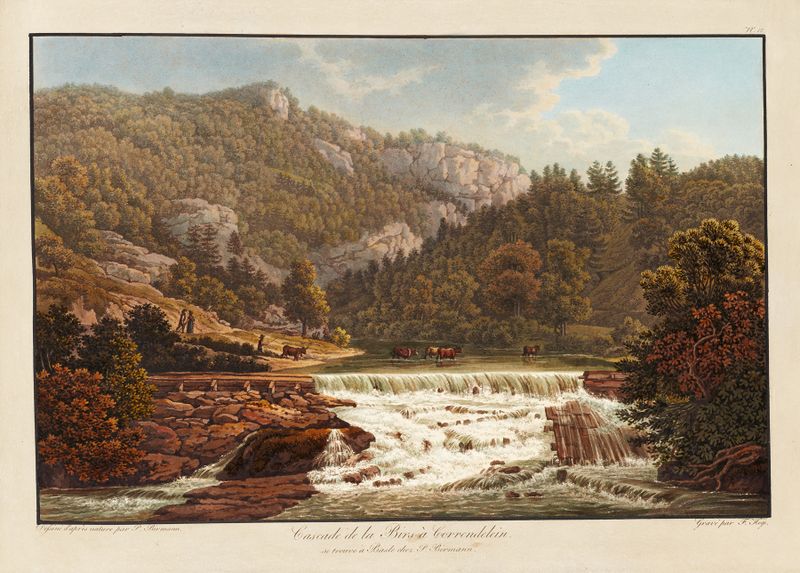
Could beauty survive in a century of chaos? In Delémont, the viewer is invited to explore a landscape where nature’s grace encounters the relentless passage of time. Look to the foreground, where delicate brushstrokes depict the lush greenery and flowing water, inviting the eye to traverse the vibrant hues of life. The gentle blending of colors creates a sense of harmony, while the subtle highlights on the leaves suggest sunlight filtering through, illuminating moments of serenity amidst inevitable decay. As we delve deeper, notice how the distant mountains stand stoic, their darker shades contrasting with the lively foreground.
This juxtaposition of vitality and the looming stillness hints at a tension between growth and the inexorable cycle of mortality. The soft contours of the hills echo a sense of nostalgia, perhaps a reminder of what once flourished. The artist's careful attention to detail emphasizes the fleeting beauty of the natural world, a poignant commentary on life and its ephemeral nature. Peter Birmann created Delémont during a period marked by both artistic exploration and historical upheaval.
Working in Switzerland in the late 18th century, he found himself amidst the changing tides of Romanticism, where artists sought to convey emotion through nature. This context of transformation and turmoil likely influenced his depiction of a serene landscape, serving as a sanctuary in a world that felt increasingly chaotic.
More Artworks by Peter Birmann
Browse all →
View from the Isteinerklotz up the Rhine toward Basel
Peter Birmann

Sursee und Umgebung mit Sempachersee und Alpen
Peter Birmann
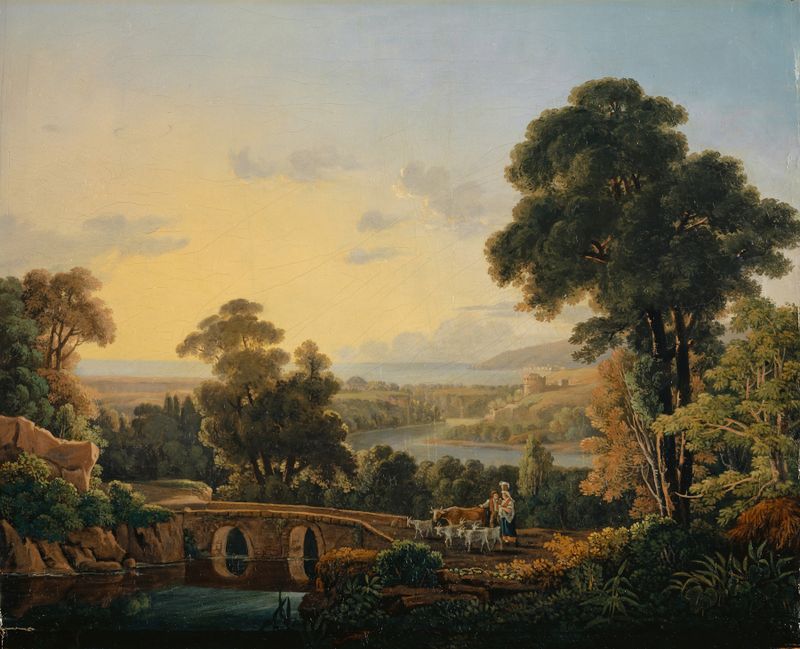
Hilly Landscape with River and Bridge
Peter Birmann
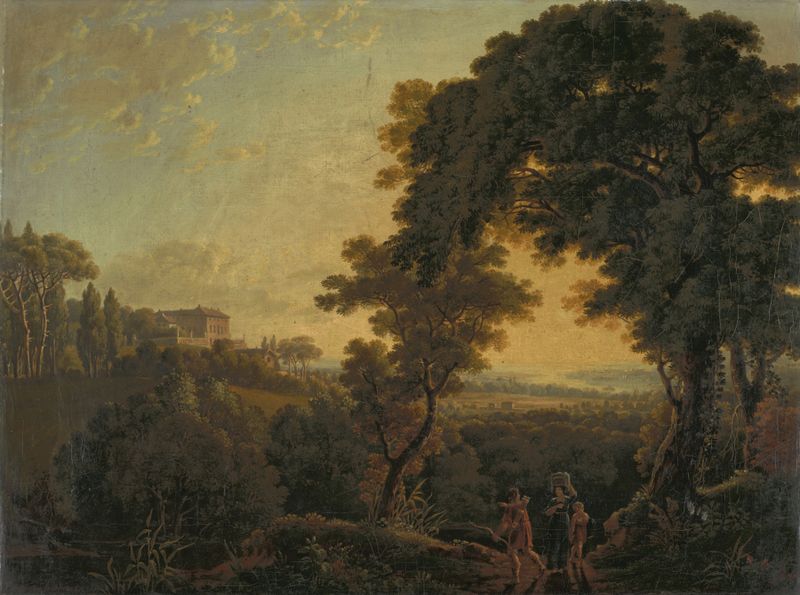
Italian Landscape, Lake Nemi
Peter Birmann

View from the Muttenz Quarry toward Basel
Peter Birmann

Entrée du Val de Moutier
Peter Birmann
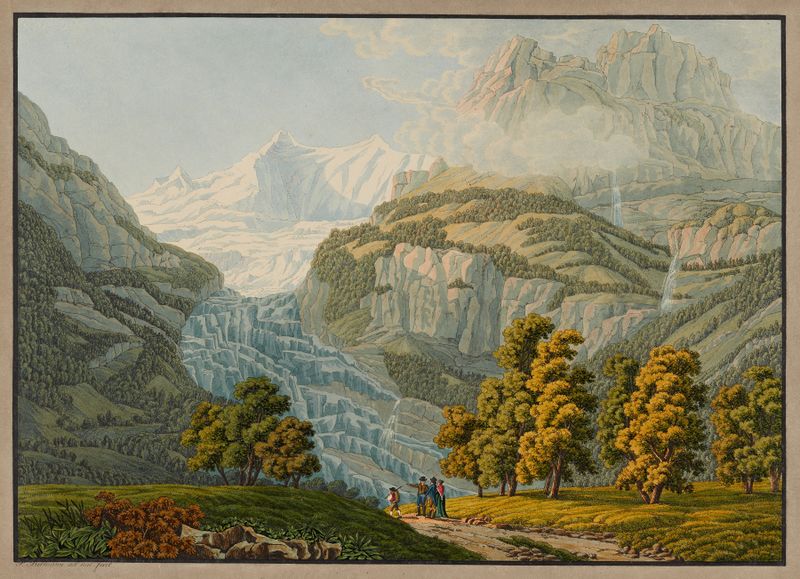
Le Glacier inférieur du Grindelwald, dans le Canton de Berne
Peter Birmann
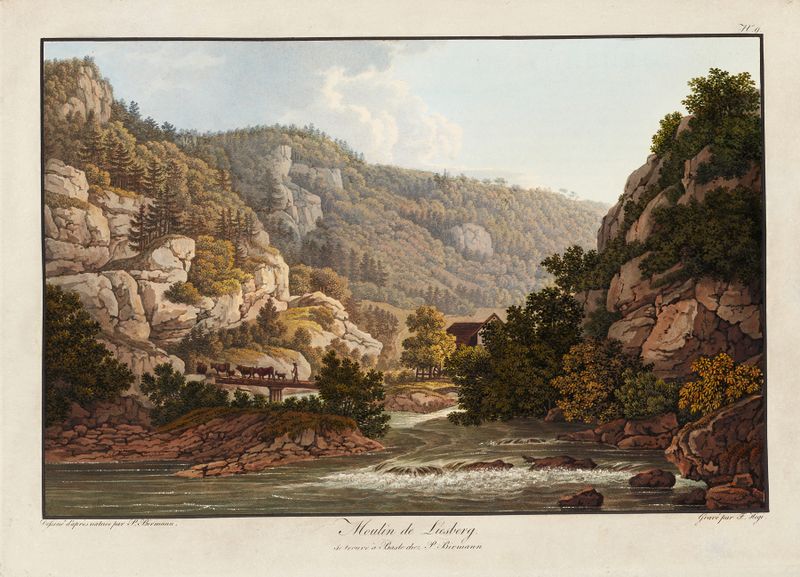
Moulin de Liesberg
Peter Birmann

Blick vom Muttenzer Steinbruch auf Basel (‘Environs de Bâle. prise sur la Carriere de Muttentz’)
Peter Birmann
Cascade de la Birs à Correndelein
Peter Birmann





