
Denslow's 5 Little Pigs page 4b — History & Facts
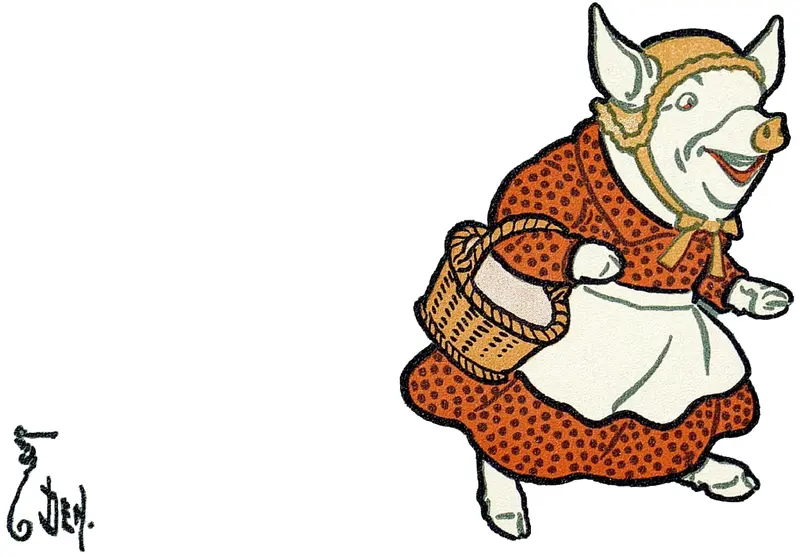
The eye is caught at once by the lively figure of a pig, upright and purposeful, dressed in a russet polka-dot frock and crisp white apron, basket in hand. The animal’s open mouth and bright, wide eye suggest a moment of cheerful determination, as though she is setting off on an errand or adventure. The bonnet, tied neatly under her chin, transforms her from barnyard creature to a figure of domestic comedy, bridging the world of animals and the manners of Edwardian society.
Every line is bold and clear, the palette simple but striking, inviting the viewer to imagine the story that comes before and after this instant. The black background isolates her, making her the sole focus—her intent stride and animated expression hint at a narrative just out of view. Created in 1903, this illustration belongs to a moment when children’s books were blossoming into full-color, character-driven worlds, thanks in part to artists like William Wallace Denslow. Denslow’s work, including his famed collaboration on The Wonderful Wizard of Oz, helped define the look of early 20th-century American children’s illustration: playful, accessible, and instantly memorable.
Works like Denslow’s 5 Little Pigs were often commissioned for young readers, intended to delight and instruct with their blend of humor and gentle anthropomorphism. The history of this particular image is largely silent, but its style speaks for its era—a time when illustrators were inventing new visual languages for storytelling. Look again at the pig’s confident step and see the optimism of a new century, rendered in pen, color, and wit.
More Artworks by William Wallace Denslow
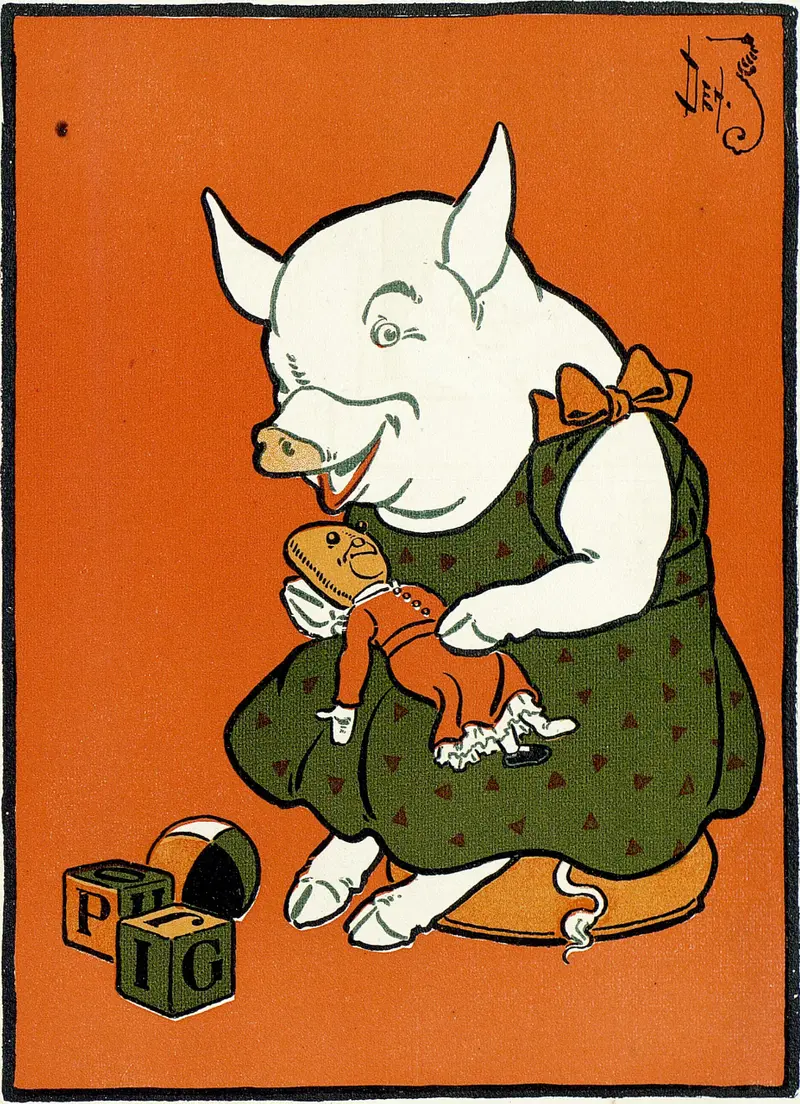
Denslow's 5 Little Pigs (page 7 crop)
William Wallace Denslow

Denslow's 5 Little Pigs
William Wallace Denslow
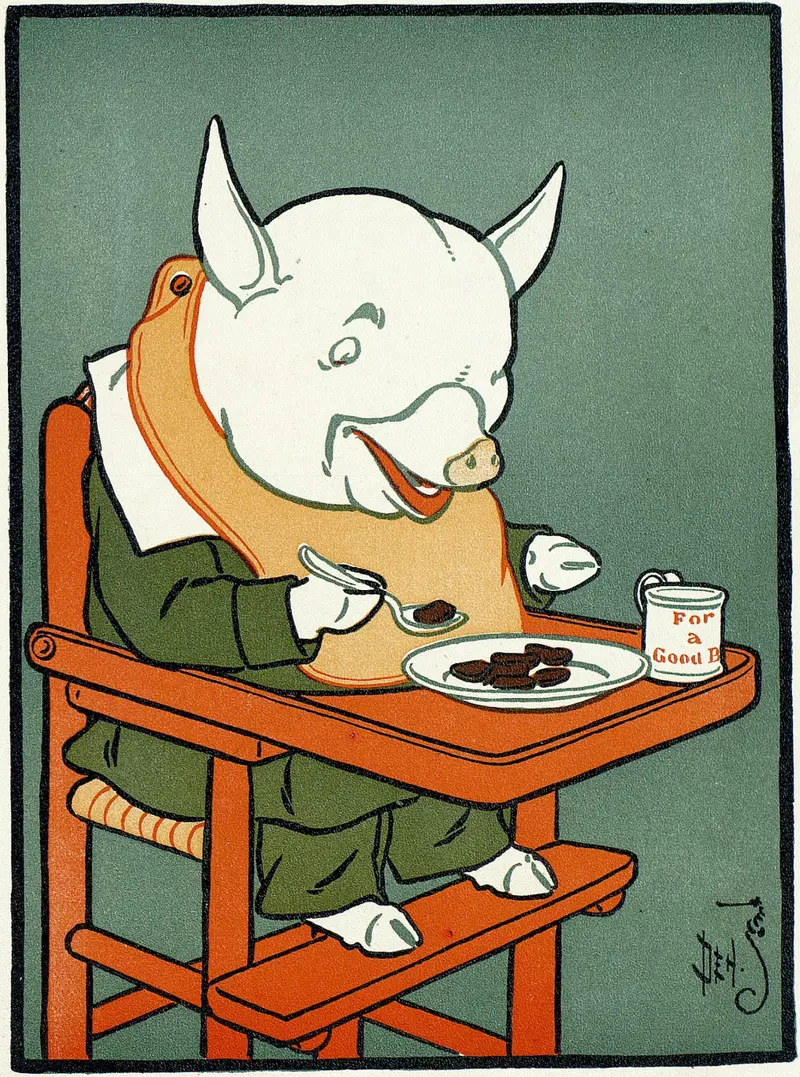
Denslow's 5 Little Pigs (page 9 crop)
William Wallace Denslow
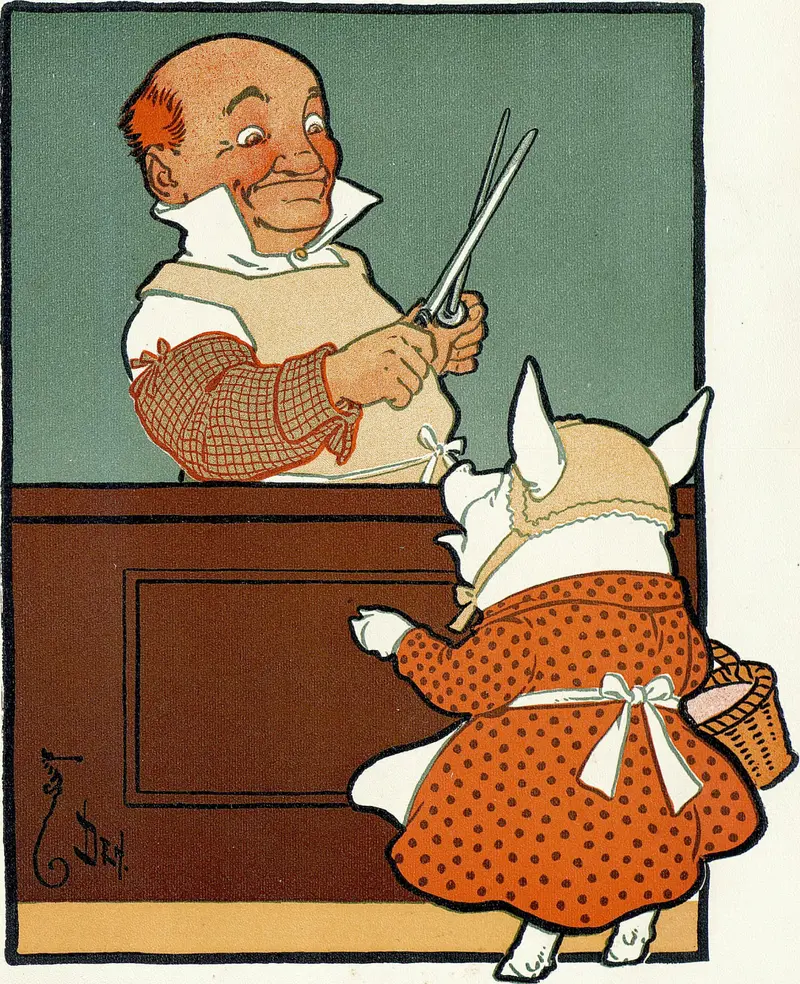
Denslow's 5 Little Pigs (page 5 crop)
William Wallace Denslow

Denslow's 5 Little Pigs (page 11 crop)
William Wallace Denslow

Denslow's 5 Little Pigs (page 15 crop)
William Wallace Denslow

Denslow's 5 Little Pigs (page 13 crop)
William Wallace Denslow

Pearl and Pumpkin-book pg-000 cover
William Wallace Denslow
Denslow's 5 Little Pigs page p4b
William Wallace Denslow
Denslow's 5 Little Pigs page 3
William Wallace Denslow





