Der Abschied des Besuchs — History & Facts
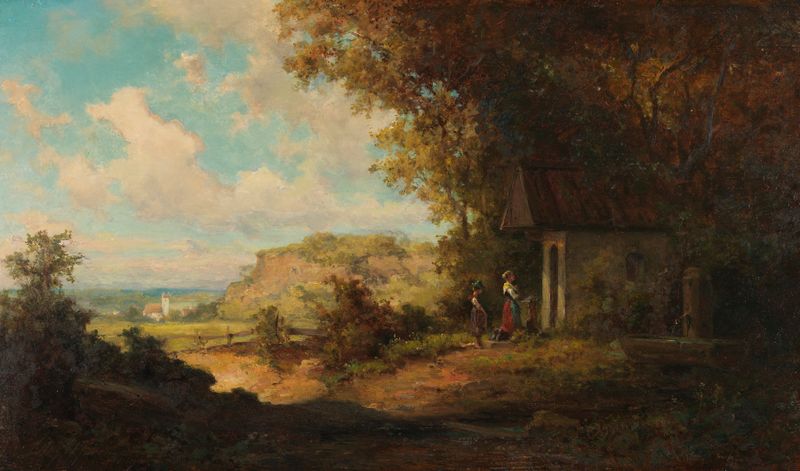
This whisper of absence lingers in the air of Der Abschied des Besuchs, evoking a profound sense of emptiness that resonates deeply within the viewer. Focus on the figure in the foreground, a woman poised with an expression that dances between longing and resignation; her eyes seem to hold stories untold. Notice how the muted palette envelops the scene, with soft browns and grays dominating, establishing an atmosphere of melancholy. The delicate brushstrokes breathe life into her garments, yet they blend seamlessly into the background, suggesting her isolation amidst the emotional landscape. As you delve deeper, consider the interplay of light and shadow, illuminating moments of connection while simultaneously casting darkness over the void left behind.
The subtle tension between the woman's stance and the vacant space around her speaks volumes; it hints at a farewell that is not just physical but a severing of emotional ties. The absence of other figures amplifies her solitude, allowing the viewer to ponder what has been lost and what remains unspoken. Willy Moralt painted this work in 1914, a time when Europe was on the brink of turmoil with the onset of World War I. Living in Munich, he was navigating the transitional wave of expressionist influence in art, marked by a shift towards more personal and emotive themes.
The turmoil of the world outside echoed in his exploration of isolation and emptiness, reflecting both the artist's internal struggles and the collective anxieties of a continent heading into chaos.