Mädchen vor Waldkapelle — History & Facts
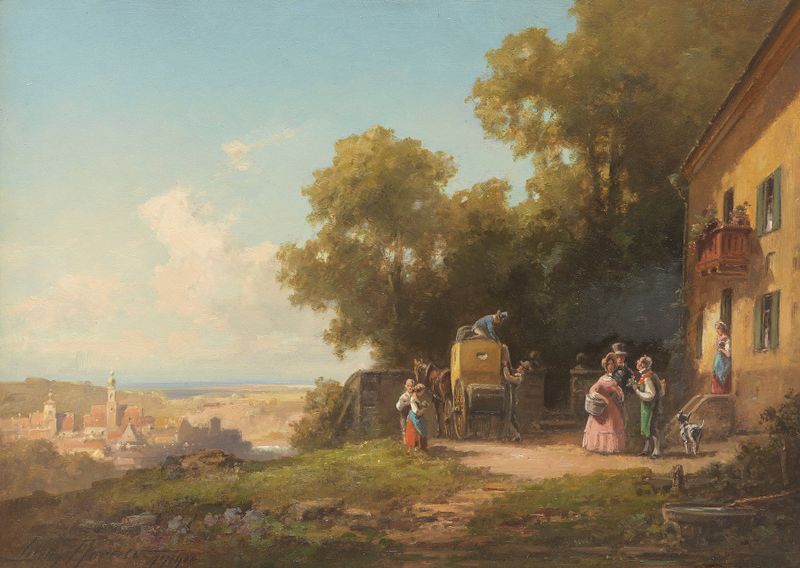
In the quiet recesses of human experience, shadows reveal more than mere absence; they unveil the depths of emotion and thought. Focus on the delicate interplay of light and shadow that dances across the canvas. The young girl, poised in her moment of reflection, draws the eye with her gentle expression and the soft fall of her garments. Notice how the light bathes her figure while casting the surrounding forest into a darker embrace, hinting at secrets hidden just beyond the frame.
The contrast between her brightness and the somber woods invites contemplation, echoing the duality of innocence and the weight of unseen truths. Look closer at the girl’s posture; her slight lean towards the chapel suggests a longing or perhaps a moment of prayer. The tall trees loom in the background, their sturdy forms standing as silent witnesses to her introspection. This tension between the vibrant figure and the looming shadows of the trees creates a profound emotional depth, prompting questions about what lies beyond the sanctuary of the chapel and the innocence of youth.
In this stillness, the shadows gather significance, transforming the space into a realm of both comfort and unease. Willy Moralt painted this work in 1910, during a time marked by the burgeoning modern art movement in Germany, which sought to challenge traditional representations. Living in Munich, he was influenced by the changing urban landscape and the symbolic significance of nature. His exploration of shadows reflects broader themes of identity and transition, as artists of this era grappled with their own reactions to a rapidly evolving world.