
‘Der Schöne Brunnen’ in Nuremberg — History & Facts
In the stillness of a moment captured on canvas, desire hums beneath the surface, drawing us into a world both intimate and expansive. Focus on the intricate details surrounding the fountain at the center — its graceful curves rise majestically, inviting the eye to wander through the vibrant architecture that frames it. The cobbled streets, alive with a sense of history, lead us towards the soft, dappled light that falls across the scene, illuminating the warm hues of the buildings. Notice how shadows play upon the facades, accentuating the contrast between light and dark, revealing a poetic dialogue between the past and present. The painting pulsates with unfulfilled longing, evident in the way the figures interact with their environment.
The townspeople, each lost in their own thoughts, reflect a deep yearning for connection — whether it be with one another or the history that envelops them. The interplay of architectural lines with the organic shapes of the trees creates a tension between nature and the man-made, suggesting that desire transcends both realms, intertwining them in a shared narrative. In 1876, Cornelis Springer was deeply immersed in the tradition of Dutch Romanticism while living in the Netherlands. His works from this period often emphasized the beauty of urban landscapes, showcasing his mastery in depicting architectural details alongside humanity’s subtle interactions within these spaces.
Europe was undergoing significant changes, and in this context, Springer's art sought to preserve the fleeting beauty of a bygone era.
More Artworks by Cornelis Springer
Browse all →
The Royal Palace and the Nieuwe Kerk on the Dam, Amsterdam
Cornelis Springer
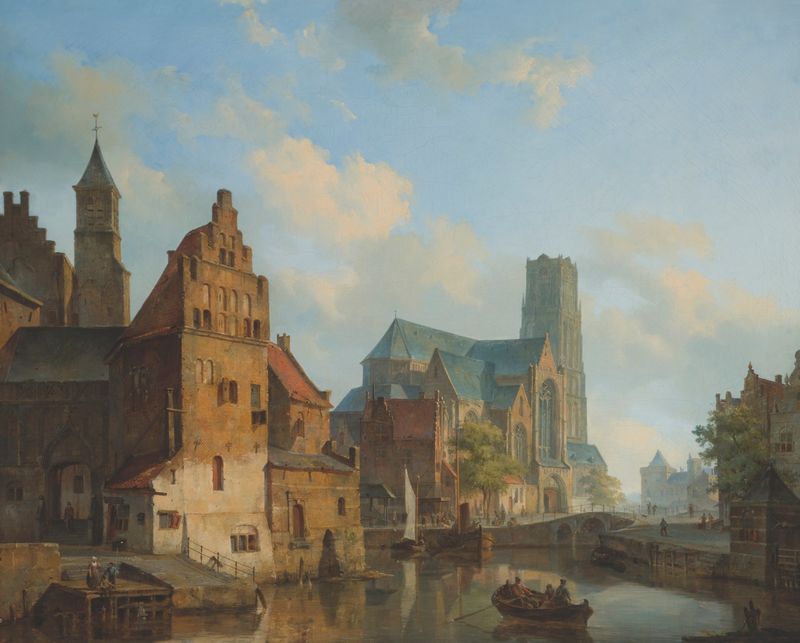
A View Of The Delftse Vaart And St Laurens Church, Rotterdam
Cornelis Springer

The Kerkgracht In Leiden
Cornelis Springer
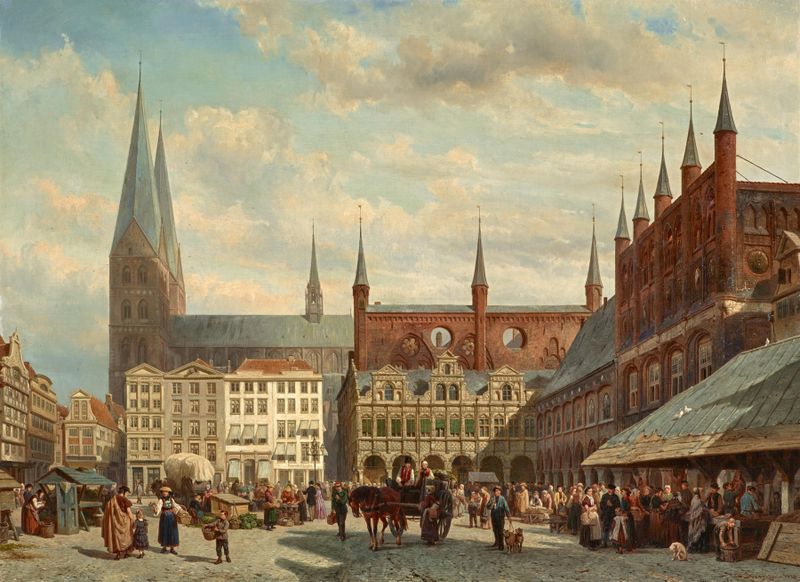
Ansicht des Lübecker Marktes
Cornelis Springer

View of The Hague
Cornelis Springer
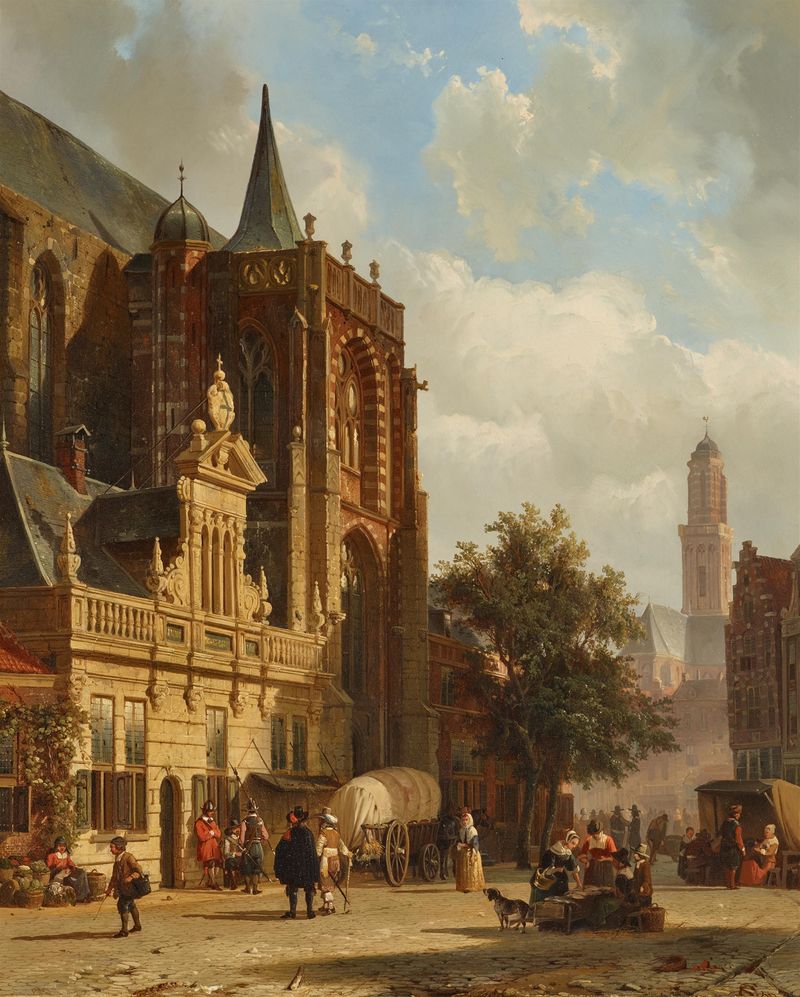
Der Grote Markt in Zwolle
Cornelis Springer
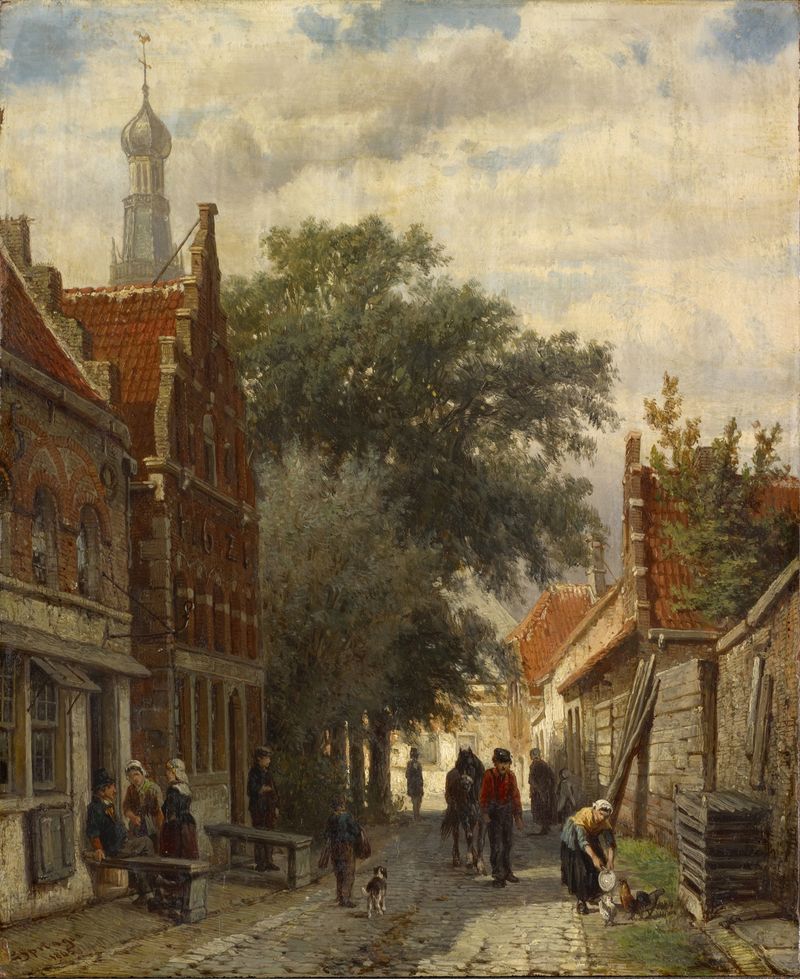
Street in Enkhuizen
Cornelis Springer

View of The Hague from the Delftse Vaart in the Seventeenth Century
Cornelis Springer
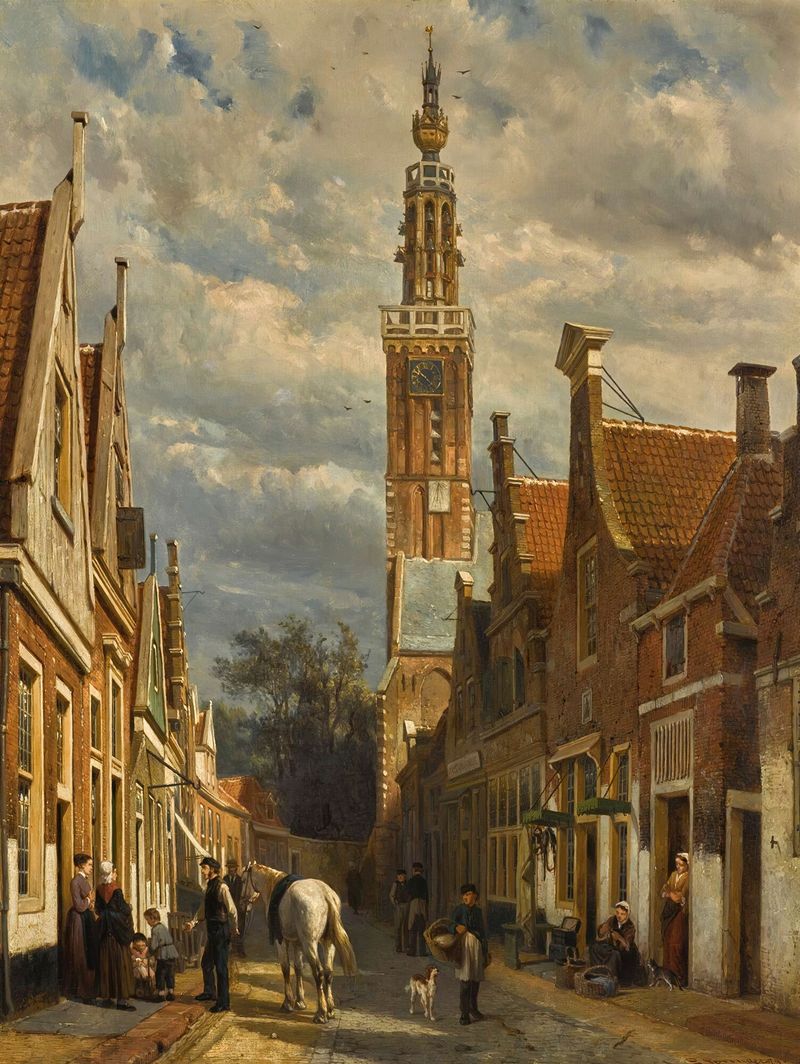
The carillon tower in Edam
Cornelis Springer
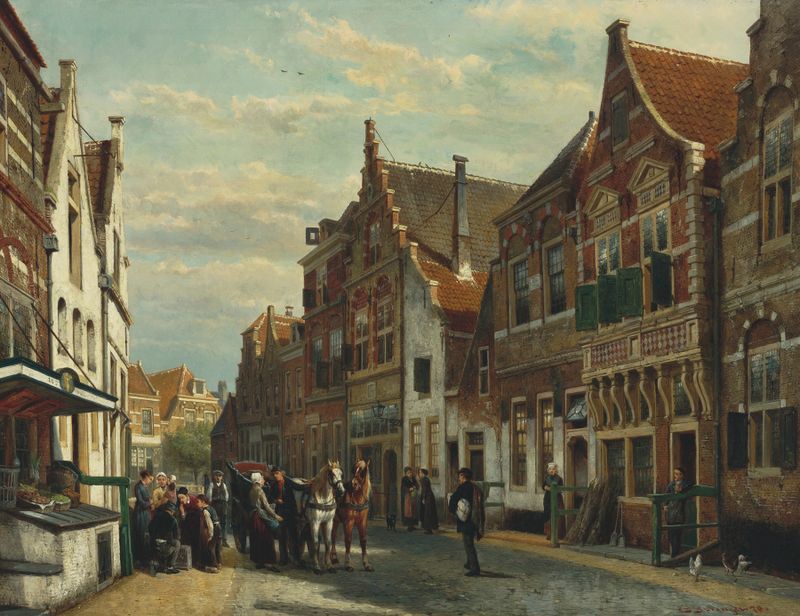
The Wijdstraat, Oudewater, in summer
Cornelis Springer
More Architecture Art
Browse all →
The statue of Liberty
Frédéric Auguste Bartholdi

View of Houses in Delft, Known as ‘The Little Street’
Johannes Vermeer

View of Houses in Delft, Known as ‘The Little Street’
Johannes Vermeer

The Cathedral in Rouen. The portal, Grey Weather
Claude Monet

The yellow house
Vincent van Gogh

The Church in Auvers-sur-Oise, View from the Chevet
Vincent van Gogh