
Der strickende Soldat — History & Facts
In Der strickende Soldat, we see a soldier seated comfortably, engrossed in knitting. The colors are warm and inviting, with earthy tones dominating the scene. The soldier's uniform contrasts with the domestic activity, creating a striking visual juxtaposition.
The setting appears cozy, suggesting a moment of peace amidst the chaos of war. The painting is executed in oil on panel, a medium that allows for rich textures and details. Spitzweg's brushwork is meticulous, capturing the soldier's focused expression and the intricate patterns of the knitting. The dimensions are approximately 40 x 60 cm, making it an intimate piece that draws viewers in.
The composition balances the figure and the surrounding space effectively. Carl Spitzweg was a prominent figure in 19th-century German art, known for his depictions of everyday life. This work reflects his interest in the contrast between the military and domestic spheres. An interesting fact about this painting is that it was created during a time of significant social change in Germany, highlighting the human side of soldiers.
Spitzweg's ability to blend humor and realism is evident in this charming scene.
More Artworks by Carl Spitzweg

Die Stadtwache
Carl Spitzweg
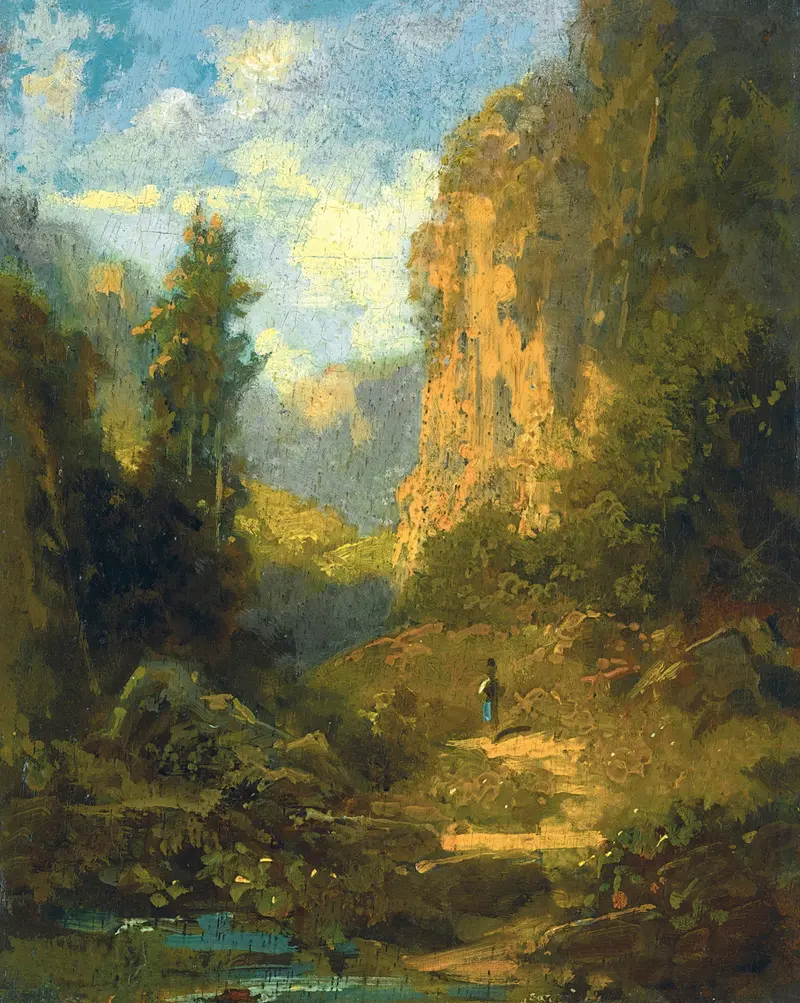
Gebirgslandschaft
Carl Spitzweg
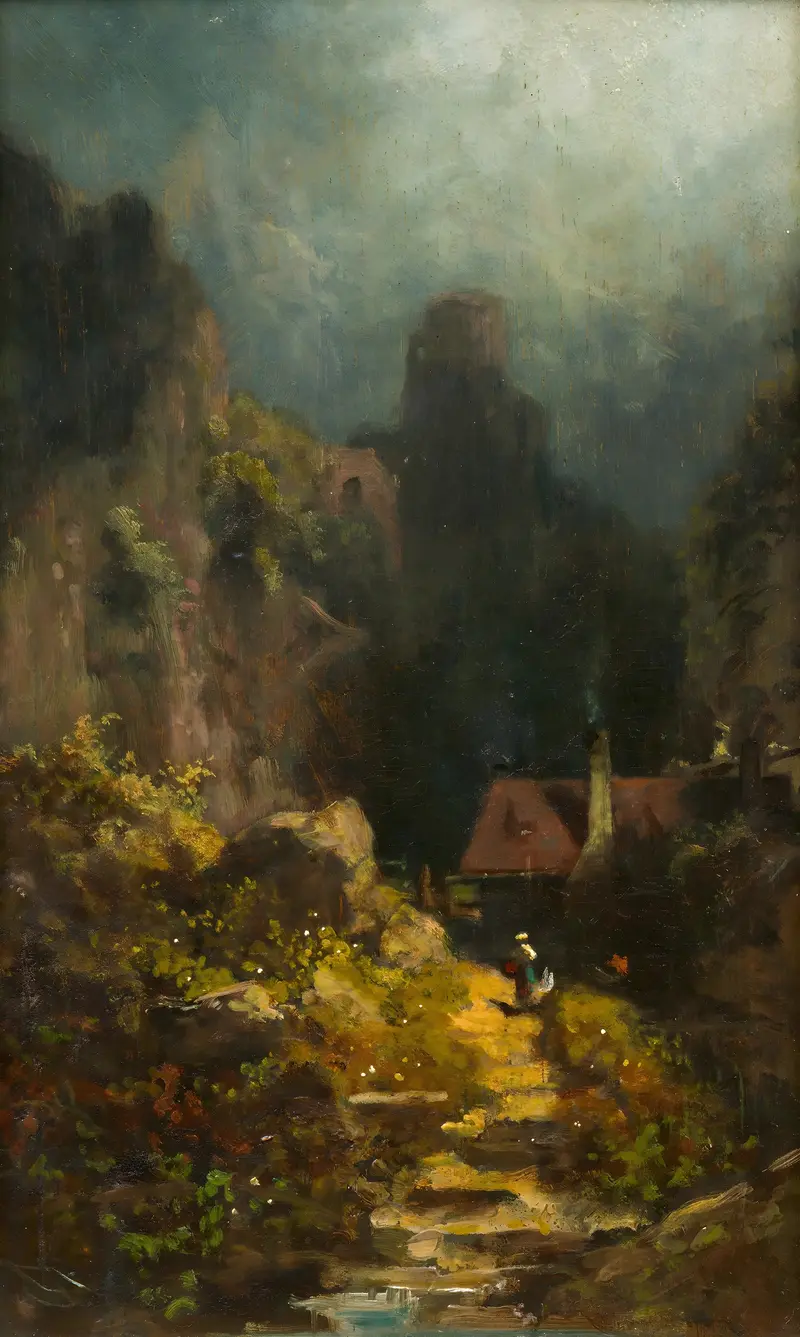
In der Schlucht
Carl Spitzweg

Gebirgsmühle
Carl Spitzweg
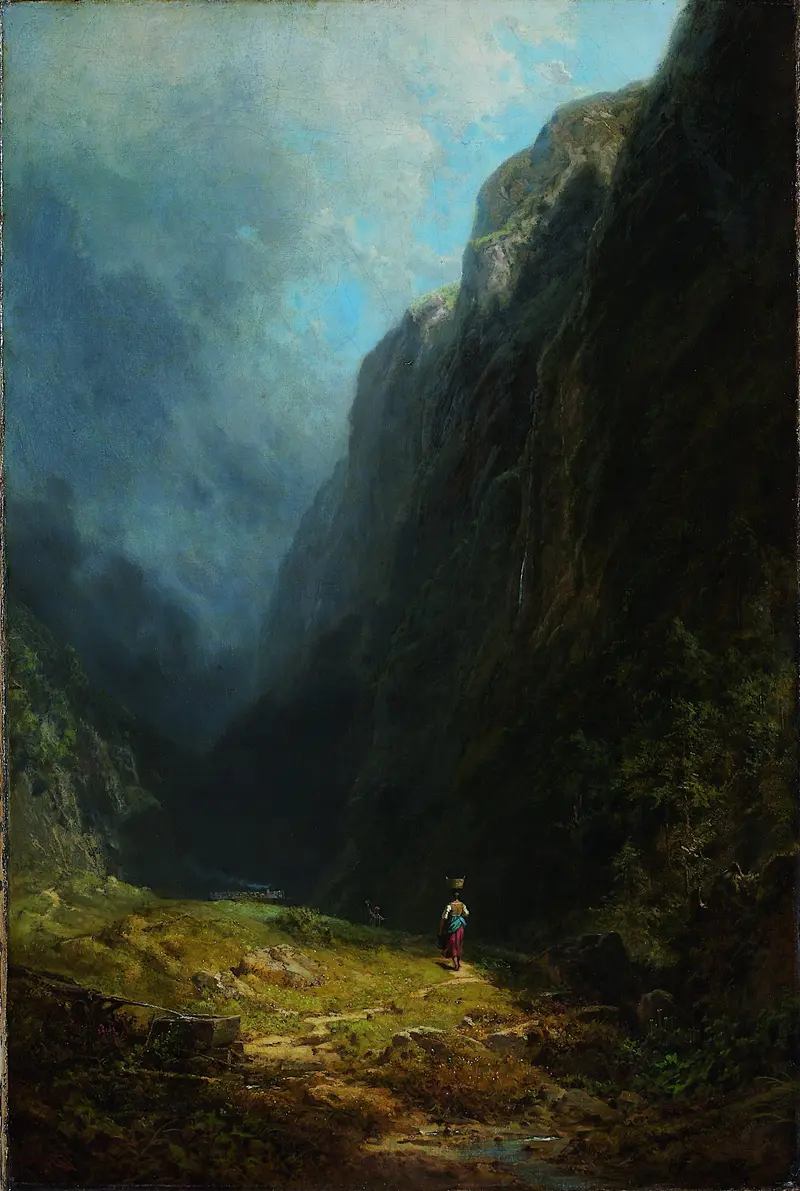
In the Alpine High Valley (Landscape with Mt. Wendelstein)
Carl Spitzweg
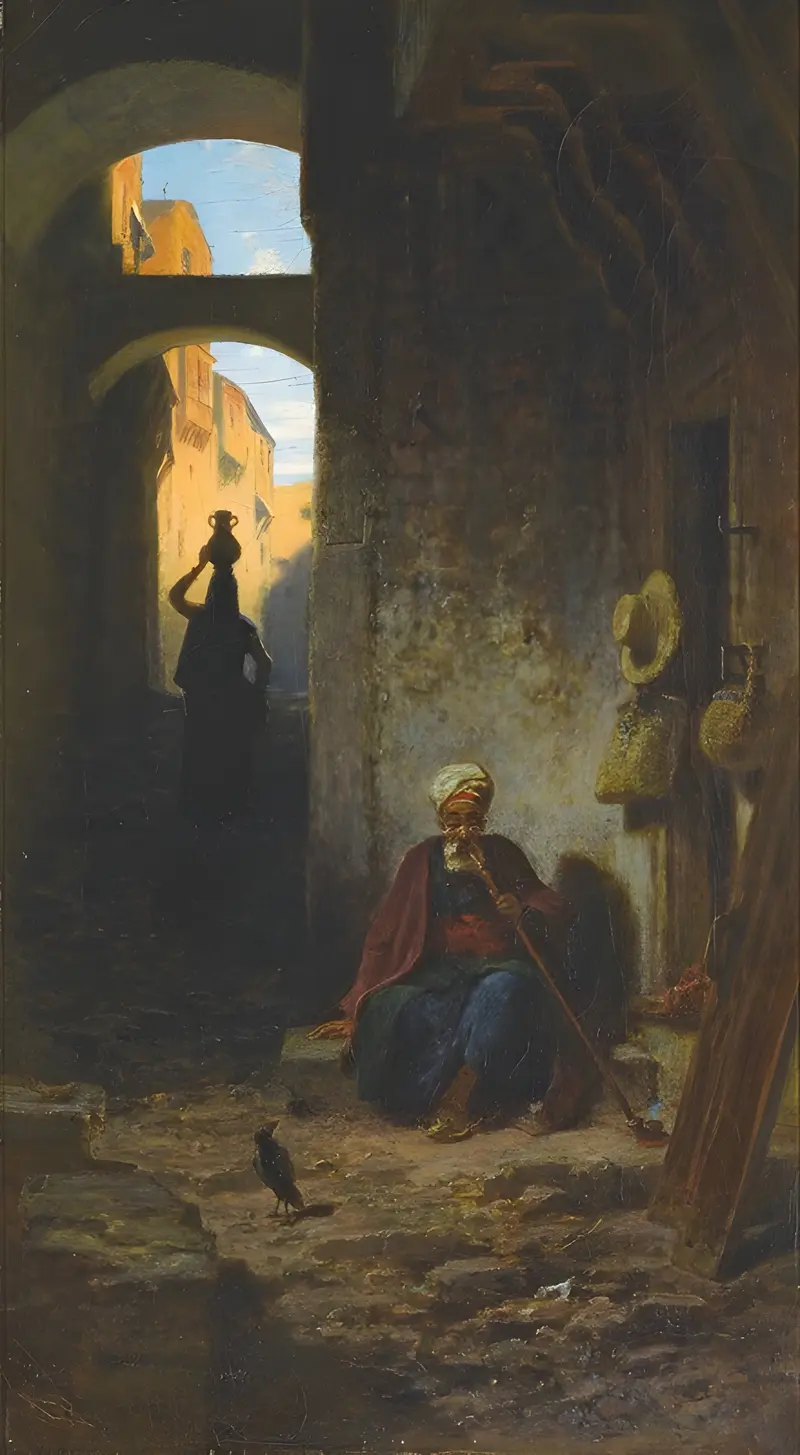
Out Of The Orient
Carl Spitzweg
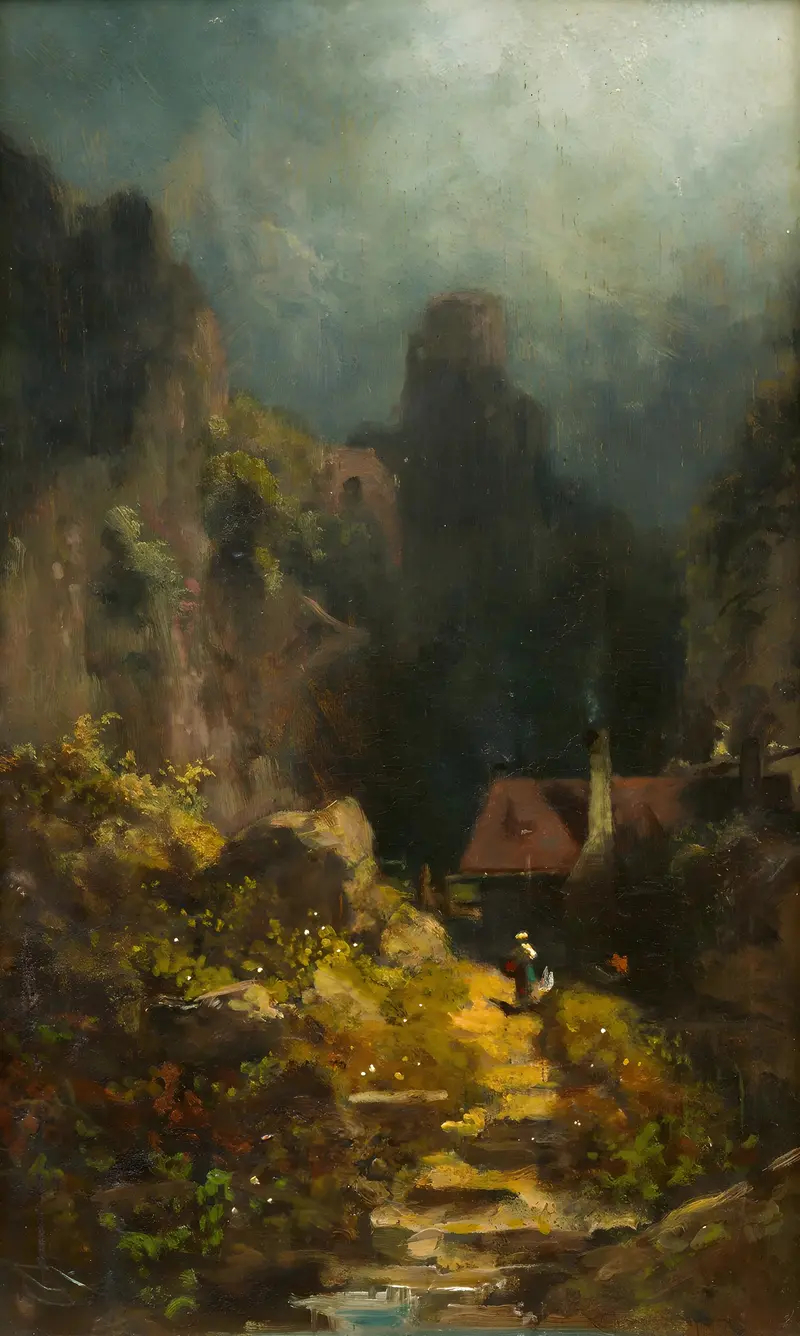
In der Schlucht (Haus im Grund mit rauchendem Kamin)
Carl Spitzweg
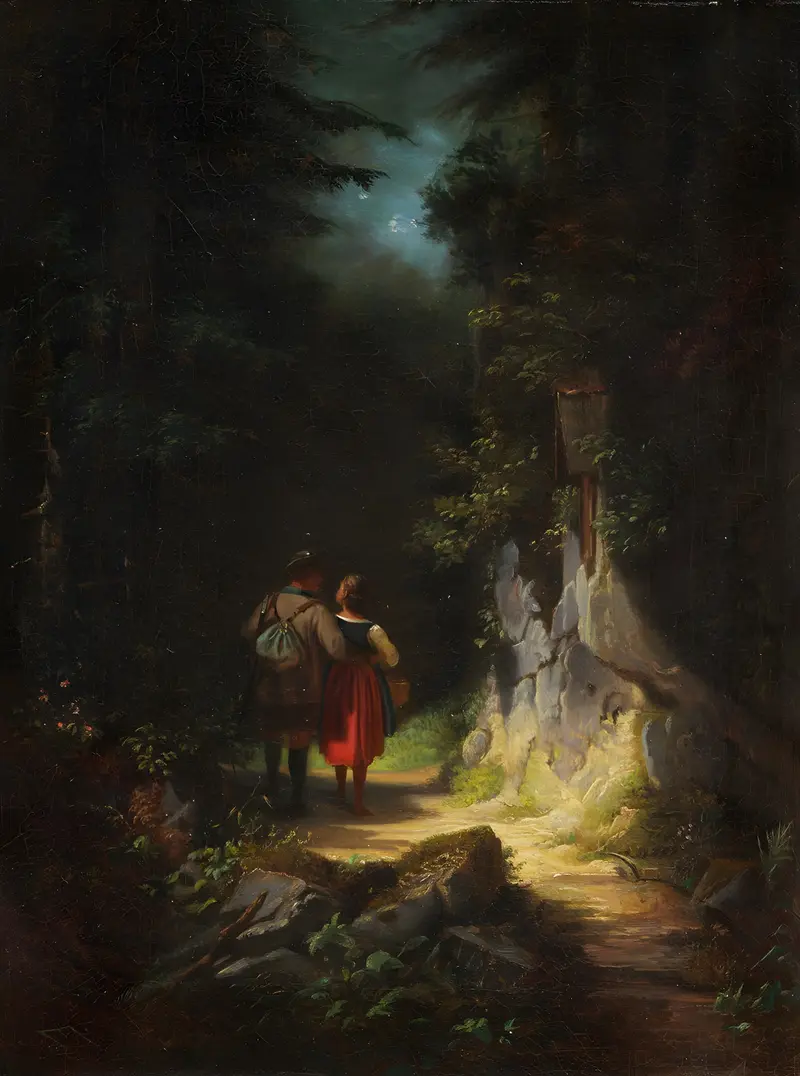
Jäger mit Mädchen (Der verliebte Jäger)
Carl Spitzweg
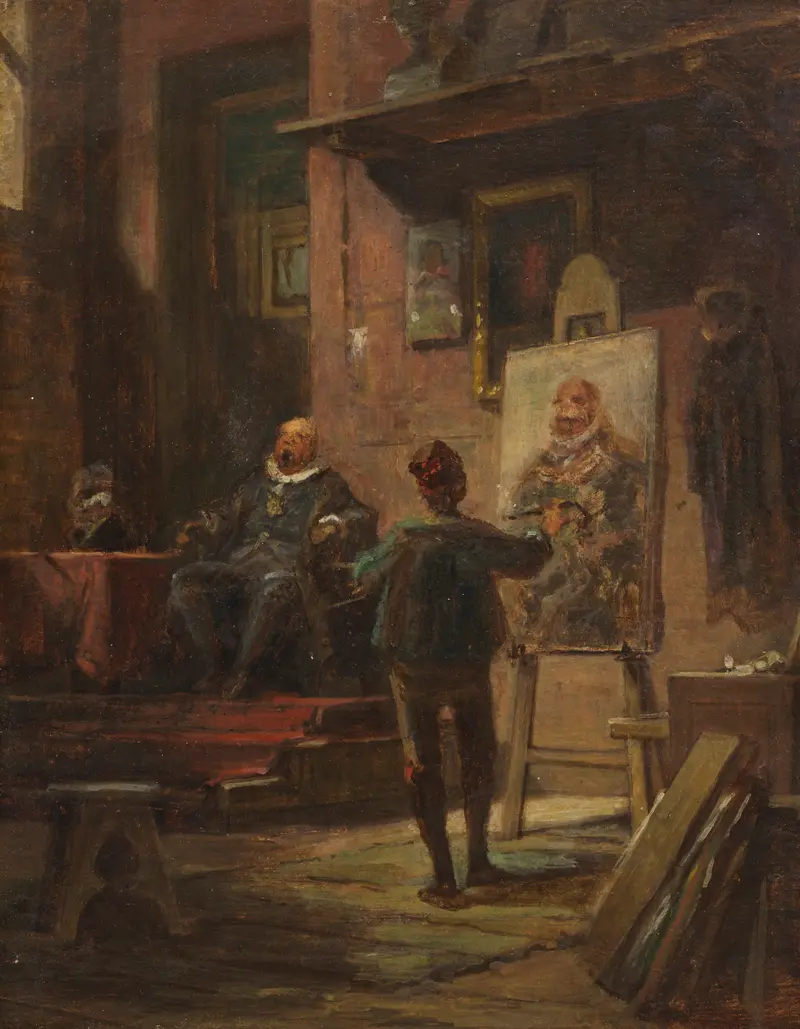
Der Maler im Atelier
Carl Spitzweg
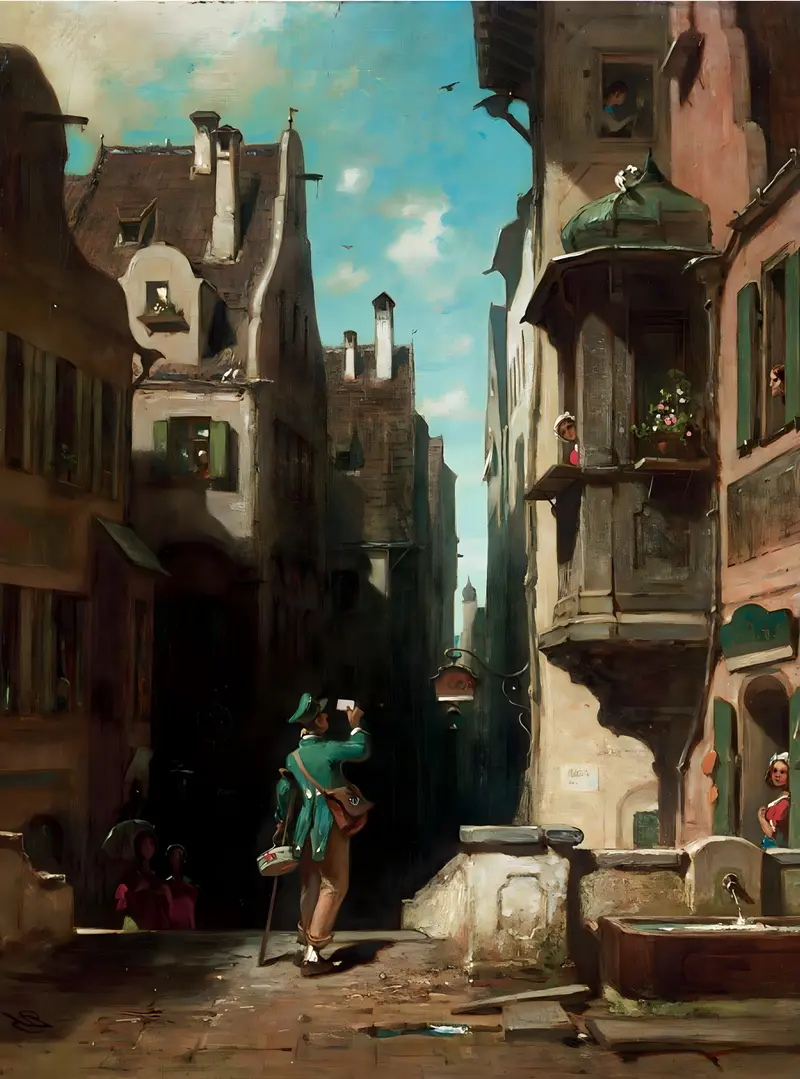
Der Postbote
Carl Spitzweg
More Genre Scene Art

Banquet of the Officers of the St George Civic Guard
Frans Hals

Rembrandt and Saskia in the Scene of the Prodigal Son
Rembrandt van Rijn

Bal du moulin de la Galette
Pierre-Auguste Renoir

Quadrille at the Moulin Rouge
Henri de Toulouse-Lautrec

A Burial at Ornans
Gustave Courbet

When Will You Marry?
Paul Gauguin