
Der Teich im Bois de Boulogne — History & Facts
What if silence could speak through light? In the gentle embrace of a sunlit afternoon, tranquility breathes life into the stillness of a serene pond, capturing the ineffable beauty of nature. Look to the left at the soft ripples on the water’s surface, where the reflection of lush greenery dances gracefully with the light. The delicate brushstrokes evoke a sense of movement, while the verdant hues contrast against the tranquil blue, drawing the eye deeper into the scene. Notice how the dappled sunlight filters through the trees, creating an intricate play of light and shadow that invites contemplation and reverie. Beneath the surface beauty lies a subtle tension between the ephemeral and the eternal.
The stillness of the pond suggests a moment frozen in time, yet the playful shimmer of water introduces an element of transience. The surrounding foliage, painted with meticulous detail, hints at life's vibrancy, contrasted by the quiet, introspective nature of the scene. Together, they whisper of the delicate balance between existence and stillness. Giuseppe De Nittis created this piece around 1875, while living in Paris amidst the flourishing Impressionist movement.
During this period, he sought to capture the essence of light and atmosphere, inspired by both the city’s bustling life and the serene landscapes on its outskirts. His works reflected a growing fascination with capturing fleeting moments of beauty, marking a significant evolution in the portrayal of nature within art.
More Artworks by Giuseppe De Nittis
Browse all →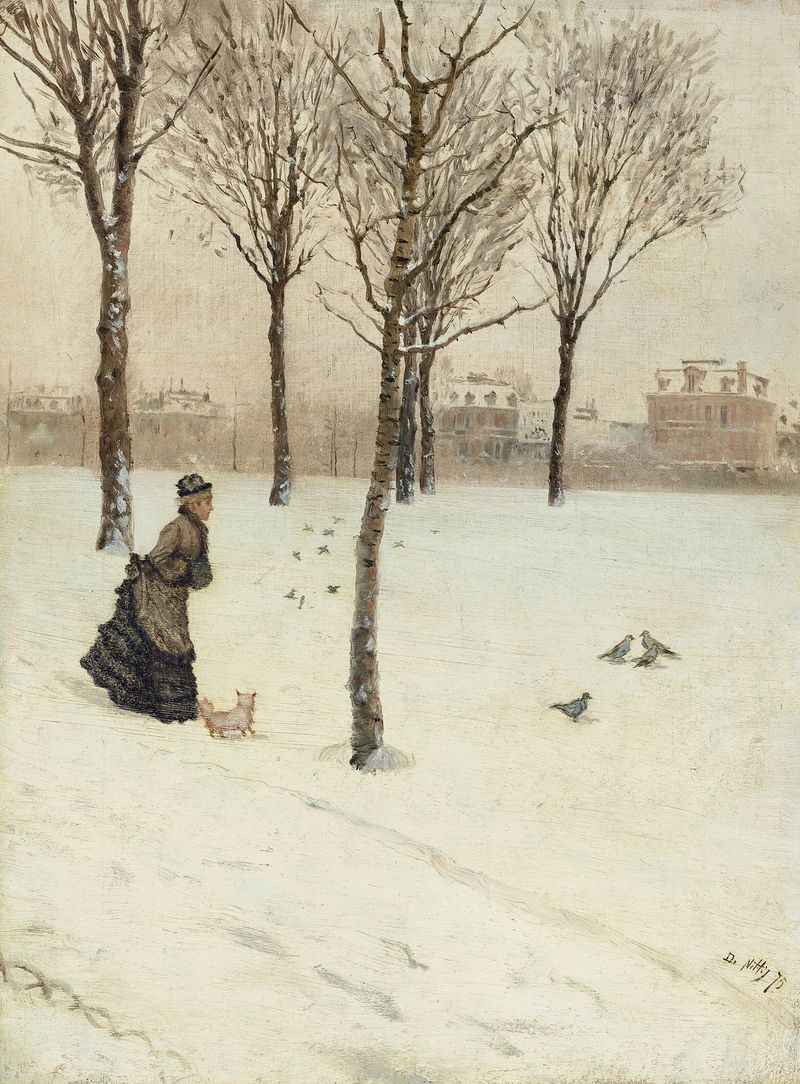
Signora sulla neve con cagnolino
Giuseppe De Nittis
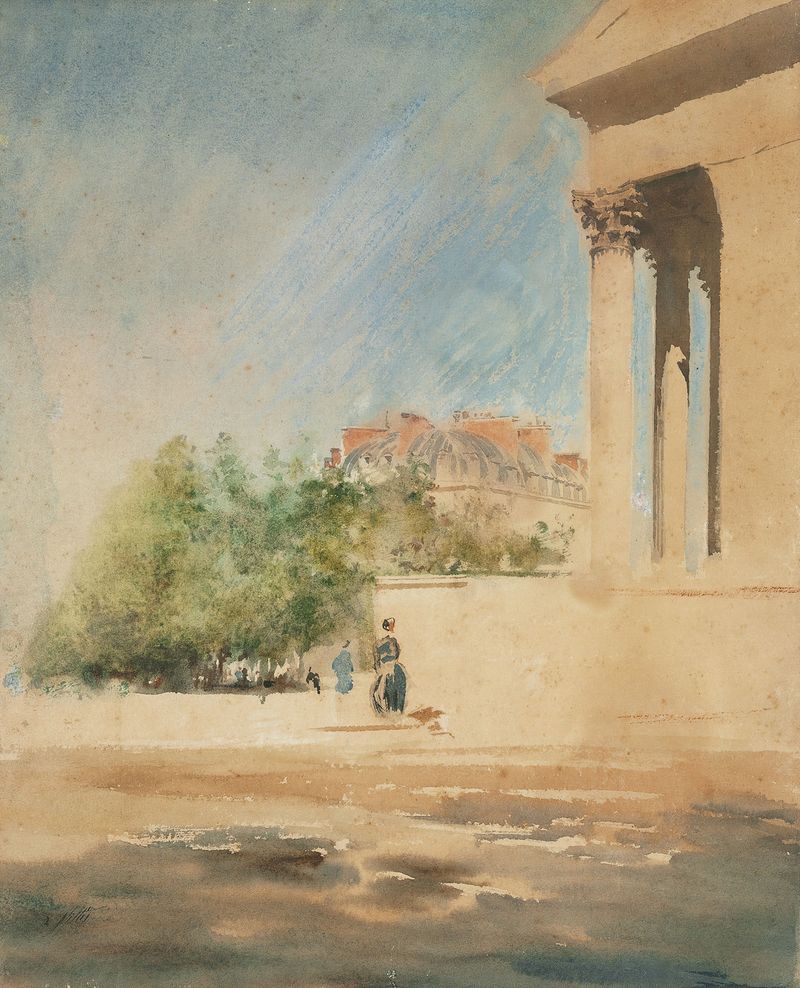
Place de la Madeleine
Giuseppe De Nittis
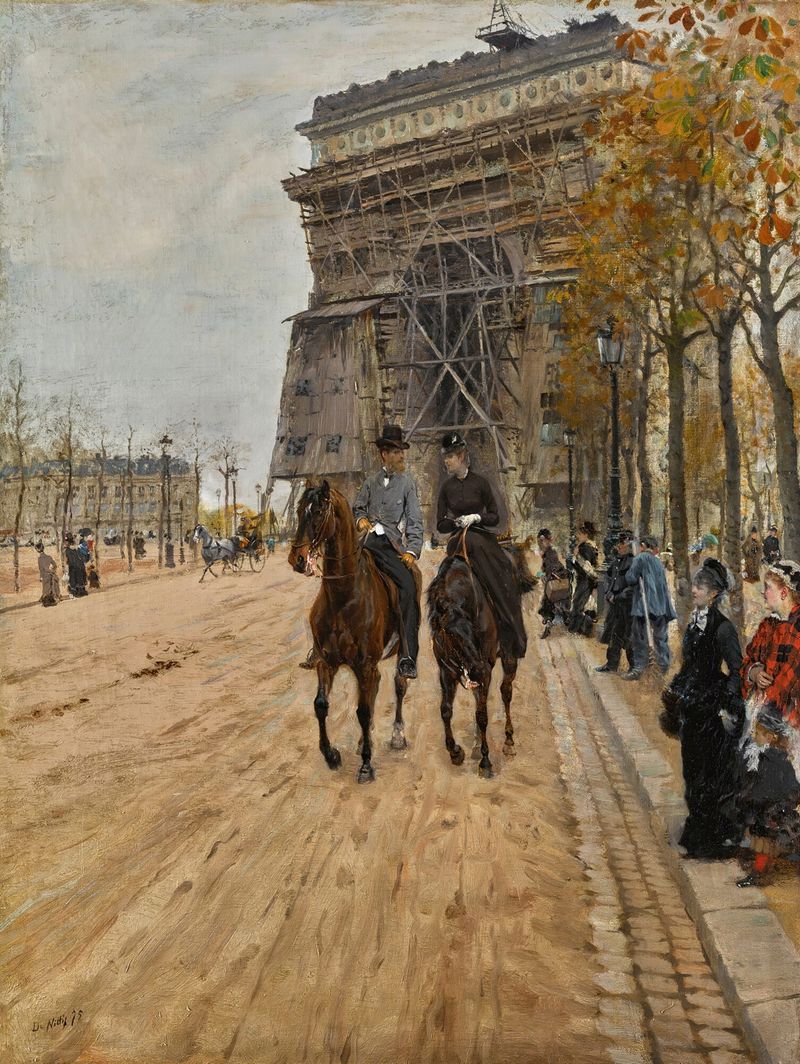
L’arc de Triomphe, Paris
Giuseppe De Nittis
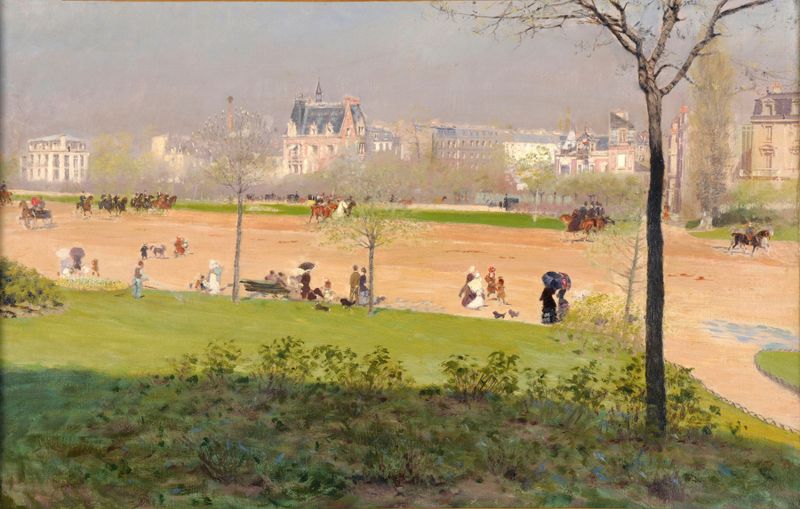
Avenue du Bois de Boulogne
Giuseppe De Nittis
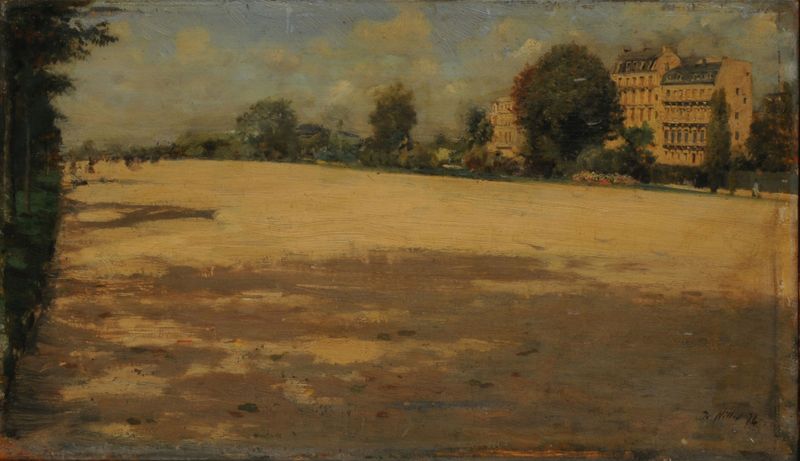
Paisaje (Avenue du Bois de Boulogne)
Giuseppe De Nittis
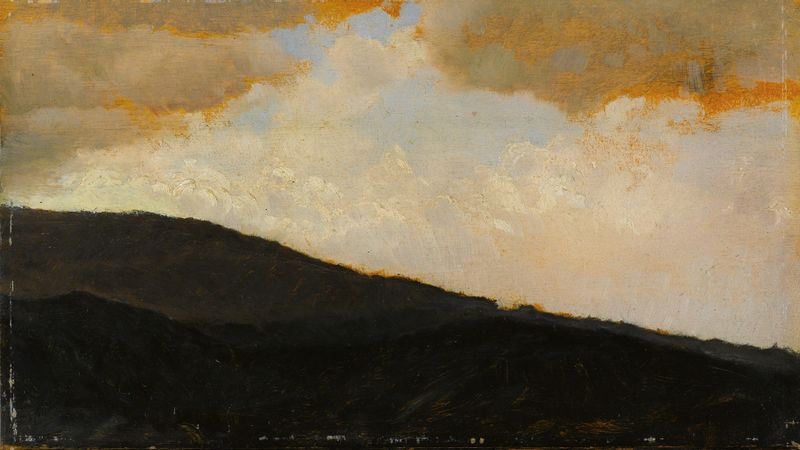
Veduta Del Vesuvio
Giuseppe De Nittis

Seelandschaft in der Umgebung von Neapel
Giuseppe De Nittis

Der Teich im Bois de Boulogne
Giuseppe De Nittis
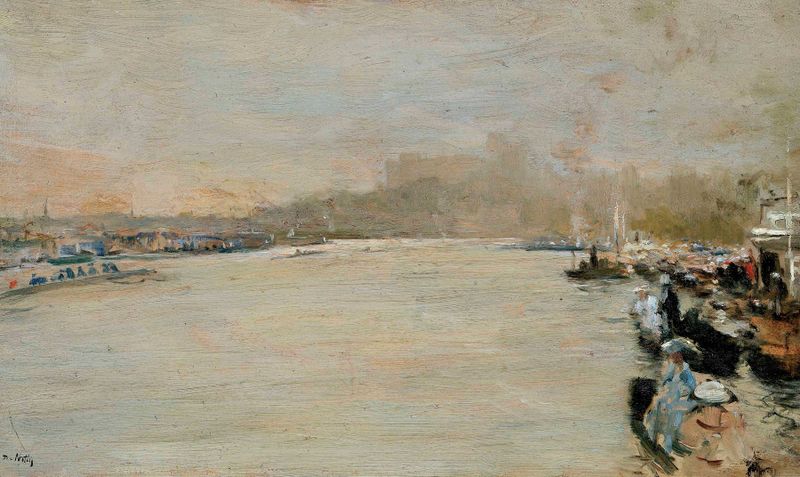
Le Regate sulla Senna
Giuseppe De Nittis
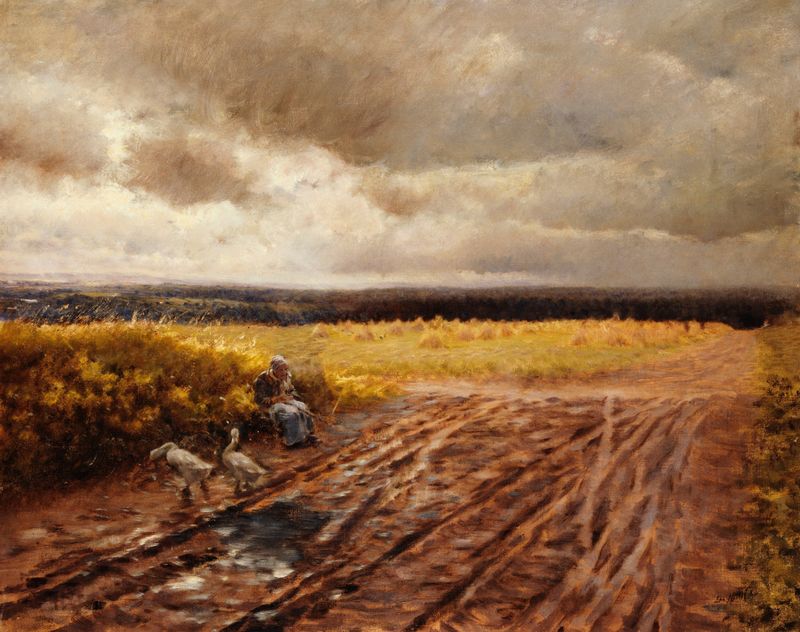
La gardeuse d’oies
Giuseppe De Nittis





