
La gardeuse d’oies — History & Facts
In this stark reminder of mortality, echoes of emptiness resonate throughout the canvas, inviting the viewer to confront the solitude of existence. Focus on the figure at the center, a solitary woman draped in modest attire, her posture slightly hunched as if bearing the weight of untold stories. The soft, muted palette envelops her, contrasting the vibrant greens of the lush landscape behind her. Look closely at the gentle brushwork that captures the delicate movement of her hands, a tender gesture that hints at her connection to the geese that wander nearby, embodying both care and isolation. As you explore the background, note the juxtaposition of the serene countryside and the silent figure.
The stillness of the scene evokes a poignant tension; while life unfolds around her, the woman appears lost in thought, perhaps reflecting on dreams deferred or cherished memories dimmed by time. It's this interplay of presence and absence that deepens the emotional impact of the piece, suggesting an unspoken longing that transcends the visual. In 1884, Giuseppe De Nittis was navigating a transitional period in his career, living in Paris while absorbing influences from Impressionism. The world was in flux, as artists sought to capture fleeting moments and the essence of everyday life.
Amidst his personal struggles and the changing art scene, La gardeuse d’oies reveals a moment of introspection, encapsulating both the beauty and the melancholy of a life quietly lived.
More Artworks by Giuseppe De Nittis
Browse all →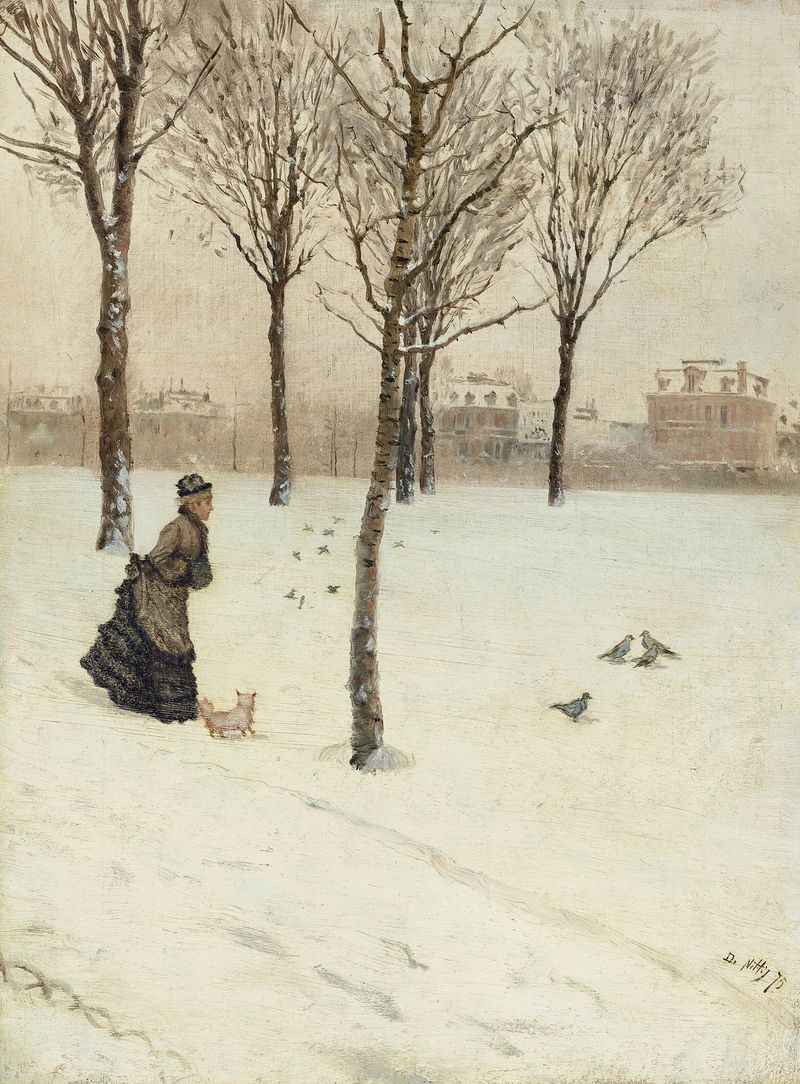
Signora sulla neve con cagnolino
Giuseppe De Nittis
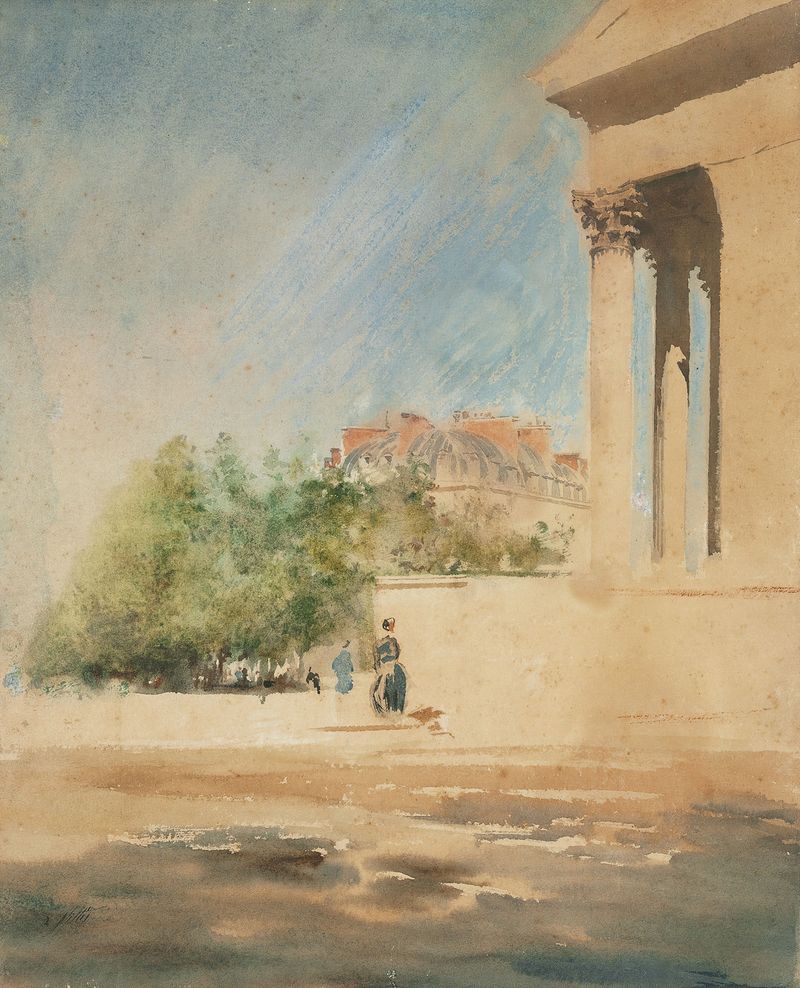
Place de la Madeleine
Giuseppe De Nittis
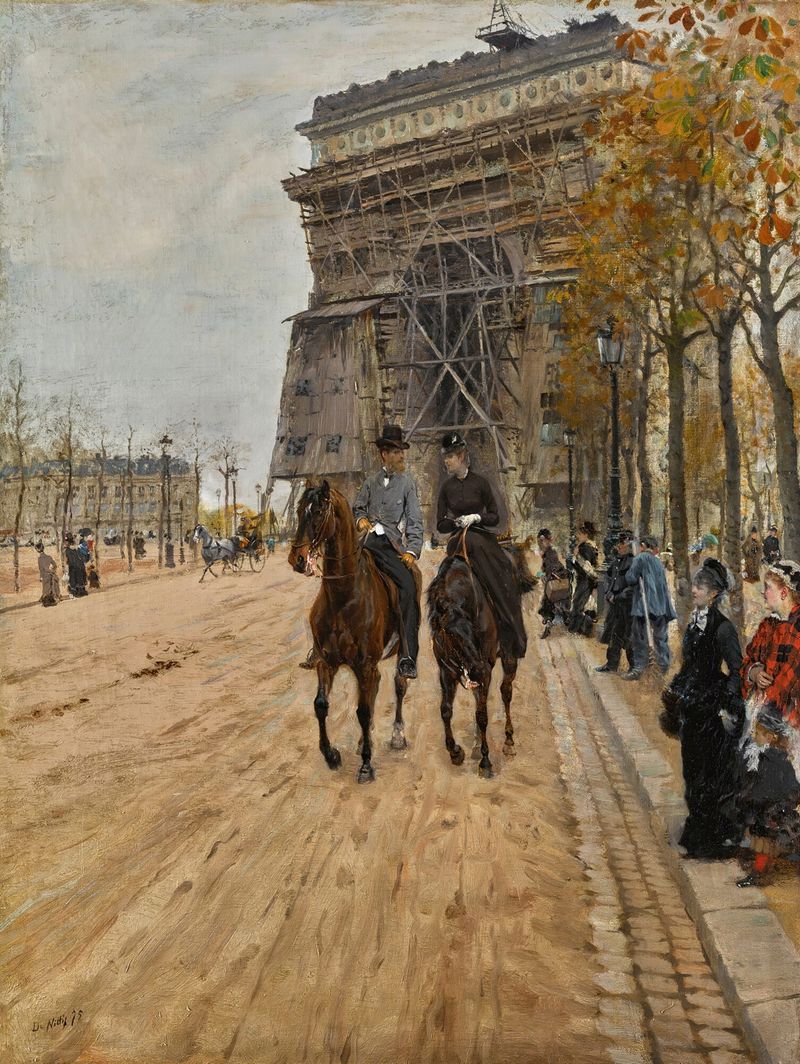
L’arc de Triomphe, Paris
Giuseppe De Nittis
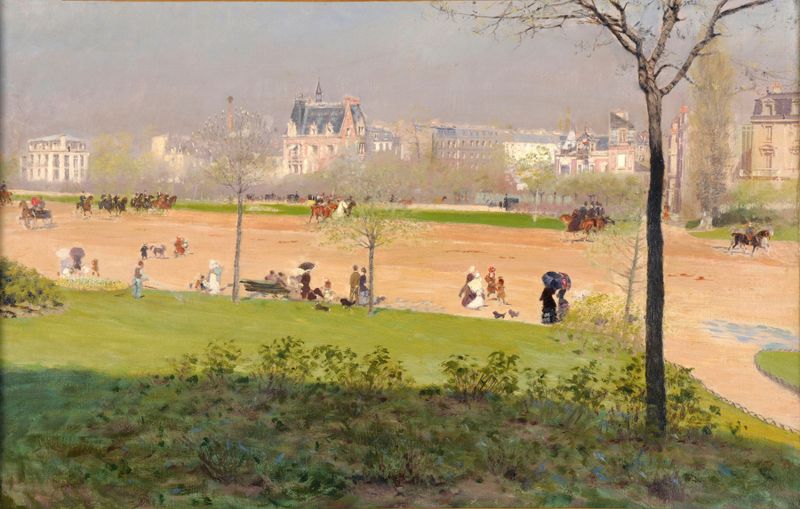
Avenue du Bois de Boulogne
Giuseppe De Nittis
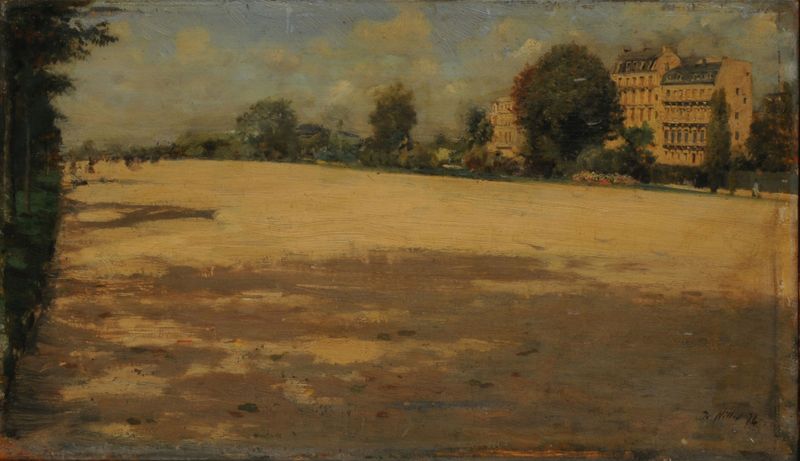
Paisaje (Avenue du Bois de Boulogne)
Giuseppe De Nittis
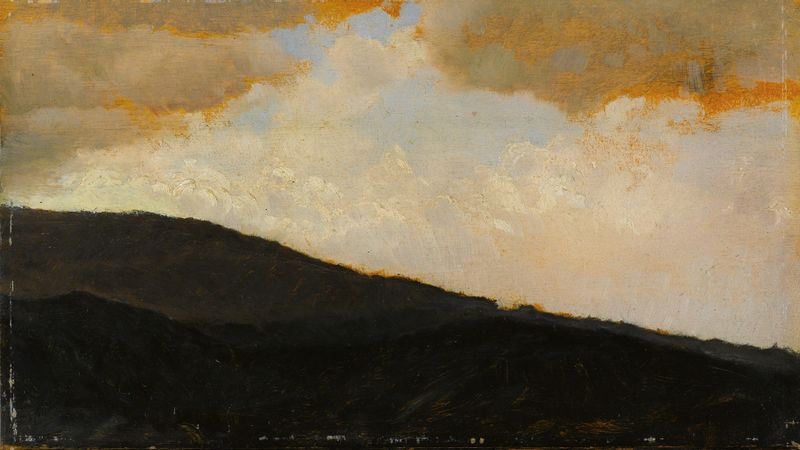
Veduta Del Vesuvio
Giuseppe De Nittis

Seelandschaft in der Umgebung von Neapel
Giuseppe De Nittis

Der Teich im Bois de Boulogne
Giuseppe De Nittis
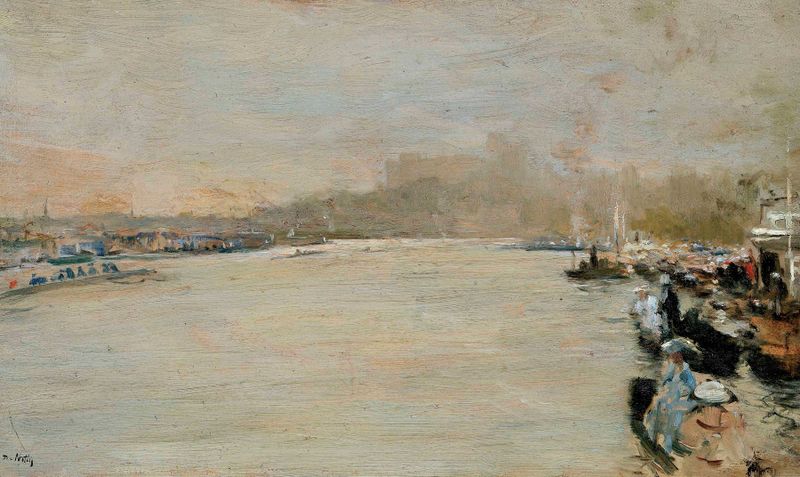
Le Regate sulla Senna
Giuseppe De Nittis

Der Teich im Bois de Boulogne
Giuseppe De Nittis





