
Der Teich im Bois de Boulogne — History & Facts
When did color learn to lie? The shadows in Der Teich im Bois de Boulogne beckon us into a world where light dances and deceives, intertwining reality with imagination. Look to the left at the tranquil pond, its surface a mirror reflecting the dappled sunlight filtering through the trees. The gentle brushwork creates a shimmering effect, pulling the eye toward the lush greens and vivid blues that seem to pulse with life. Notice how the darker hues creep in at the edges, hinting at the encroaching shadows that suggest an unspoken tension within this serene moment. The juxtaposition of light and dark is more than a mere play of color; it evokes the duality of nature itself.
The vibrant foliage contrasts sharply with the deeper shadows, revealing the underlying chaos that often accompanies tranquility. In the figures scattered throughout the scene, their postures reflect a momentary stillness, yet their blurred edges suggest that they too are caught in the interplay between presence and absence, reality and illusion. Giuseppe De Nittis painted this work around 1875, during his time in Paris, where he was heavily influenced by the Impressionist movement. At this point in his life, he was grappling with his identity as an artist amidst the rapid changes in the art world.
Emerging from the shadow of more established figures, he sought to capture the ephemeral beauty of the world around him, blending traditional techniques with the burgeoning freedom of expression that defined the era.
More Artworks by Giuseppe De Nittis
Browse all →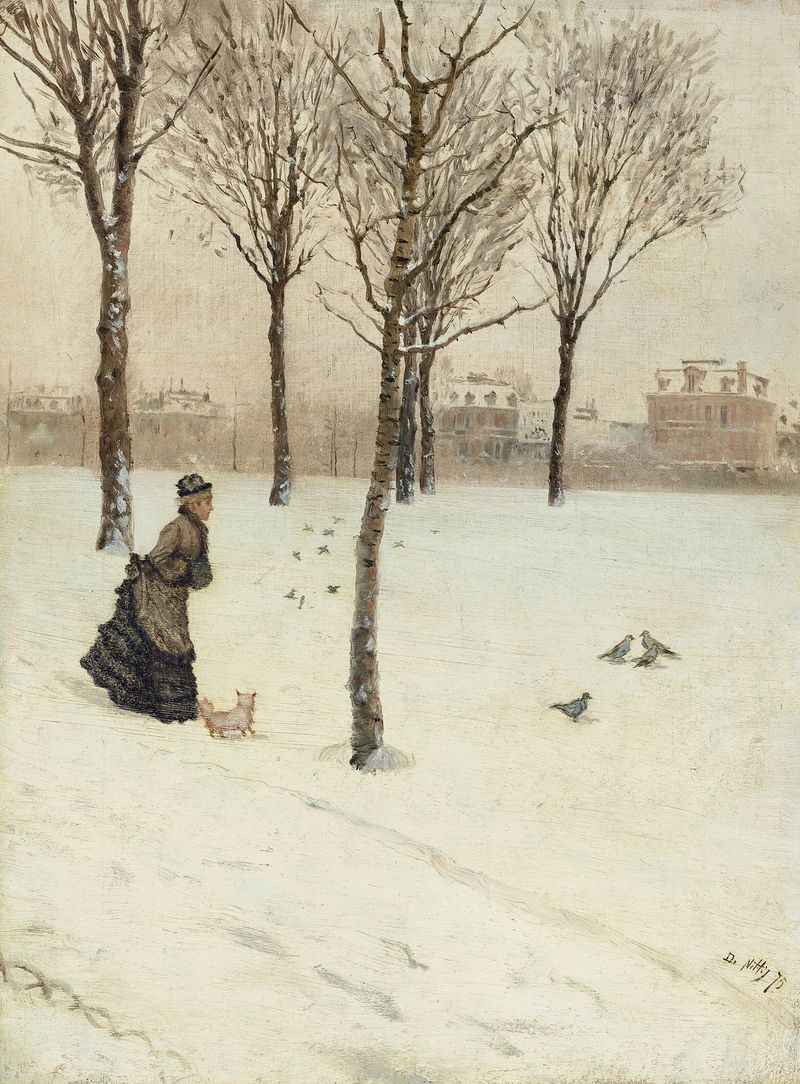
Signora sulla neve con cagnolino
Giuseppe De Nittis
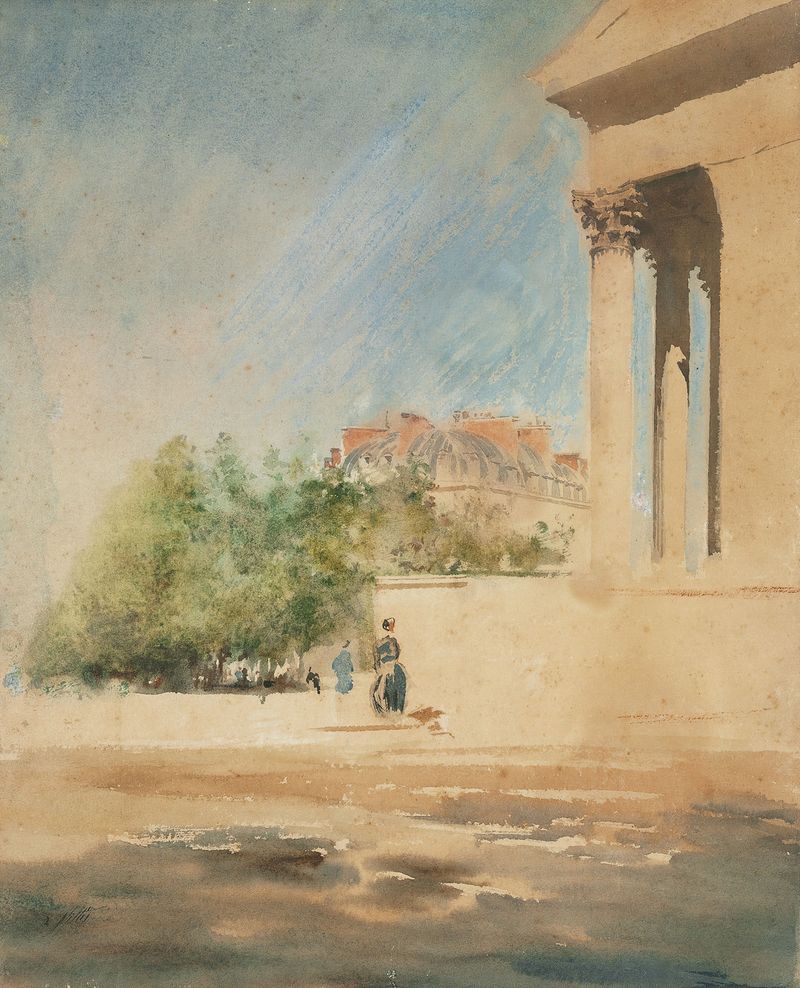
Place de la Madeleine
Giuseppe De Nittis
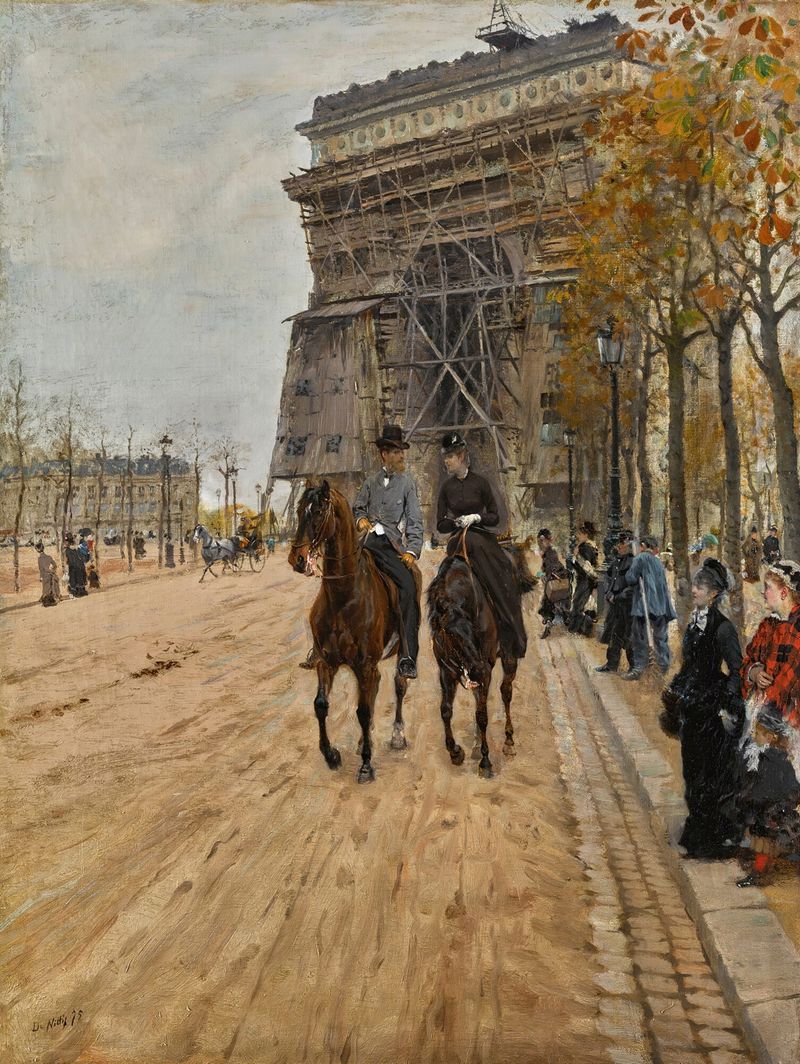
L’arc de Triomphe, Paris
Giuseppe De Nittis
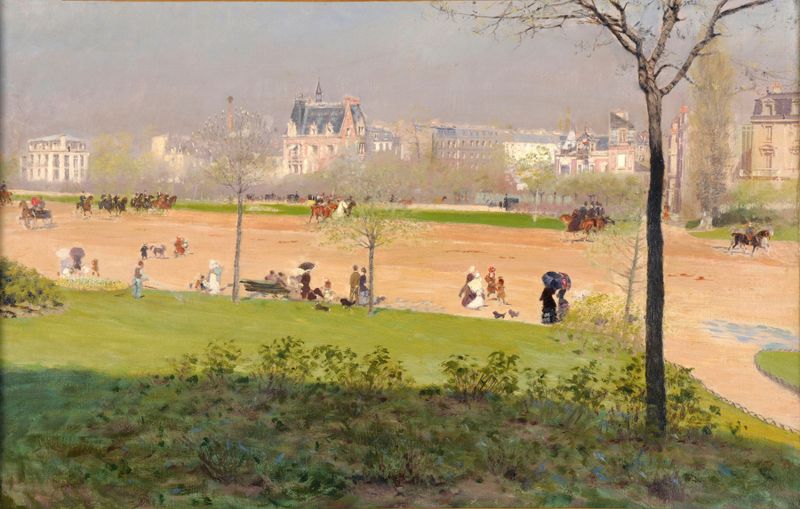
Avenue du Bois de Boulogne
Giuseppe De Nittis
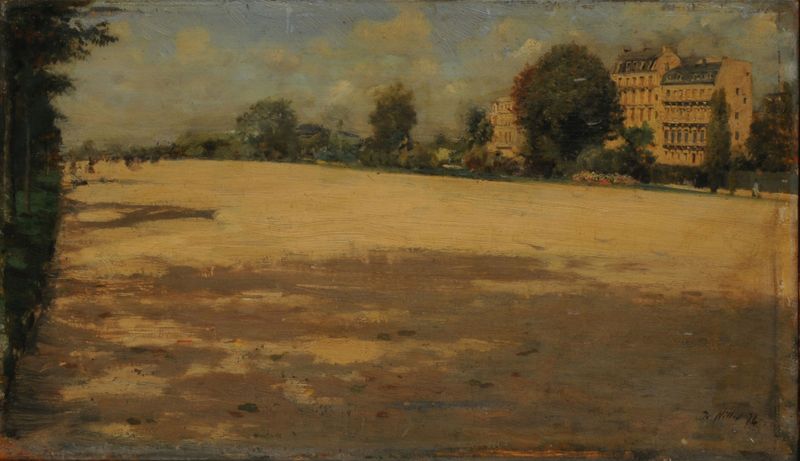
Paisaje (Avenue du Bois de Boulogne)
Giuseppe De Nittis
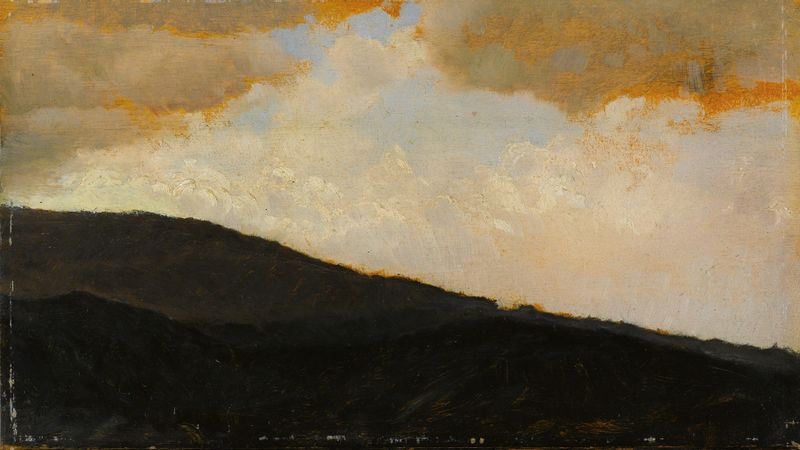
Veduta Del Vesuvio
Giuseppe De Nittis

Seelandschaft in der Umgebung von Neapel
Giuseppe De Nittis
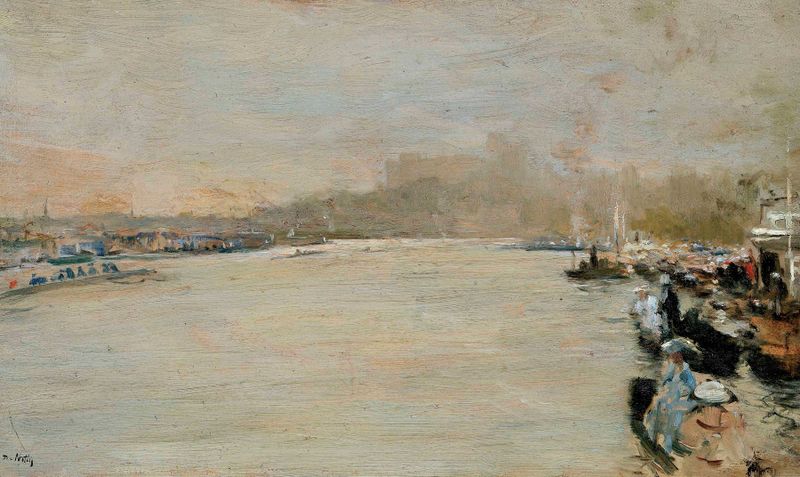
Le Regate sulla Senna
Giuseppe De Nittis
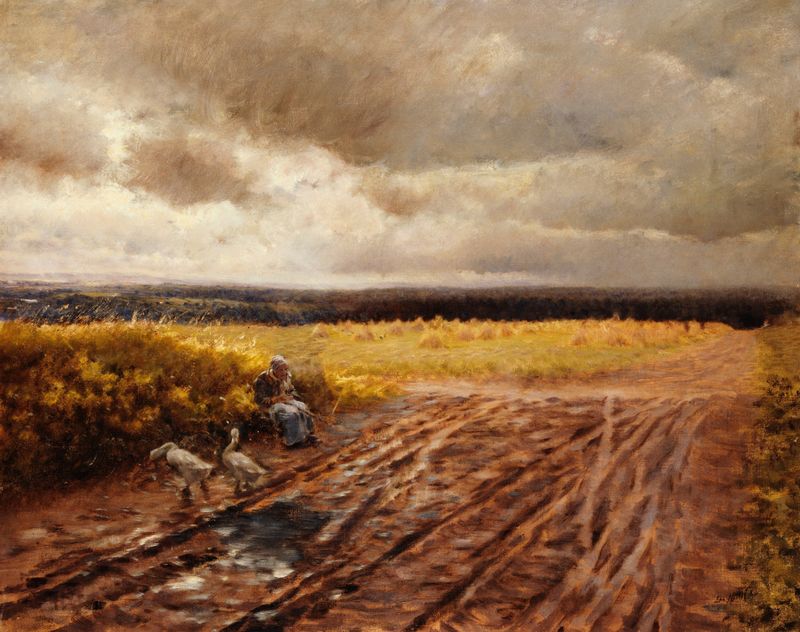
La gardeuse d’oies
Giuseppe De Nittis

Der Teich im Bois de Boulogne
Giuseppe De Nittis





