Design for a ceiling painting with the Apotheosis of Aeneas, in the corners the Four Seasons — History & Facts
When did color learn to lie? In moments of obsession, the hues we choose can deceive, weaving fantastical realities from mere pigments. Look to the center of the composition, where the grandeur of Aeneas emerges, bathed in celestial light. The artist's meticulous brushwork animates the figures, inviting your eyes to dance among them. Notice how the vibrant blues and warm golds contrast, creating a visual dialogue that speaks of triumph and divinity.
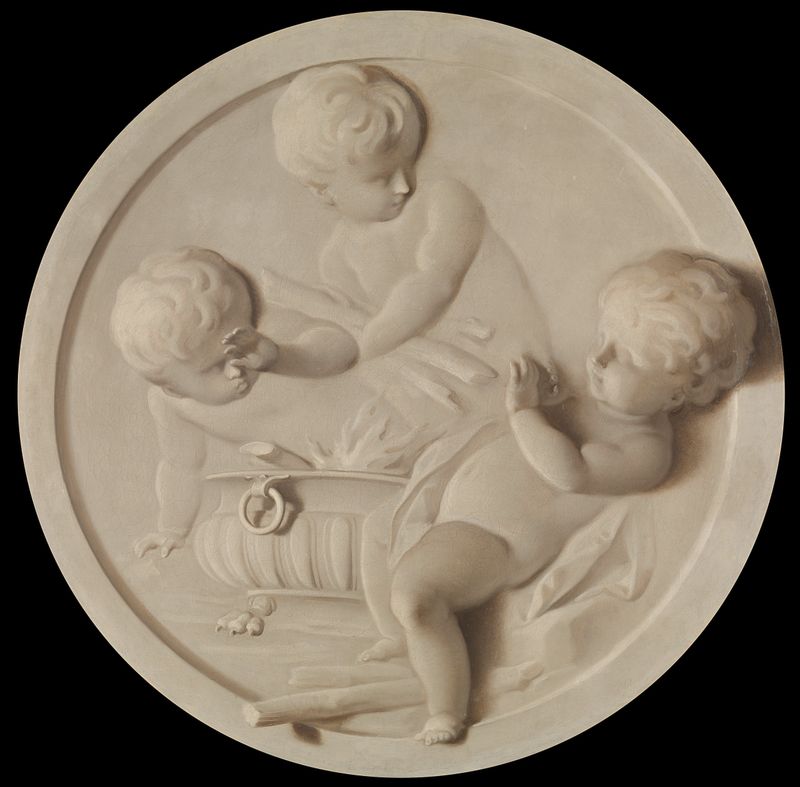
The Four Seasons, nestled in the corners, provide a structural embrace for the central narrative, their gentle curves guiding the viewer's gaze outward. Yet, beneath this ornate façade lies a more profound contemplation. The seasonal figures, each adorned with symbolic attributes, embody not just the passage of time but the cyclical nature of obsession itself—an endless return to the same desires. The opulence of the colors can evoke joy, but they also hint at the fleeting nature of glory, suggesting that even the most radiant moments are but whispers of what once was.
Each brushstroke carries weight, an echo of human longing and ambition. In the years around 1720 to 1725, Jacob de Wit was deeply immersed in the decorative arts in the Netherlands, influenced by the burgeoning Rococo style. Embracing grandeur and elegance, he aimed to elevate interior designs to new heights, reflecting both personal aspirations and the cultural zeitgeist. In a world where art began to shift from baroque solemnity to playful ornamentation, his work represents a pivotal moment of transition, marrying the ephemeral with the eternal.