Autumn Represented by Putti — History & Facts
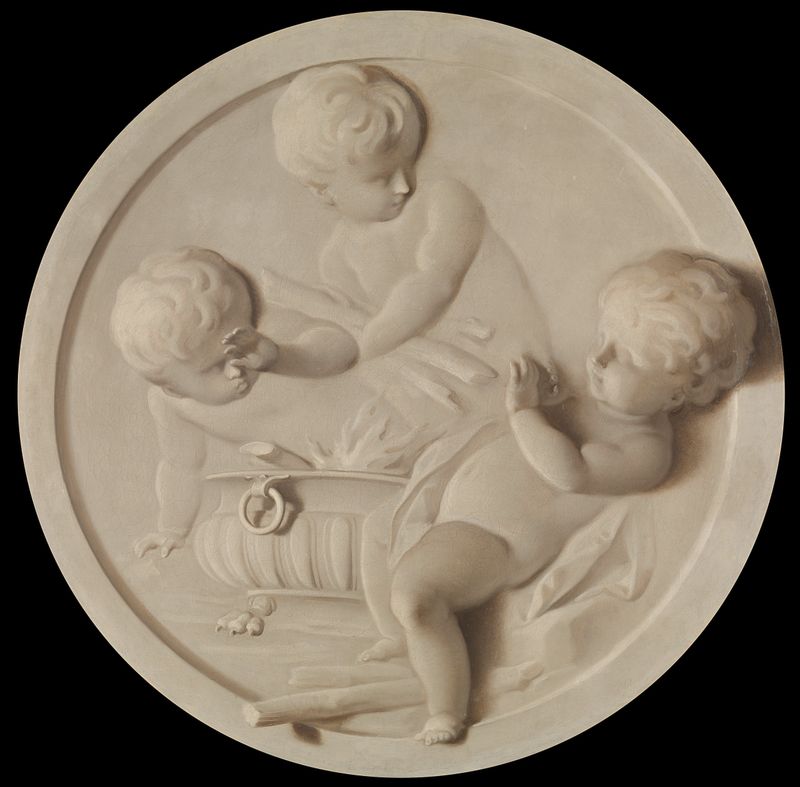
When did color learn to lie? In the world of Autumn Represented by Putti, the hues speak not simply of nature’s cycle but of an elusive void where reality bends. Each brushstroke beckons the viewer into a space that oscillates between the tangible and the ethereal, questioning the very essence of perception. Focus first on the central figures, the putti — cherubic children embodying the season’s bounty. Notice how their delicate forms contrast with the vibrant oranges and golds of autumn’s harvest.
The artist employs soft, swirling brushstrokes that mimic the gentle rustle of leaves, while the light filters through the composition, creating an interplay of warmth and shadow. This masterful blending of colors evokes a sense of nostalgia and tranquility, drawing the eye into a harmonious embrace. Yet, beneath this serene surface lies a tension between abundance and loss. The putti, playful yet wistful, suggest a fleeting joy, one that is tinged with the inevitability of change.
The juxtaposition of their innocence against the seasonal decay hints at the transient nature of life itself. This paradox reveals a deeper commentary on human emotion, as the beauty of autumn is never without its underlying sorrow — a reminder of what will soon fade into winter's grasp. Jacob de Wit painted Autumn Represented by Putti between 1745 and 1750 during a period when the Dutch art scene was embracing a revival of classicism and allegory. Emerging from an era steeped in intricate still lifes, he sought to blend mythological themes with the natural world.
His works often reflected the opulence of his time, capturing the delicate balance between pleasure and transience, mirroring both personal and collective experiences in a rapidly changing Europe.