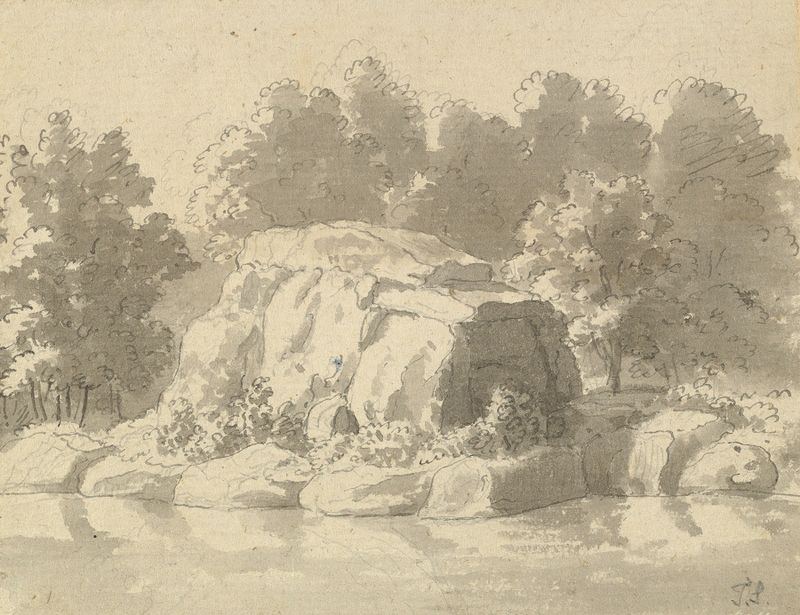
Design for Rock-work and Cascades at Virginia Water, Windsor Great Park — History & Facts
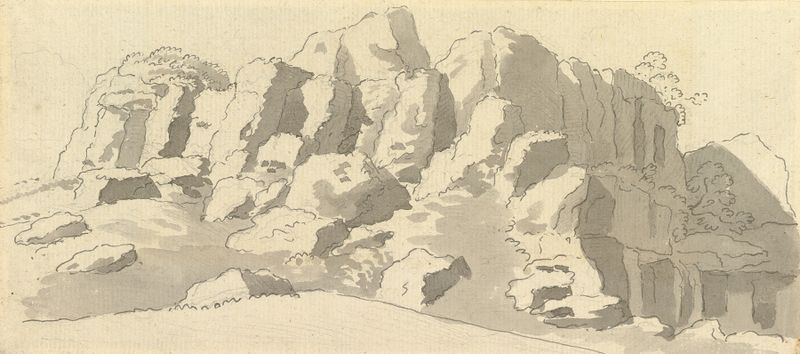
Did the painter know this moment would outlive them? In the delicate balance between nature and artistry, beauty finds a way to endure. Focus first on the intricate details within the foreground, where rough-hewn rock formations rise dramatically against the smooth, flowing water. Notice how the cascading streams tumble over the stones, the artist's skilled hand capturing the fluidity of movement and the contrasting textures of hard and soft. The palette is a harmonious blend of earthy browns and vibrant greens, evoking a sense of tranquility that invites the viewer into this serene landscape. Beneath the surface, the design reveals deeper meanings of harmony and the symbiosis between humanity and nature.
The careful arrangement suggests not just a visual feast but a contemplation of man’s desire to shape the natural world while being intimately connected to it. There’s an emotional tension present; the rocks embody permanence, while the water symbolizes change, urging us to ponder what is preserved and what flows away. In the 1780s, while living in England, the artist created this work during a time when landscape design was gaining prominence. As an influential figure in the development of picturesque gardening, he was deeply invested in blending nature with artistry.
This period reflected a growing appreciation for the beauty of natural settings, which informed his work and shaped the landscapes of parks like Windsor Great Park, where this design found its roots.