
The Moat Island, Windsor Great Park — History & Facts
Did the painter know this moment would outlive them? As the gentle ripples of the moat reflect a tranquil sky, Thomas Sandby captures a fleeting serenity that feels both eternal and fragile, evoking a quiet faith in the permanence of beauty. Look to the center at the idyllic island, framed by lush greenery and the soft embrace of the water. Here, the delicate play of light dances upon the surface, illuminating the rich textures of foliage and the subtle hues of the building nestled within. The harmonious palette, dominated by greens and earth tones, invites you to linger, while the composition draws your gaze towards the horizon, suggesting an invitation to explore beyond the canvas. Beneath the surface of this picturesque landscape lies a deeper contemplation.
The juxtaposition of the serene moat and the distant structures hints at a dialogue between nature and human creation, questioning whether one can ever truly dominate the other. The interplay of light and shadow evokes a sense of temporal transition, reminding viewers of the passage of time and the enduring faith in nature’s beauty amidst the encroachment of civilization. In the mid-18th century, Sandby painted this piece amid the evolving landscape of British art, marked by a shift towards naturalism and pastoral scenes. Working in Windsor Great Park, he sought to capture the essence of the English countryside during a period when artists began embracing the sublime beauty of their surroundings.
This work not only reflects his skill but also resonates with the artistic awakening occurring across Europe, driven by a newfound appreciation for landscape painting.
More Artworks by Thomas Sandby
Browse all →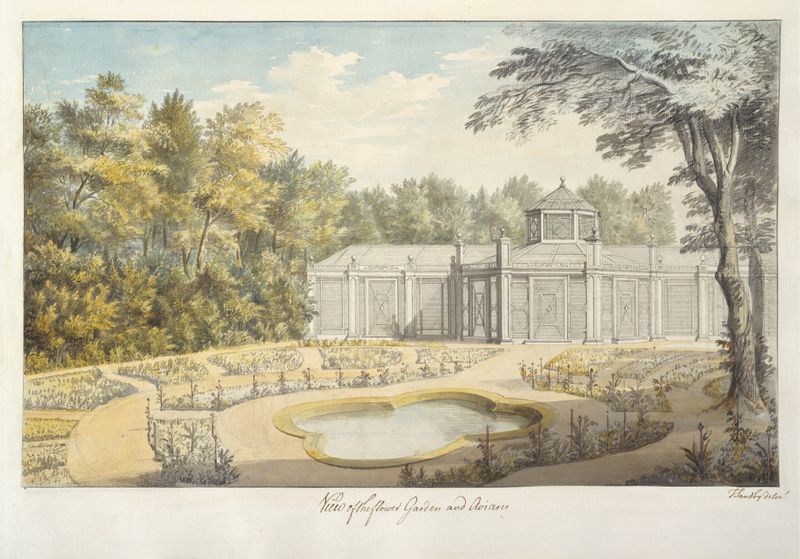
View of the Flower Garden and Aviary at Kew
Thomas Sandby
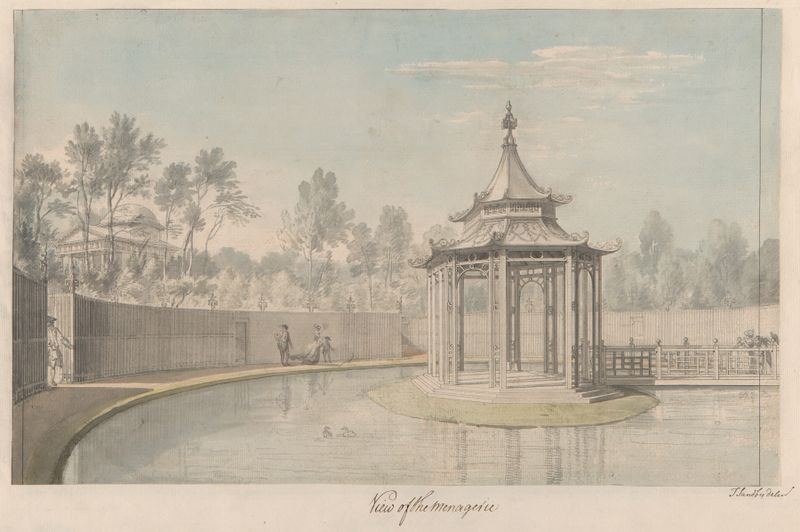
View of the Menagerie at Kew
Thomas Sandby
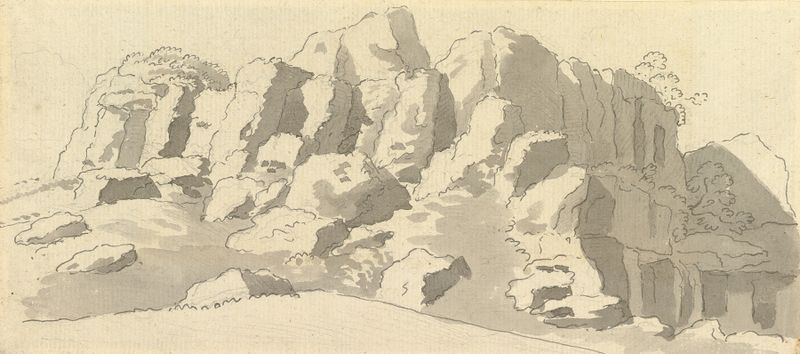
Design for Rock-work at Virginia Water, Windsor Great Park
Thomas Sandby
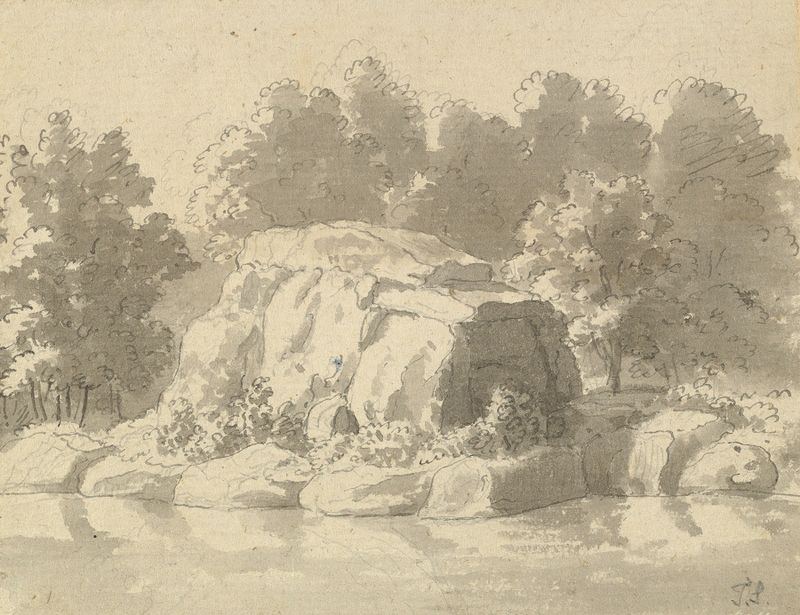
Design for Rock-work at Virginia Water, Windsor Great Park
Thomas Sandby
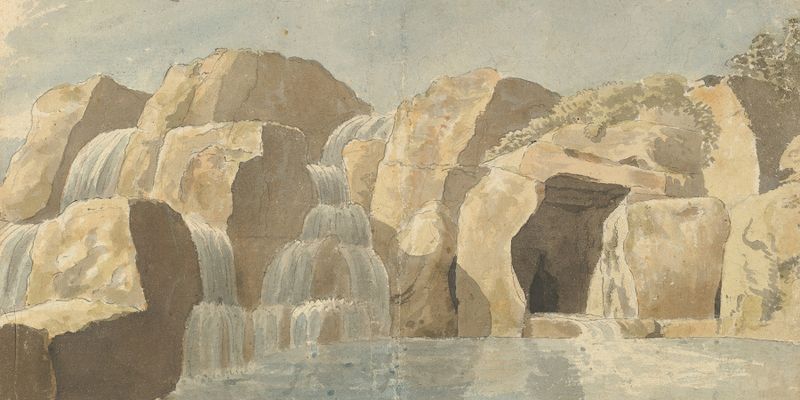
Design for Rock-work and Cascades at Virginia Water, Windsor Great Park
Thomas Sandby





