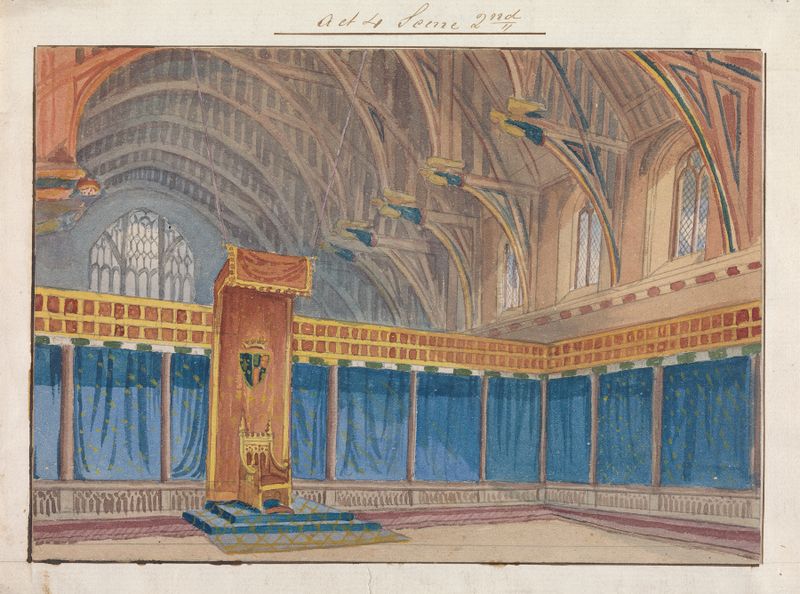
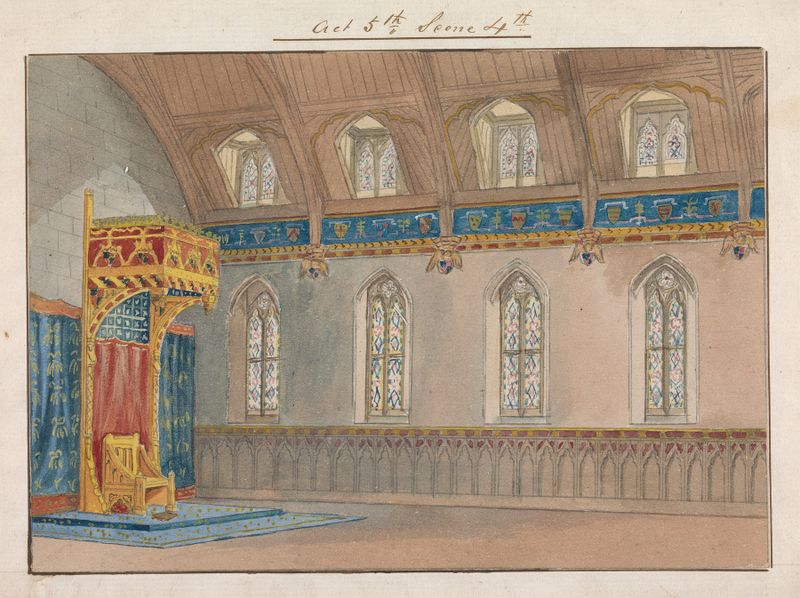
Design for Setting of Charles Kean’s Richard II at the Princess’s Theatre on March 12, 1857, Act 5, Scene 1 — History & Facts
When did color learn to lie? In a world where vibrant hues mask the ache of the heart, one must ponder the depths of loss hidden beneath the surface. Look to the heart of the composition, where intricate patterns unfold, revealing a stage set drenched in somber tones. Notice how the muted palette of blues and grays contrasts with fragments of brighter colors, hinting at the splendor that once was. The geometric shapes of the backdrop create a sense of confinement, echoing the emotional weight of the characters onstage — a visual metaphor for entrapment that draws the viewer in. As you explore further, consider the way light plays across the scene, illuminating some areas while casting others into shadow.
This creates a palpable tension, suggesting not only the struggle of the characters but also the ephemeral nature of their hopes and dreams. The meticulous details convey a narrative of loss, as the elaborate set design reflects the fading grandeur of a once-magnificent kingdom, forever marked by the passage of time and the inevitability of decline. Ellis created this setting for Richard II in a period when theatre was evolving, particularly in its use of design to evoke emotional resonance. The play premiered on March 12, 1857, at the Princess’s Theatre, a moment when the public sought deeper connections with performances.
In capturing the essence of loss through his design, the artist was responding to a broader cultural narrative of change and reflection in the world of art and theatre.