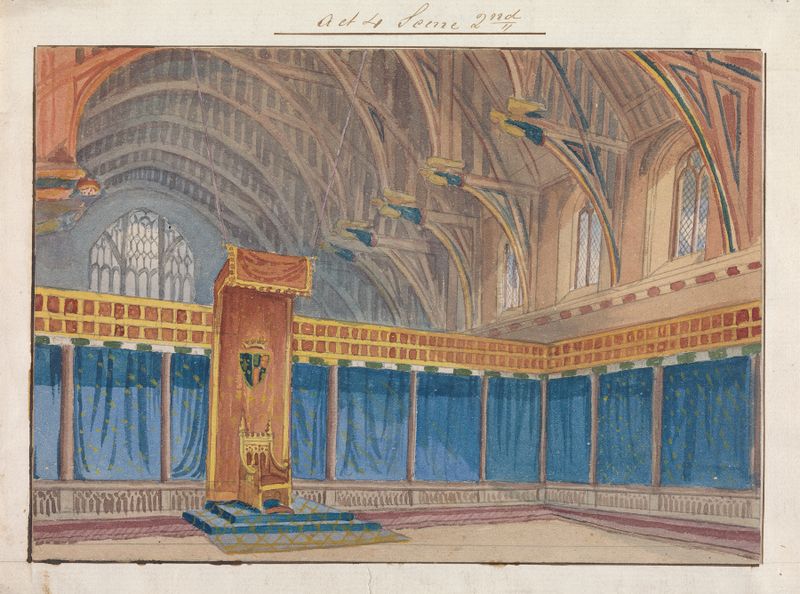
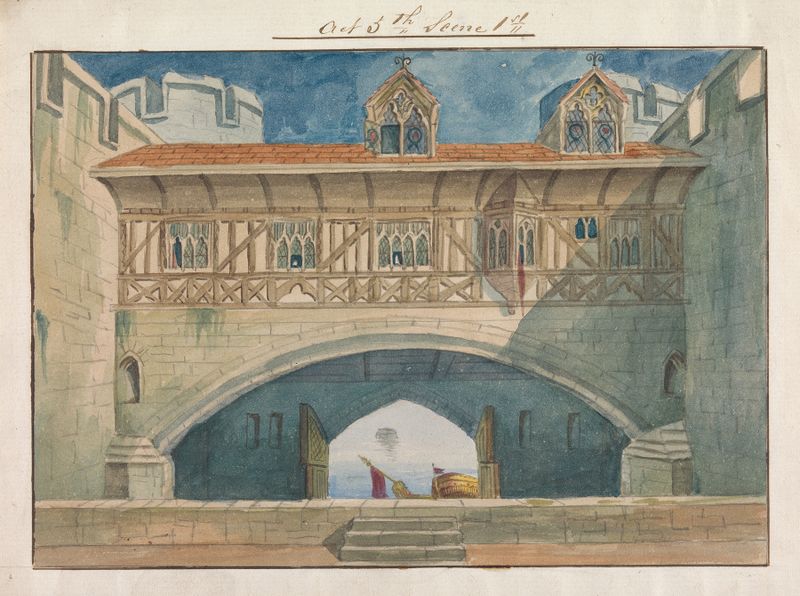
Design for Setting of Charles Kean’s Richard II at the Princess’s Theatre on March 12, 1857, Act 5, Scene 4 — History & Facts
In the hands of an artist, madness finds form, revealing the beauty hidden within turmoil. Look closely at the intricate details of this theater set design, where chaos and structure coexist in a delicate balance. Notice how the bold strokes of color swirl around the edges, enveloping the scene in a tumultuous atmosphere. The deep reds and ominous blacks pull the eye towards the center, where the raw energy of the performance takes shape.
Shadows dance upon jagged lines, suggesting a world on the brink of collapse, yet inviting the viewer to step deeper into the unfolding drama. The emotional tensions within this work speak volumes; the erratic brushwork alludes to the madness of Richard II himself. Each stroke embodies the discord between power and vulnerability, echoing the character’s tragic descent. The sharp contrasts highlight the fragility of life and authority, as if the very walls of the stage might buckle under the weight of ambition and despair.
This scene captivates with its juxtaposition of chaotic motion and the serene allure of theatricality, revealing that madness can be both beautiful and haunting. George Cressal Ellis crafted this design for Richard II in the mid-19th century, a time when the theatrical world was undergoing significant transformation. As England embraced greater dramatic depth, Ellis sought to capture the intricacies of Shakespearean tragedy through elaborate staging. This period was marked by a fascination with realism in theater, as audiences craved immersive storytelling that mirrored their own societal struggles.