Die Bereinigung im Blumistein — History & Facts
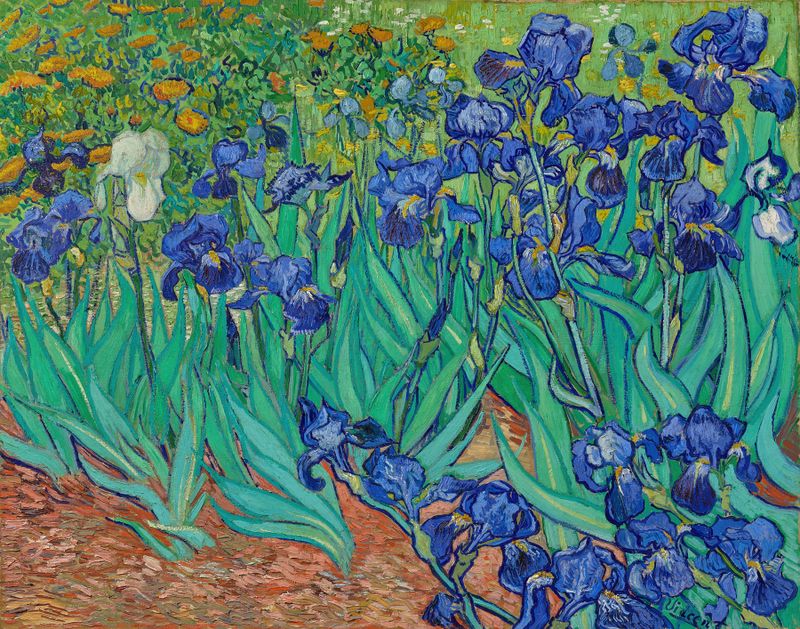
This quiet proclamation invites introspection, urging us to seek the realities veiled beneath vibrant hues and brooding shadows. It beckons us to explore the delicate interplay of emotions captured in painted moments, revealing what often lies unsaid. Look to the lower-left corner, where rich, earthy tones intertwine with soft petals, leading your gaze towards a luminescent bloom at the center. The contrasting palette — dark greens against bright whites — emphasizes the tension between life and decay.
Notice how Jenner employs texture; the brushstrokes are both deliberate and fleeting, as if the essence of the flower might dissipate at any moment, capturing the ephemeral nature of beauty. Yet, as you delve deeper, observe the gentle curve of a drooping stem and the scattered petals wilting at the edges. This signifies not just the passage of time, but the weight of unspoken truths that linger beneath the surface. The play of light across the canvas, where illumination dances delicately, evokes a sense of melancholy, suggesting that the beauty of existence is often intertwined with underlying sorrow. Created between 1915 and 1945, when the world was embroiled in conflict and existential crisis, this work reflects Emanuel Jenner's contemplative response to a tumultuous time.
Living in a Europe overshadowed by war, he sought solace in nature, immortalizing its fragility. As modernist sensibilities began to shift, Jenner's exploration of truth through subtle abstraction became a way to confront the chaos surrounding him, revealing a depth of emotion that resonates even today.