
Die Berge ‘Dois Irmaons’ am Meer — History & Facts
Could beauty survive in a century of chaos? In Die Berge ‘Dois Irmaons’ am Meer, the haunting landscape presents a poignant meditation on loss nestled within nature's embrace. The painting beckons us to reflect on the fragile interplay between tranquility and turmoil—an eternal question that resonates across time. Look to the foreground where gentle waves lap at the shore, inviting you to step closer. Notice the lush hills rising in the distance, painted with a palette that shifts from soft greens to deeper, melancholic blues.
The clouds, brushed with delicate whites and grays, hover above, creating a sense of impending change. This careful balance of light and shadow reveals not just a picturesque view but an emotional landscape that stirs questions about the very nature of existence. As you delve deeper, the quiet interaction between sea and mountain evokes the weight of what has been lost. The horizon serves as a metaphor for the unknown, a boundary between the safety of the land and the vastness of the ocean, symbolizing both hope and uncertainty.
Each element—the rolling hills, the soft waves—seems to whisper stories of what once was, inviting viewers to contemplate their own experiences of beauty and ache. Ferdinand Keller created this work in 1861, at a time when Europe was rife with political strife and social upheaval. Living in the tumult of a changing world, Keller sought solace in the natural world, reflecting both the serenity and the melancholy inherent in its beauty. This painting stands as a testament to his ability to capture the emotional undercurrents of his era, echoing the persistent quest for beauty amid chaos.
More Artworks by Ferdinand Keller
Browse all →
Markt in Rio
Ferdinand Keller
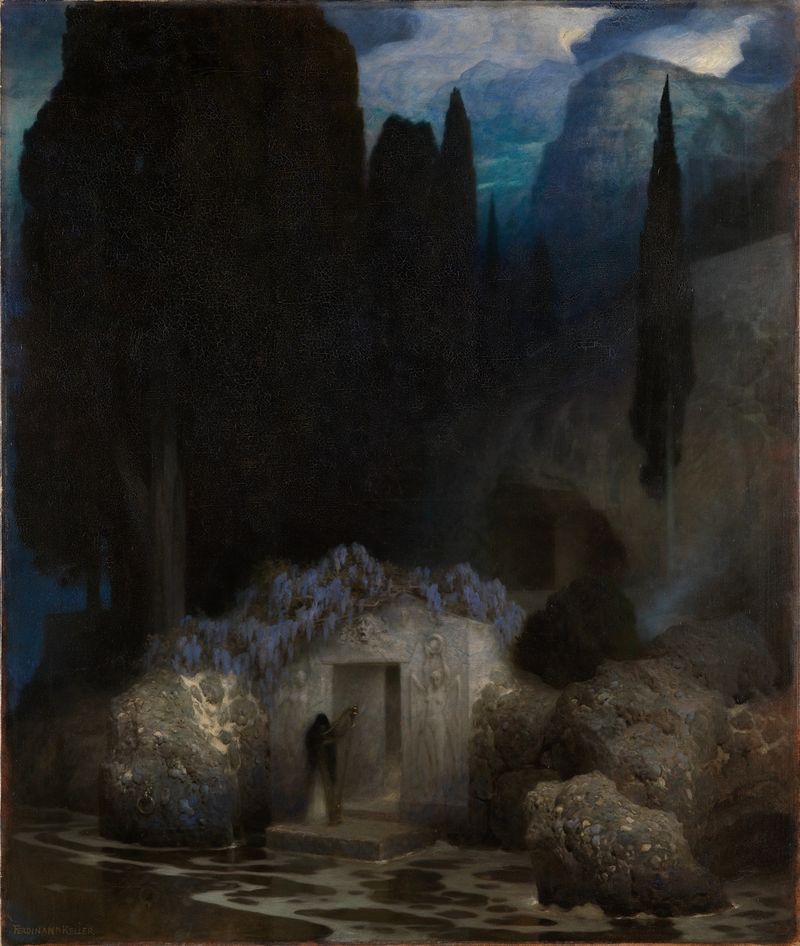
Böcklins Grab
Ferdinand Keller

Reisende in Brasilien
Ferdinand Keller
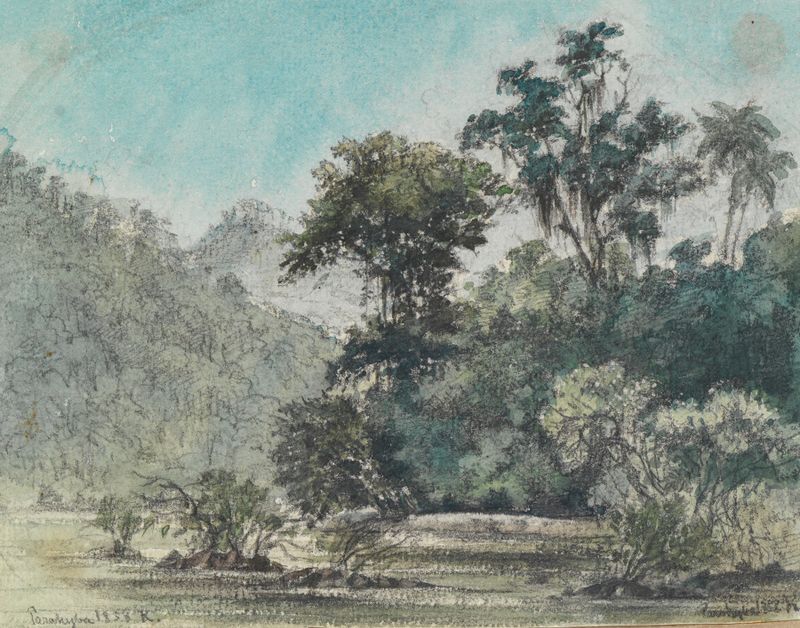
Blick auf das bewaldete Flussufer
Ferdinand Keller

Seestück- Segel und Ruderboote auf bewegtem Meer
Ferdinand Keller
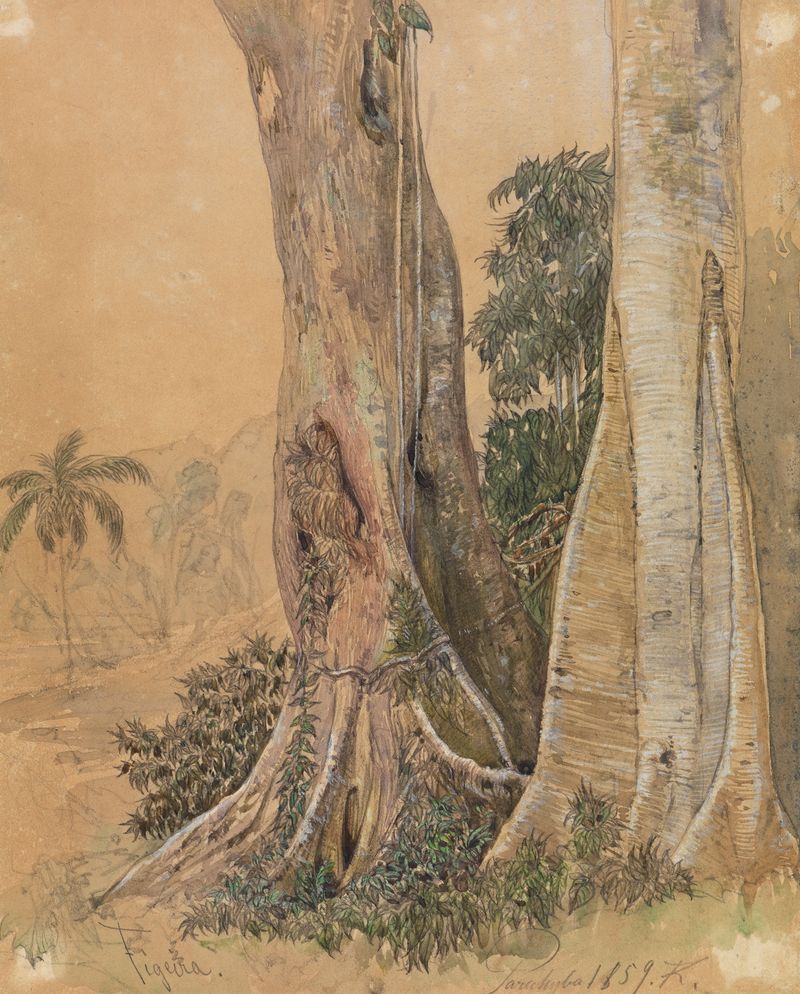
Figeira-Stämme am Ufer des Parahyba
Ferdinand Keller

Flusslauf mit aufragender Felswand
Ferdinand Keller
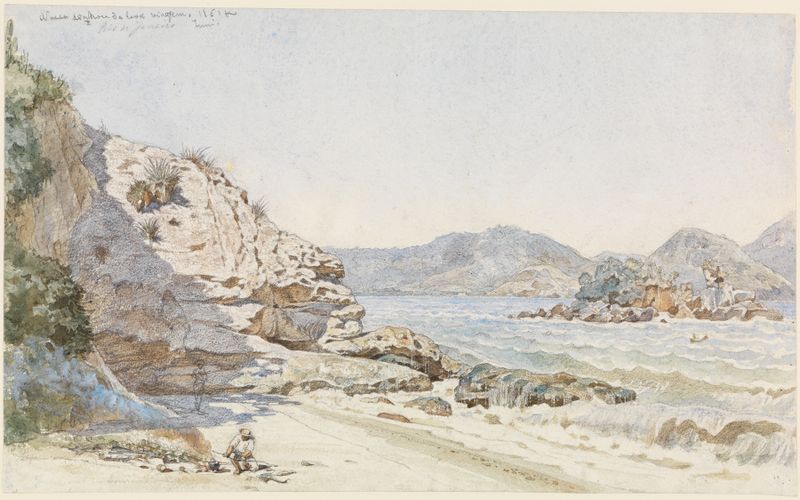
Meeresbucht bei Rio de Janeiro
Ferdinand Keller
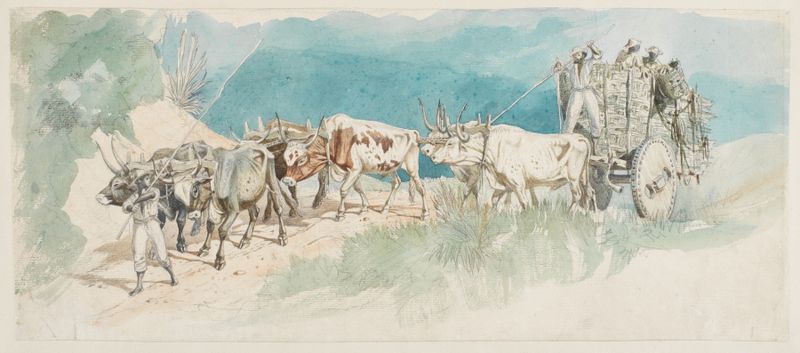
Zweiradgespann, von sechs Büffeln gezogen
Ferdinand Keller
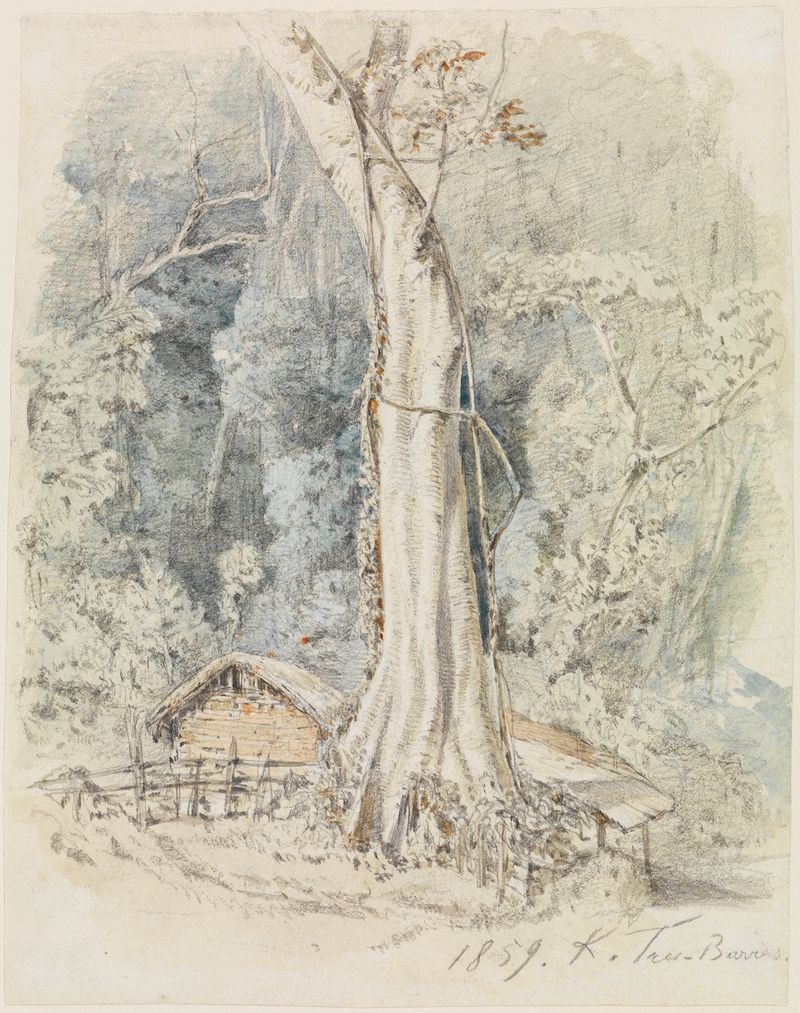
Haus mit Unterstand im Urwald bei Tres-Barras
Ferdinand Keller





