
Die Dächer von Wien — History & Facts
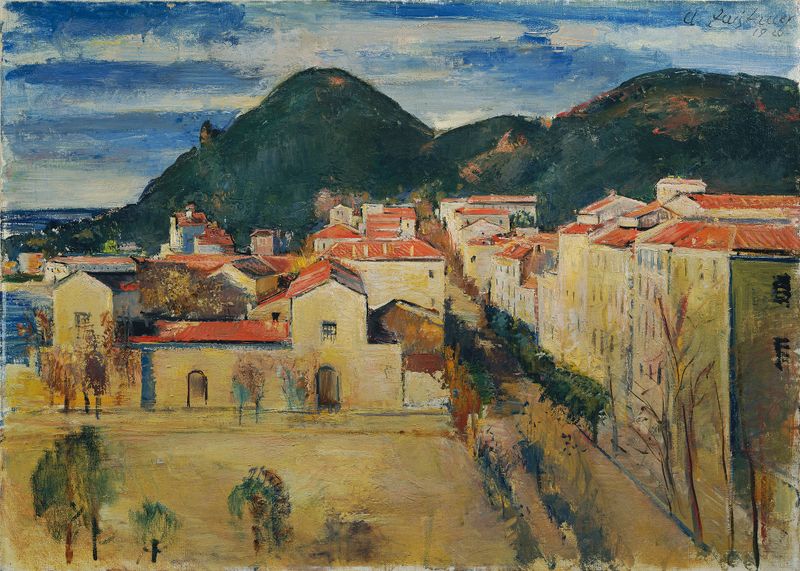
Could beauty survive in a century of chaos? This question looms large in the heart of Die Dächer von Wien, a work that captures the delicate interplay between destruction and renewal in a rapidly changing world. Look to the top left, where the rooftops of Vienna rise ambitiously against a backdrop of muted tones. Notice how Faistauer’s brushstrokes swirl with a certain energy, creating a vibrant tapestry of ochres and deep blues. The rooftops, jagged yet harmonious, seem to defy the encroaching shadows that linger at the edges, suggesting a resilient spirit.
The artist's use of light spills softly across the canvas, illuminating the promise of dawn—a symbol of rebirth amidst uncertainty. Within the layered textures, emotional tensions emerge: the contrast between the crumbling facades and the radiant sky embodies the struggle of a city reborn after the turmoil of the First World War. Each rooftop tells a story of survival, while the gentle hues whisper hope for the future, hinting at Vienna’s enduring artistic and cultural legacy. The thoughtful composition invites viewers to ponder the complexities of existence during such tumultuous times. Anton Faistauer painted Die Dächer von Wien in 1928 during a period of reflection for Austria, grappling with its recent past.
In the wake of war and political upheaval, artists sought to capture both the beauty and the scars of their environment. Faistauer was at the forefront of the Vienna Secession movement, which aimed to redefine art in a transforming society. His work reflects both a personal and collective yearning for peace, beauty, and a fresh start.
More Artworks by Anton Faistauer
Browse all →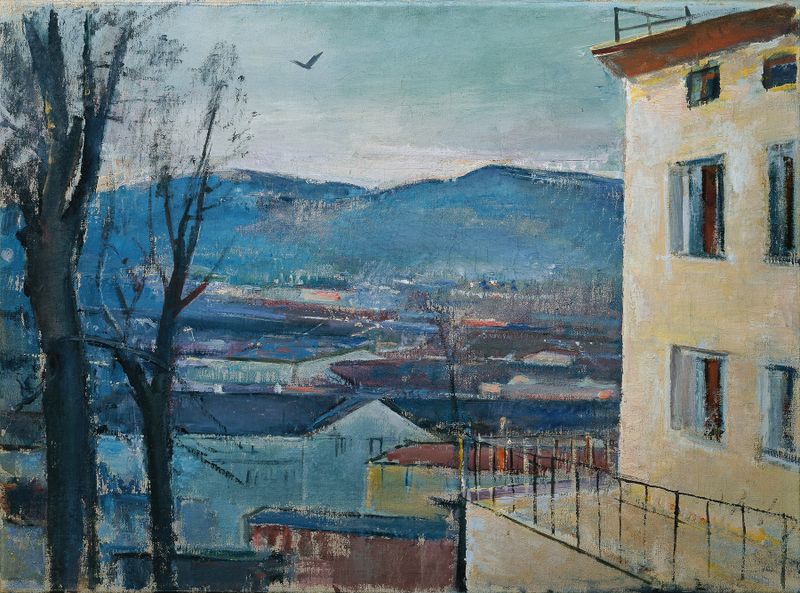
More Architecture Art
Browse all →
The statue of Liberty
Frédéric Auguste Bartholdi

View of Houses in Delft, Known as ‘The Little Street’
Johannes Vermeer

View of Houses in Delft, Known as ‘The Little Street’
Johannes Vermeer

The Cathedral in Rouen. The portal, Grey Weather
Claude Monet

The yellow house
Vincent van Gogh

The Church in Auvers-sur-Oise, View from the Chevet
Vincent van Gogh