Salzburger Abendlandschaft — History & Facts
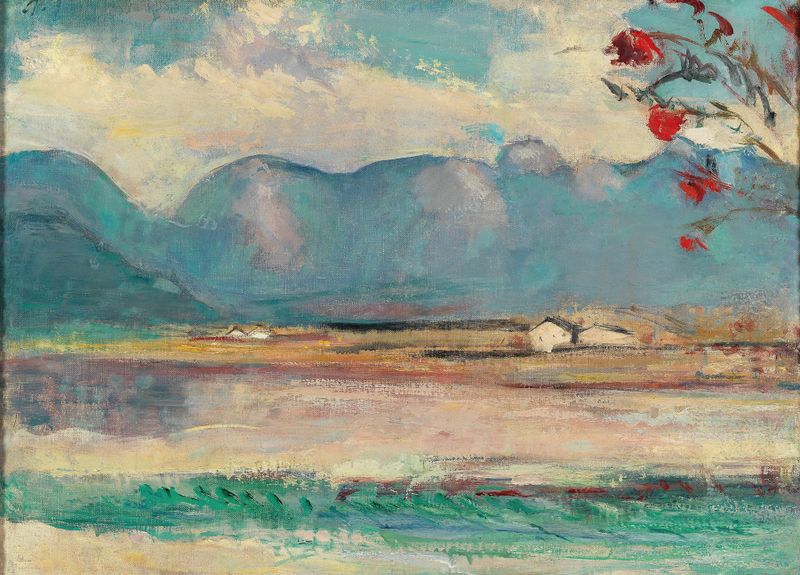
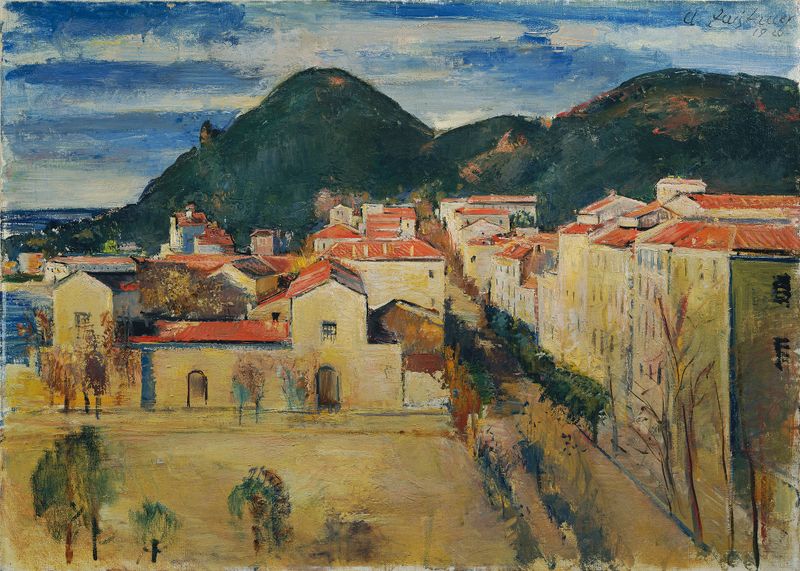
When did color learn to lie? In the canvas of Salzburger Abendlandschaft, hues dance and flicker, as if they hold the secrets of the twilight sky and the whispered stories of the mountains beneath. Look to the center, where the rich oranges and soft purples blend seamlessly as day surrenders to night. The horizon, painted with a delicate stroke, draws the viewer’s gaze outward, merging the shadows of the land with the glowing sky. Notice how the artist employs broad, sweeping brushstrokes to evoke movement, and the layering of color creates a palpable depth that invites contemplation and discovery. At first glance, the scene may appear tranquil, yet beneath the surface lies a tension between the luminous sky and the looming silhouettes of the mountains.
This contrast symbolizes the struggle between light and darkness, suggesting a transition not just in time, but in emotional states. The vibrant colors reflect hope, yet the darkened landscape hints at the inevitable encroachment of night, encapsulating the duality of existence itself. In 1924, Anton Faistauer was immersed in the burgeoning expressionist movement, creating works that sought to convey emotion through bold colors and forms. Living in Salzburg, he was influenced by the natural beauty of the Austrian landscape, which resonated deeply with his artistic voice.
This piece reflects both the personal and cultural shifts of the time, as artists explored new ways to express their relationship with the world around them.