
Häuser Am Hang — History & Facts
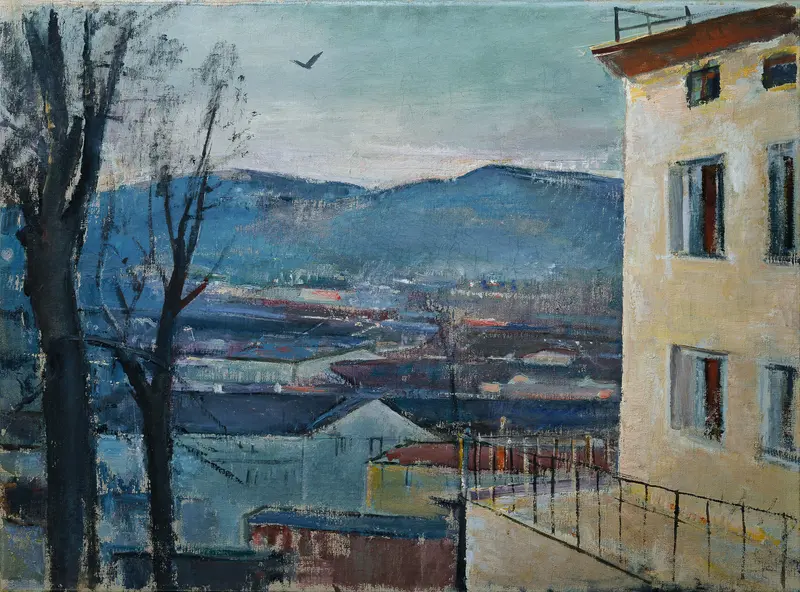
In its stillness, it embodies the fragile nature of existence, whispering secrets about the passage of time. Focus on the gentle slope that cradles the humble houses, their earthy tones merging with the landscape. Notice how the light dances across the rooftops, casting soft shadows that hint at the lives lived within. Each structure, with its weathered façade, tells a story of resilience and vulnerability amid encroaching nature.
The composition is a harmonious balance of earth and sky, evoking a sense of place that speaks to the fundamental human connection with our surroundings. Hidden within the seemingly serene tableau is a poignant tension between permanence and transience. The strength of the houses juxtaposes the encroaching greenery, suggesting a struggle against inevitable decay. The slight tilt of the roofs and the subtle play of light emphasize a world in flux, inviting contemplation of mortality and the fleeting nature of human endeavor.
Here, life continues, yet the inevitability of change looms, creating a space for reflection and emotional resonance. Anton Faistauer created this work in the early 20th century, during a time of profound transformation in Europe. Positioned in Austria, he painted amidst the growing influence of modernism, yet he remained deeply rooted in the tradition of landscape painting. As the world around him began to shift rapidly with the onset of urbanization and the looming shadows of war, his art reflected an enduring engagement with nature, capturing the delicate balance between humanity and the environment.
More Artworks by Anton Faistauer

More Landscape Art

The Starry Night
Vincent van Gogh

View of Delft
Johannes Vermeer

Water Lilies
Claude Monet

The Grand Canal, Venice, looking north-west from the Ca' Corner to the Ca' Contarini degli Scrigni, with the campanile of Santa Maria della Carità
Canaletto

Windsor Castle
Canaletto

The Grand Canal looking North-East from the Palazzo Dolfin-Manin to the Rialto Bridge
Canaletto