
Die Schwendergasse In Wien Mit Schwenders Colosseum — History & Facts
Did the painter know this moment would outlive them? Die Schwendergasse In Wien Mit Schwenders Colosseum captures a fleeting scene from a bygone era, evoking a sense of nostalgia that resonates deeply within us all. Look to the left at the elegantly detailed architecture, where intricate facades rise against a soft, warm palette. The sun casts a golden glow, illuminating the cobblestone streets and creating shadows that dance playfully beneath the awnings. Notice the figures meandering through the scene; their gestures hint at stories untold, moments shared, and dreams whispered in the bustling heart of Vienna.
Each brushstroke reveals the artist’s meticulous attention to light and color, inviting your eye to explore the layers of urban life. Beneath the surface, the painting’s emotional weight lies in the contrast between the vibrancy of city life and the inevitable passage of time. The joyful bustle signifies a thriving culture, while the careful rendering of the structures suggests an awareness of fleeting beauty. The Colosseum looms large, symbolizing both pride in architectural achievement and the impermanence of human endeavors.
Here, nostalgia intertwines with a sense of loss, as the viewer grapples with the reality that such moments, while immortalized, exist only in memory. In 1897, during a period rich with artistic innovation in Vienna, Ernst Graner painted this work when the city was a hub of cultural and intellectual activity. As he navigated his own artistic path, the rise of modernism challenged traditional forms, yet Graner remained committed to capturing the essence of daily life. His work stands as a testament to a time of change, a bridge between the past and an uncertain future.
More Artworks by Ernst Graner
Browse all →
The Departure of Emperor Francis Joseph, near the Schweizertor in Hofburg residence
Ernst Graner

Old Albrechtsplatz (today Albertinaplatz) in Vienna with the Philipphof and the Mozart monument
Ernst Graner
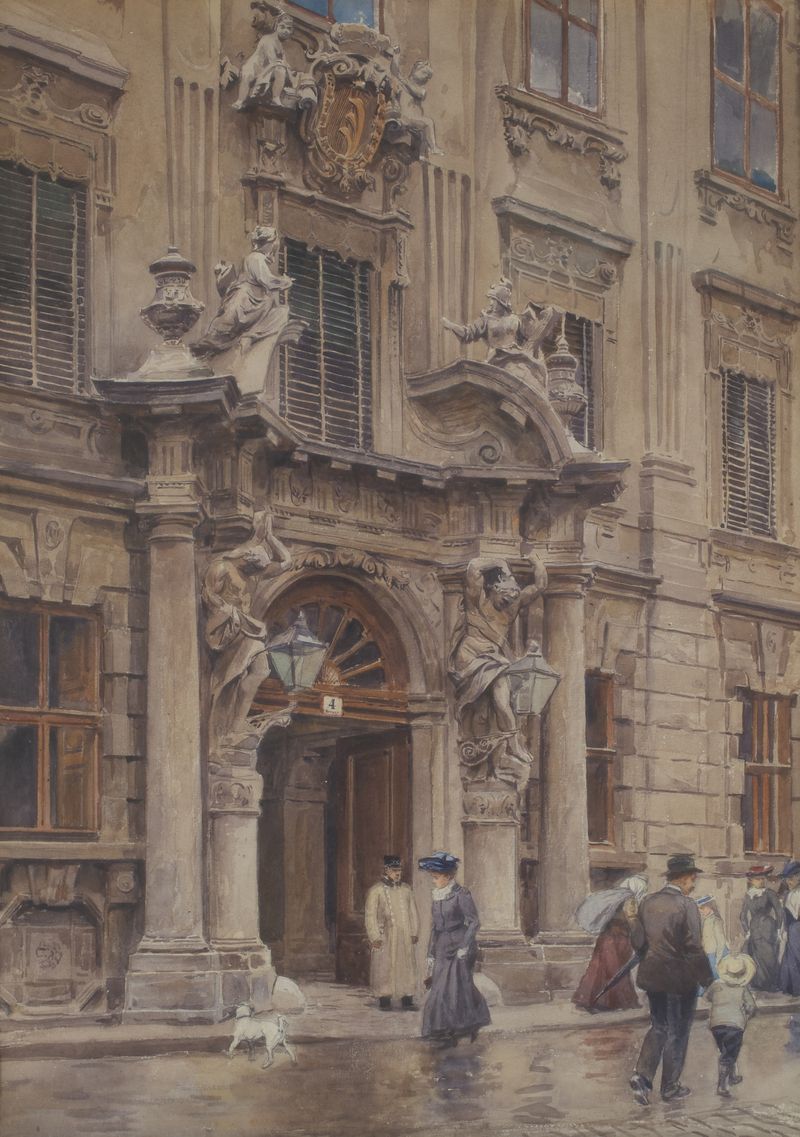
Das Portal Des Palais Kinsky
Ernst Graner
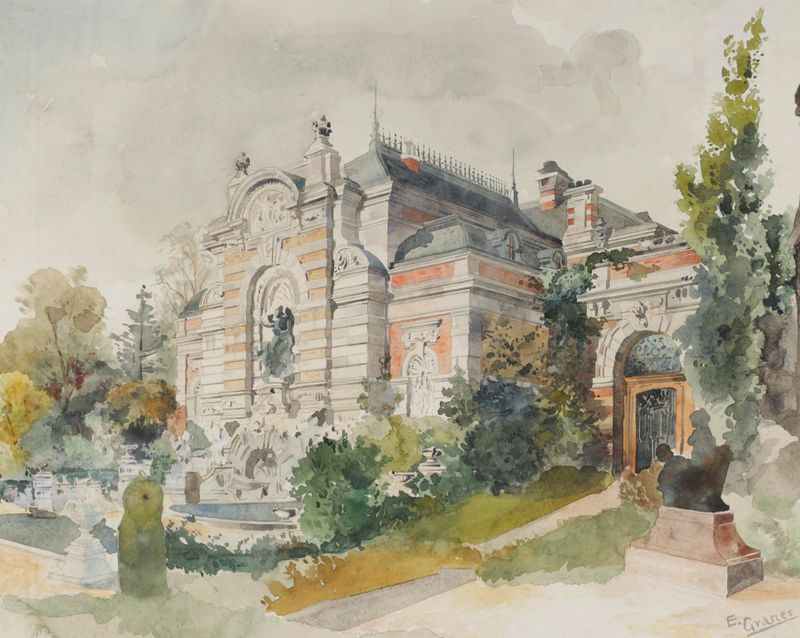
Villa in einem Park
Ernst Graner

Karlskirche
Ernst Graner

Kaiser Franz Joseph überquert den Naschmarkt
Ernst Graner

Palais des Prinzen Eugen in der Himmelpfortgasse
Ernst Graner
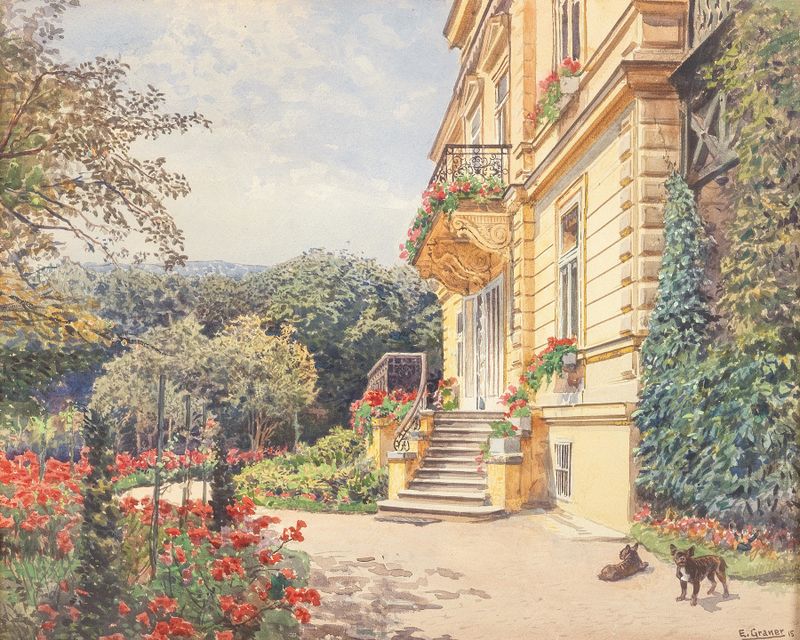
Villa in gepflegtem Garten
Ernst Graner
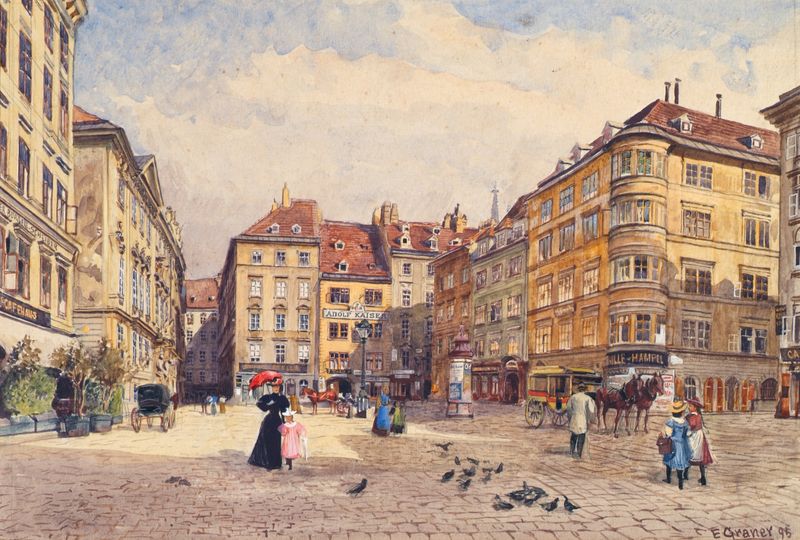
Der Judenplatz In Wien
Ernst Graner

A ‘Fiaker’ (horse-drawn carriage) near Franziskaner church
Ernst Graner
More Architecture Art
Browse all →
The statue of Liberty
Frédéric Auguste Bartholdi

View of Houses in Delft, Known as ‘The Little Street’
Johannes Vermeer

View of Houses in Delft, Known as ‘The Little Street’
Johannes Vermeer

The Cathedral in Rouen. The portal, Grey Weather
Claude Monet

The yellow house
Vincent van Gogh

The Church in Auvers-sur-Oise, View from the Chevet
Vincent van Gogh