
Palais des Prinzen Eugen in der Himmelpfortgasse — History & Facts
Can beauty exist without sorrow? In Palais des Prinzen Eugen in der Himmelpfortgasse, the delicate interplay of light and shadow invites this haunting question, beckoning us to explore the depths of its serene facade. Look closely at the gentle curves of the building’s architecture, where soft shadows dance alongside luminous highlights. The muted palette of soft blues and warm creams creates a tranquil atmosphere, drawing the eye upward towards the intricate details adorning the structure. Notice how the light filters through tree branches, casting playful patterns on the cobblestones below, subtly guiding your gaze across the composition and revealing the harmony between nature and man-made beauty. Yet, beneath this calm exterior lies a tension between light and shadow, hinting at stories untold.
The deep shadows evoke a sense of melancholy, suggesting that every beautiful moment is underpinned by a whisper of loss or longing. The architectural splendor, while inviting, also serves as a reminder of the transient nature of beauty itself and the inevitable decay that shadows even the grandest of structures. Ernst Graner painted this work in 1910 during a time when Vienna was a flourishing hub of culture and innovation. Living in an era of artistic experimentation, Graner’s emphasis on light and architectural form reflects the burgeoning interest in the aesthetics of modernity.
As a member of the Vienna Secession, he engaged with contemporary movements while capturing the elegance of his city's unique historical fabric, placing this piece firmly within the dialogue of early 20th-century art.
More Artworks by Ernst Graner
Browse all →
The Departure of Emperor Francis Joseph, near the Schweizertor in Hofburg residence
Ernst Graner

Old Albrechtsplatz (today Albertinaplatz) in Vienna with the Philipphof and the Mozart monument
Ernst Graner
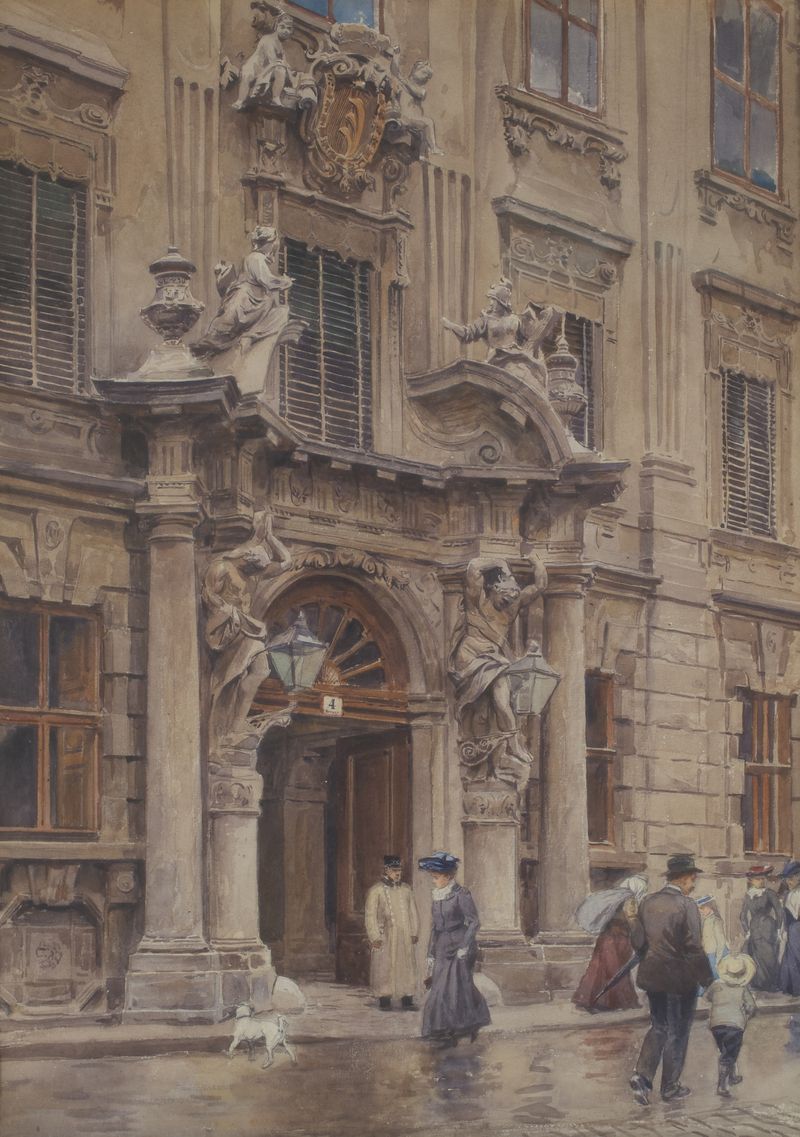
Das Portal Des Palais Kinsky
Ernst Graner
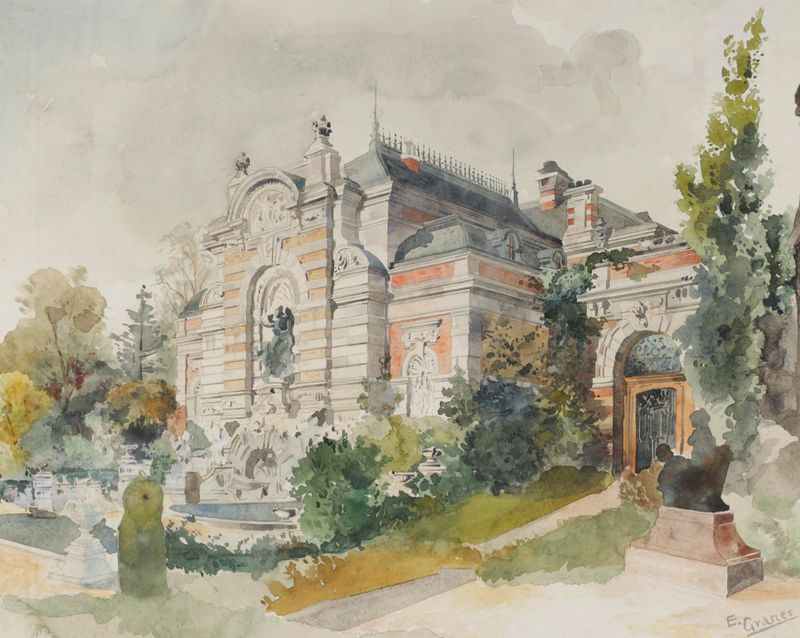
Villa in einem Park
Ernst Graner

Karlskirche
Ernst Graner

Kaiser Franz Joseph überquert den Naschmarkt
Ernst Graner

Die Schwendergasse In Wien Mit Schwenders Colosseum
Ernst Graner
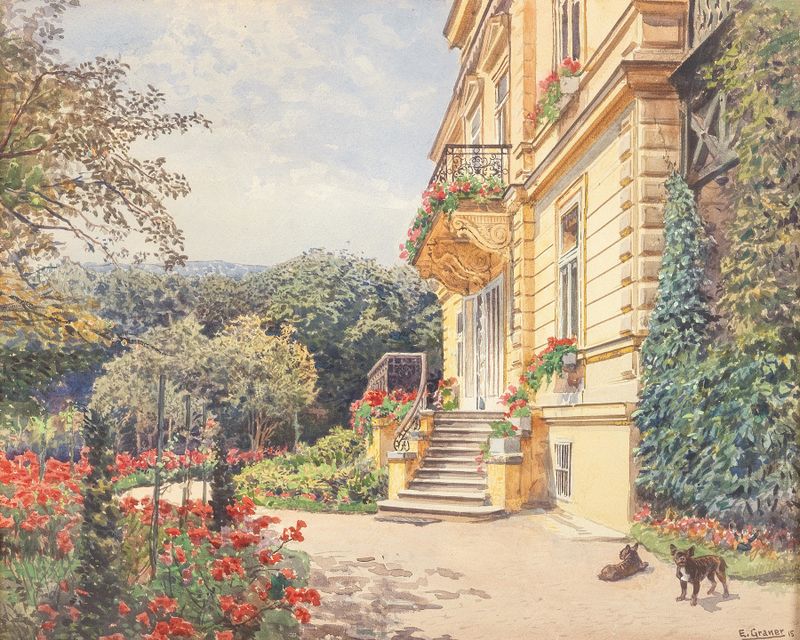
Villa in gepflegtem Garten
Ernst Graner
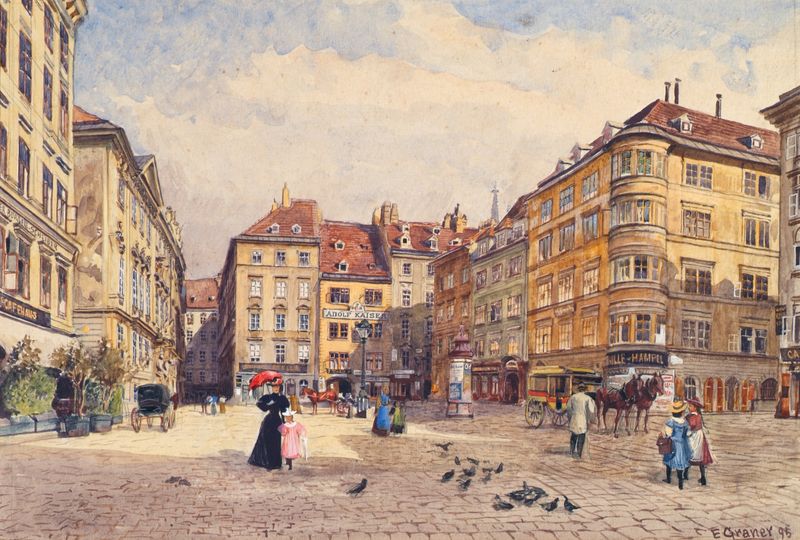
Der Judenplatz In Wien
Ernst Graner

A ‘Fiaker’ (horse-drawn carriage) near Franziskaner church
Ernst Graner
More Architecture Art
Browse all →
The statue of Liberty
Frédéric Auguste Bartholdi

View of Houses in Delft, Known as ‘The Little Street’
Johannes Vermeer

View of Houses in Delft, Known as ‘The Little Street’
Johannes Vermeer

The Cathedral in Rouen. The portal, Grey Weather
Claude Monet

The yellow house
Vincent van Gogh

The Church in Auvers-sur-Oise, View from the Chevet
Vincent van Gogh