
Die Seekirche Hl. Kreuz in Mösern bei Seefeld in Tirol — History & Facts
It speaks volumes about the profound stillness captured in this remarkable piece. The emptiness of the canvas beckons us to explore what lies beneath the surface, hinting at the weight of solitude and the sacredness of space. Look to the foreground, where the church stands resolutely against a backdrop of tranquil hills. The delicate blues and greys of the sky blend seamlessly into the muted earth tones surrounding the structure, creating a harmonious balance.
Notice how the light softly engulfs the church's silhouette, casting long shadows that stretch across the scene, emphasizing its isolation and inviting contemplation. The composition feels deliberate, as each element guides the viewer's gaze towards the steeple, a solitary beacon amidst the vastness. Delving deeper, the emptiness surrounding the church resonates with a sense of introspection. The absence of figures amplifies the solitude, inviting one to ponder the relationship between the human spirit and the sacred.
This emptiness is not merely a void; it speaks to the yearning for connection in an increasingly fragmented world. The juxtaposition of the strong architectural lines and the soft, expansive landscape further highlights the tension between man-made structures and the natural world, suggesting a dialogue that transcends time. In 1932, Otto Geigenberger painted this scene as Europe stood at the brink of monumental change. Living in Germany, he was influenced by the complex interplay of tradition and modernity in art, and the looming shadows of political upheaval.
This painting reflects not only a personal vision but also the collective consciousness of a society grappling with uncertainty, embodying both a physical structure and an emotional landscape in its quiet yet powerful stillness.
More Artworks by Otto Geigenberger
Browse all →
Hohe Munde bei Seefeld in Tirol
Otto Geigenberger
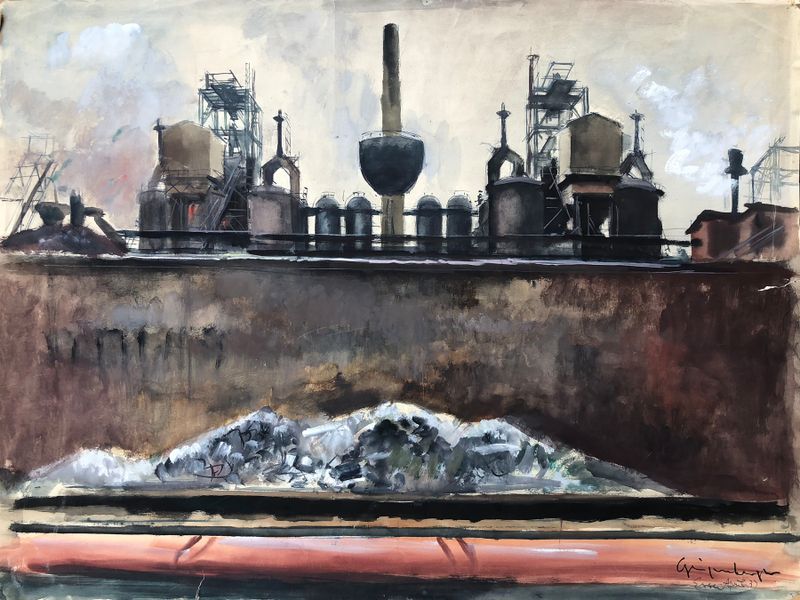
Stahlwerk Krupp in Essen
Otto Geigenberger

Landschaft mit Kirche
Otto Geigenberger

Passau am Inn 2
Otto Geigenberger
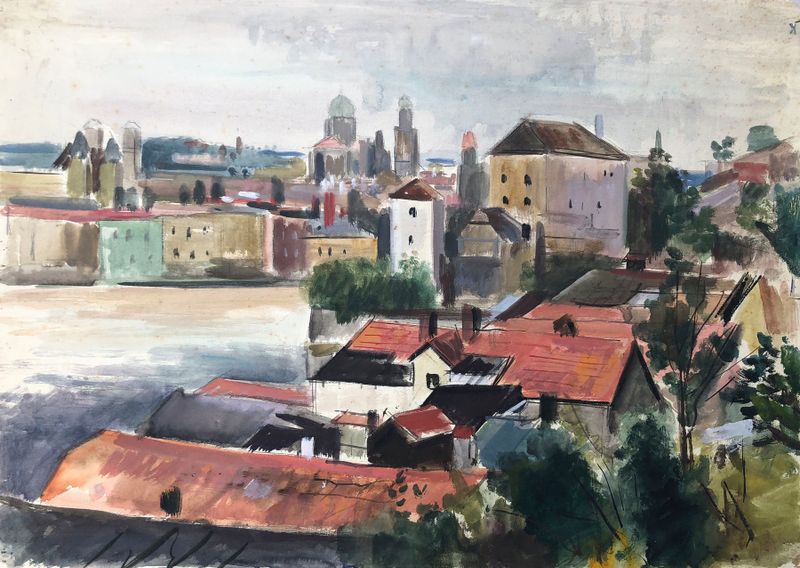
Passau am Inn
Otto Geigenberger
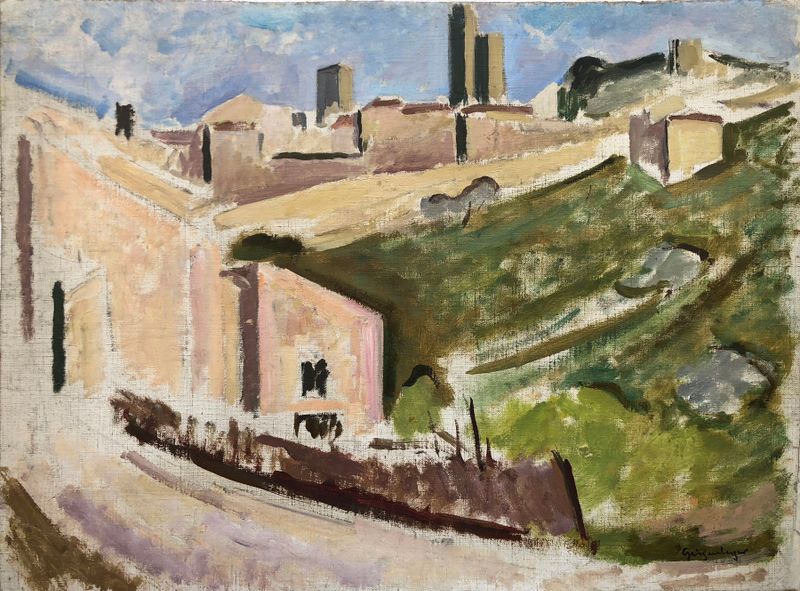
Südliche Stadt auf einem Hügel
Otto Geigenberger

Wasserburg am Inn – Häuserpartie am Inn
Otto Geigenberger

Wasserburg am Inn – Innfront
Otto Geigenberger
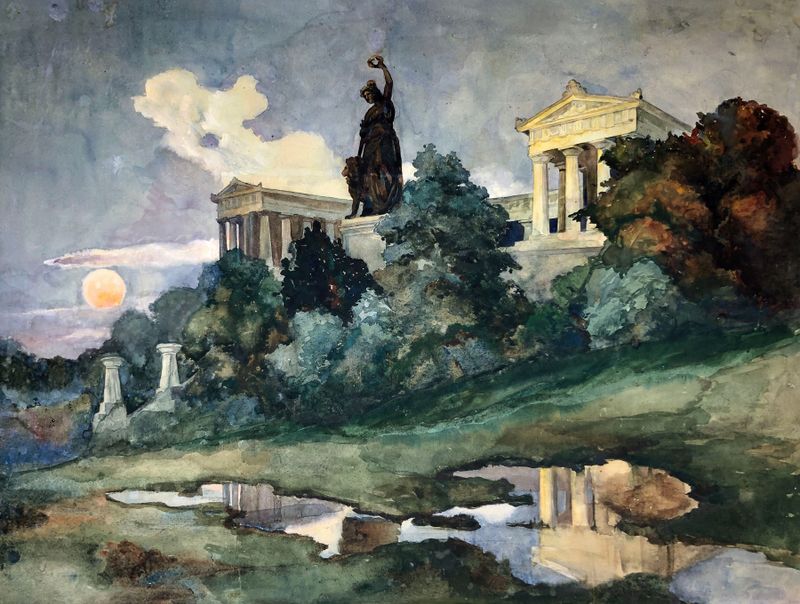
Sonnenuntergang an der Bavaria und Ruhmeshalle in München
Otto Geigenberger
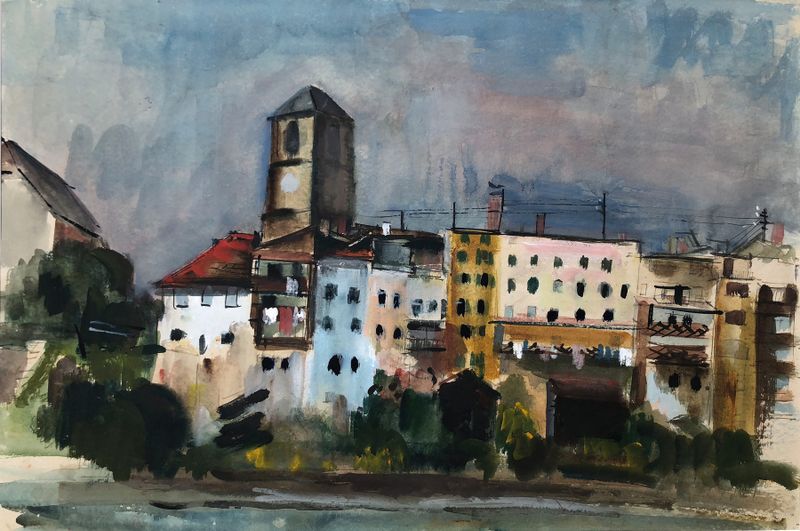
Wasserburg am Inn – Innfront.
Otto Geigenberger
More Architecture Art
Browse all →
The statue of Liberty
Frédéric Auguste Bartholdi

View of Houses in Delft, Known as ‘The Little Street’
Johannes Vermeer

View of Houses in Delft, Known as ‘The Little Street’
Johannes Vermeer

The Cathedral in Rouen. The portal, Grey Weather
Claude Monet

The yellow house
Vincent van Gogh

The Church in Auvers-sur-Oise, View from the Chevet
Vincent van Gogh