Die Weissgärber Lände in Wien mit dem Donau-Dampfschiffahrtsgebäude — History & Facts
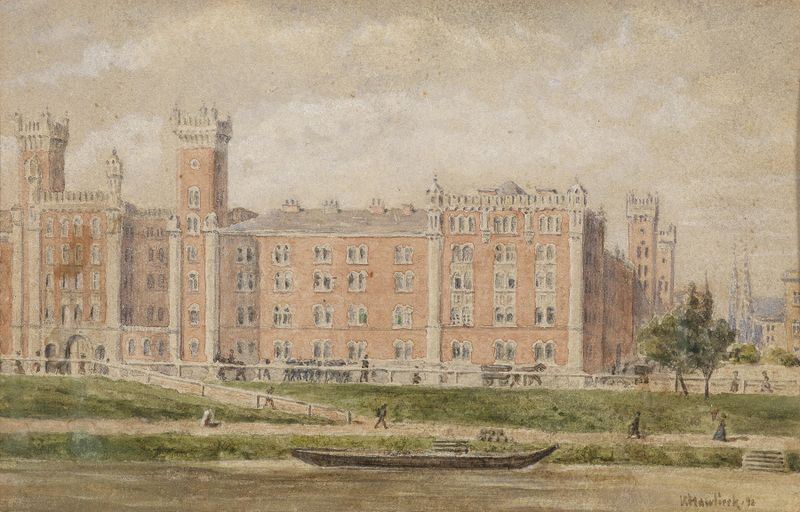
Can beauty exist without sorrow? In Die Weissgärber Lände in Wien mit dem Donau-Dampfschiffahrtsgebäude, a poignant moment of rebirth unfurls, capturing the delicate balance of life by the riverbank. Look to the lower right, where the gentle curves of the Danube embrace the shoreline, mirror-like in its stillness. The soft hues of dawn break through the morning mist, casting a delicate glow on the riverboat and the robust architecture of the Danube Shipping Building. Notice the careful layering of brushstrokes, where earthy palettes resonate with the cool blues of water, and how light dances across the surface, imbuing the scene with quiet vibrancy that speaks of renewal and fresh beginnings. Yet, it is the contrasts that enrich this image—the engineered precision of the manmade structure juxtaposed against nature’s fluidity evokes a sense of harmony and tension.
The boats, mere silhouettes against the luminous backdrop, symbolize fleeting journeys, while the warmly painted architecture stands as a testament to human endeavor. This delicate interplay reveals an underlying narrative of the inexorable passage of time, where each moment carries both promise and melancholy. In 1895, Havlicek was immersed in Vienna's evolving artistic landscape, a period marked by innovation and a search for identity. The city was a hub of cultural change, and the artist's work reflected the burgeoning confidence of the Viennese spirit.
During this time, he sought to capture the essence of his surroundings, transforming the everyday into a poetic representation of life’s transitions—an endeavor that resonated deeply with the sentiments of his era.