Der Donaukanal in Wien — History & Facts
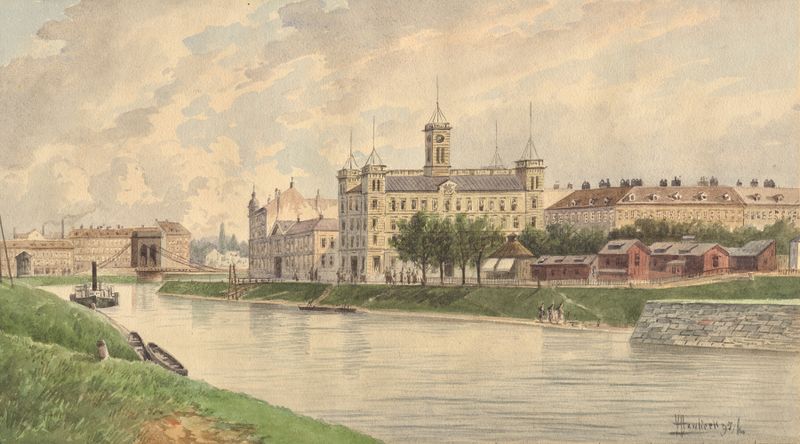
Is this a mirror — or a memory? The shimmering reflections on water beckon us to ponder the essence of time and place, as light dances across the surface, creating a realm where reality intertwines with dreams. Focus on the interplay of light and shadow in the painting. Look to the left, where the soft glow from the setting sun bathes the buildings in warm hues, their facades glowing with an ethereal quality. Notice how the brushwork conveys both fluidity and structure, mirroring the gentle ripples on the water's surface.
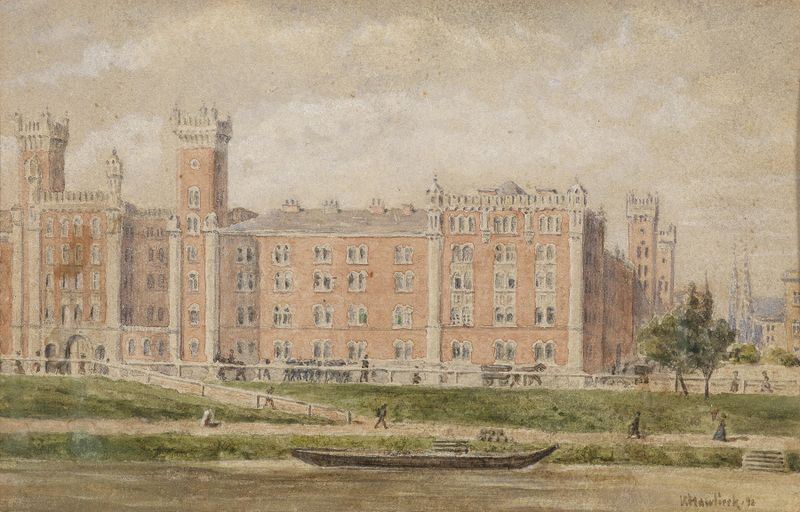
The color palette harmonizes cool blues with warm golds, capturing an evening that feels both tranquil and vibrant, inviting contemplation. The juxtaposition of solid architecture against the fluidity of water captures a deeper tension — the permanence of man-made structures against the ephemeral nature of light and reflection. The gentle wave patterns echo thoughts of change and memory, while the stillness of the water suggests moments frozen in time. It’s a reminder of the transient beauty found in everyday life, where each reflection tells a fragment of a larger story. Created in Vienna in 1892, the artist was navigating a transformative period in art history, where Impressionism began to influence the traditional approaches of the time.
Havlicek, inspired by his surroundings, sought to capture not just a landscape but an emotional resonance within it, crafting a scene that speaks to both the past and the fleeting present.