Dieppe — History & Facts
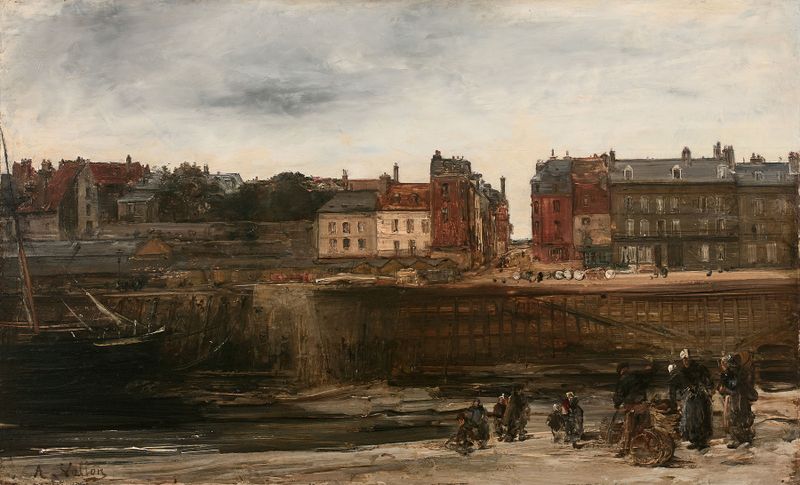
Did the painter know this moment would outlive them? In Dieppe, a delicate balance of light and shadow captures a fleeting moment, inviting viewers to ponder the transient nature of beauty and time. Look to the right at the serene coastline, where gentle waves kiss the sandy shore, their turquoise hues dancing in the sunlight. Notice how the light falls upon the figures, subtly illuminating their forms against the backdrop of soft clouds and the vast sea. The tonal shifts between warm and cool colors lend depth, while the soft brushwork creates an ethereal quality, imbuing the scene with a sense of tranquility that feels almost palpable. Within this idyllic setting lies a deeper emotional resonance.
The juxtaposition of the calm sea and the distant, unyielding horizon speaks to the tension between aspiration and the limitations of reality. Each figure appears engaged in their own world, suggesting an exploration of individual solitude amidst collective existence. The balance of composition reflects an equilibrium between nature and humanity, evoking contemplation on the harmony that can exist within chaos. Antoine Vollon created Dieppe in an era brimming with artistic exploration.
Working primarily in the late 19th century, he navigated a world impacted by rapidly changing societal norms and artistic movements. As Impressionism began to dominate, Vollon carved out a unique place for himself with his focus on still lifes and landscapes, striving to capture moments that resonate with simplicity and emotional weight.