Dieppe — History & Facts
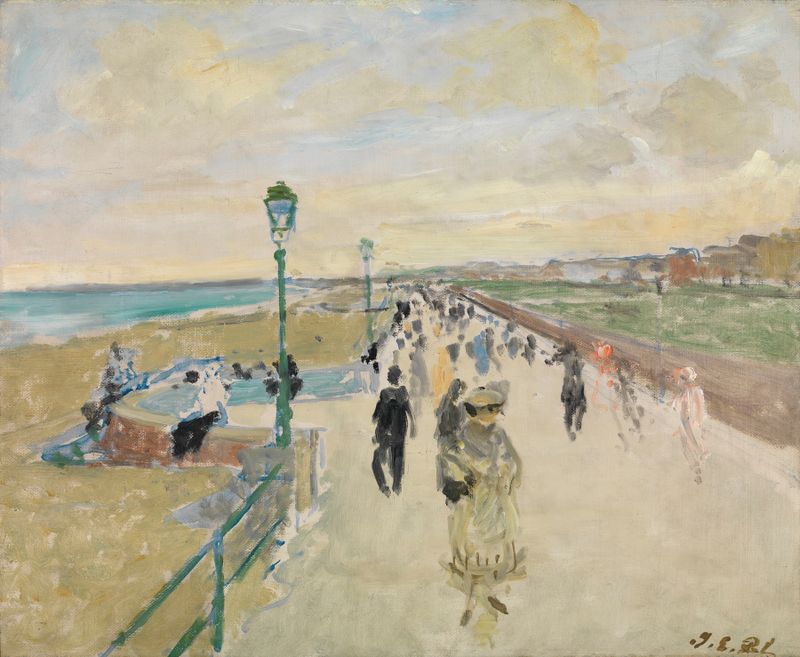
In a fleeting moment, mortality finds its form through brushstrokes that echo echoes of life and loss. Look to the center of the canvas, where a delicate interplay of shadow and light captures both the foreground and the background in a tender embrace. The soft hues meld into one another, inviting you to trace the outlines of figures that seem to dance on the edge of existence. Notice how the artist employs muted colors to evoke a sense of fragility, while the precise strokes of the paint highlight the tension between permanence and ephemerality. Beyond the obvious, hidden meanings lurk within the details.
The way the figures, though separate, appear to reach for one another speaks to our yearning for connection in the face of inevitable departure. Each element—be it the soft contours of faces or the gentle waves in the background—serves to remind us of the passing moments we often take for granted. The canvas, in its stillness, invites contemplation on what it means to be alive, to love, and to lose. During a period of personal introspection, Jacques-Émile Blanche created this piece in the late 19th century, a time when the art world was grappling with modernity and the shifting tides of Impressionism.
Living in Paris, he was surrounded by a vibrant community of artists and thinkers, struggling with themes of existence against the backdrop of rapid social change. This work reflects that tumultuous intersection, revealing both the beauty and the fragility of the human experience.