Knightsbridge Seen From Sloane Street, December 1913 — History & Facts
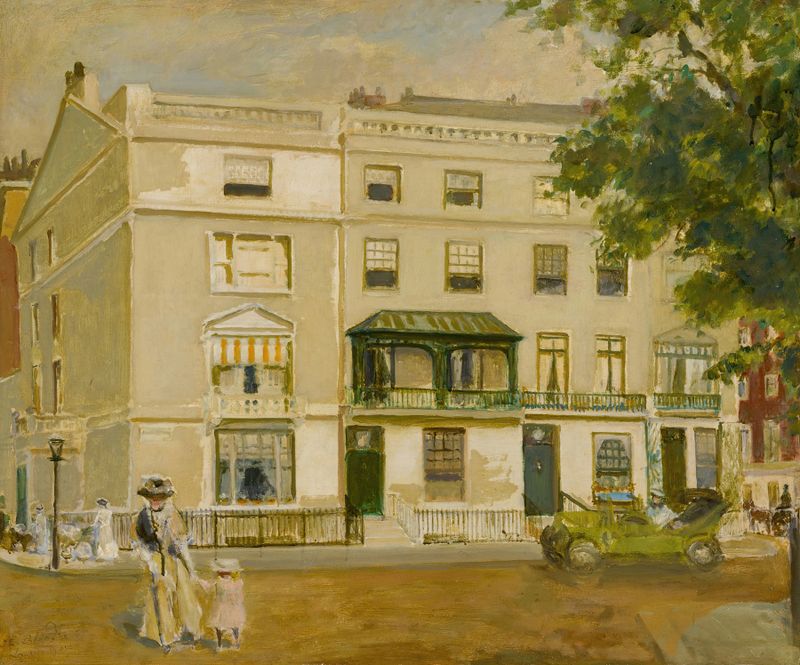
Who listens when art speaks of silence? In the hushed elegance of Jacques-Émile Blanche's Knightsbridge Seen From Sloane Street, December 1913, we encounter a moment suspended in time, where stillness breathes life into the canvas. Look closely to the left, where a delicate play of light and shadow outlines the elegant facades of the buildings, each stroke revealing their unique character. The muted palette, dominated by soft grays and silvery whites, evokes the chill of a winter's day while the subtle warmth in the buildings suggests a hidden vibrancy within. Notice how the figures, small and distant, blend into the scenery, their presence felt more than seen, inviting contemplation of their stories. The contrast within this work lies in its serene surface and the deeper currents of urban life.
The meticulous details of the architecture embody a sense of stability amidst change, while the ethereal quality of the light hints at a divine presence in the mundane. The painting captures a fleeting moment where time seems to pause, urging viewers to reflect on their own interactions with the world around them. In December 1913, as Blanche painted this piece, he was deeply immersed in the artistic milieu of Paris, drawing inspiration from the Impressionists and Symbolists. This period marked a significant transition in his career, as he sought to infuse his work with a sense of intimacy and introspection.
Amidst the burgeoning modernist movement, Knightsbridge Seen From Sloane Street stands as a testament to his unique vision, reflecting both the stillness of the moment and the vibrant life pulsing beyond the canvas’s edge.