
Diesbach bey Thun — History & Facts
What if beauty was never meant to be finished? In a world where nature is ever-changing, Diesbach bey Thun captures a fleeting moment that eludes permanence, beckoning us to explore the layers beneath its surface. Direct your gaze to the luminous blue waters lapping gently at the shore, rich with hues that reveal the artist's delicate touch. Notice how the brushstrokes deftly blend the colors, creating a sense of movement that seems to breathe life into the landscape. The juxtaposition of the serene sky against the rugged mountains invites contemplation, while light dances upon the surface, illuminating the freshness of the scene.
The composition draws you into this tranquil moment, as the eye is guided seamlessly from the foreground to the distant horizon. Within the serene beauty lies a deeper narrative — the contrast between the calmness of the water and the imposing mountains that cradle it. This tension embodies the duality of nature's fragility and strength. The slight ripples on the surface hint at a hidden undercurrent, suggesting that stillness can mask tumult underneath.
Each brushstroke serves as a reminder that truth often exists within complexity, and that the ephemeral moments we cherish may hold secrets yet to be uncovered. Created during a period of rapid artistic exploration, the exact date of this work remains unknown, yet it reflects the evolving landscape of the 19th century. Weibel was immersed in a time when Romanticism celebrated nature and its sublime beauty, and he sought to distill that essence into his art. As he painted this idyllic scene, he was likely in touch with the shifting ideals of beauty and truth that defined his era, striving to connect the viewer with a moment both intimate and expansive.
More Artworks by Jakob Samuel Weibel
Browse all →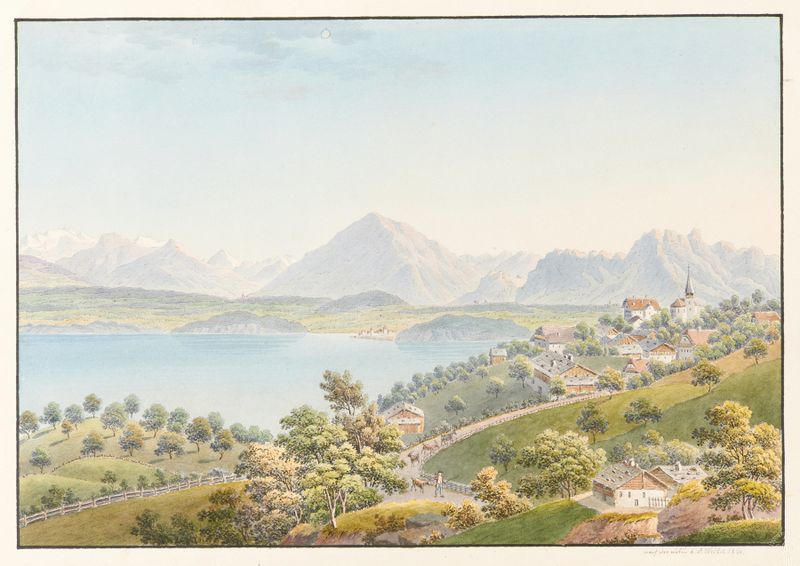
Vue dessiné depuis le Village de Sigriswil, audessus du Lac de Thoune
Jakob Samuel Weibel
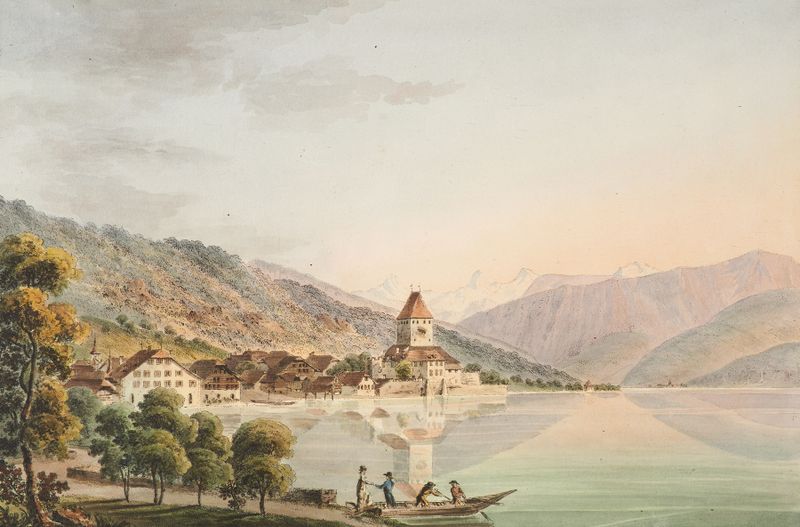
Vûe du Chateau d’Oberhofen au Lac de Thoune
Jakob Samuel Weibel
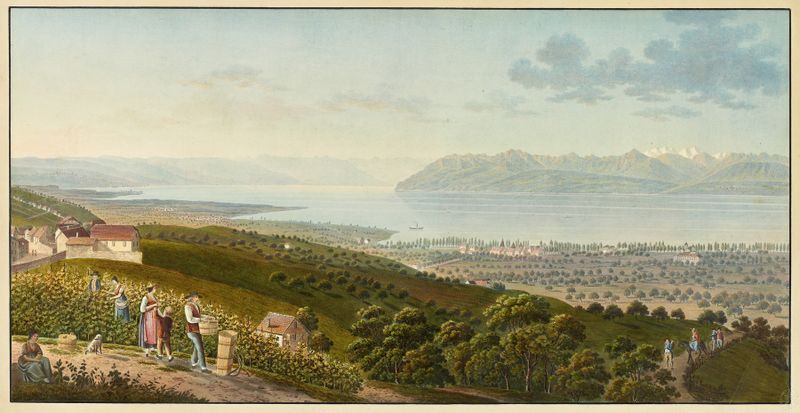
Vue genérale du Lac de Geneve
Jakob Samuel Weibel
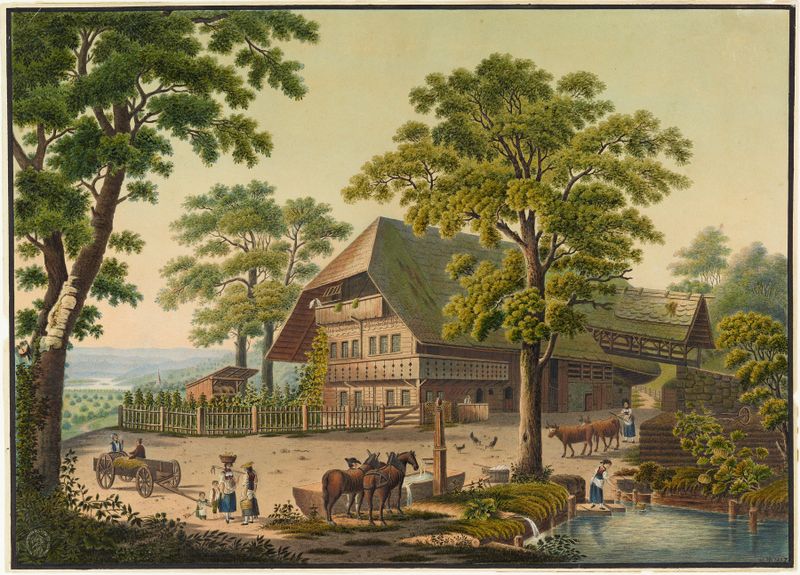
Maison de paysan près Wichtrach
Jakob Samuel Weibel
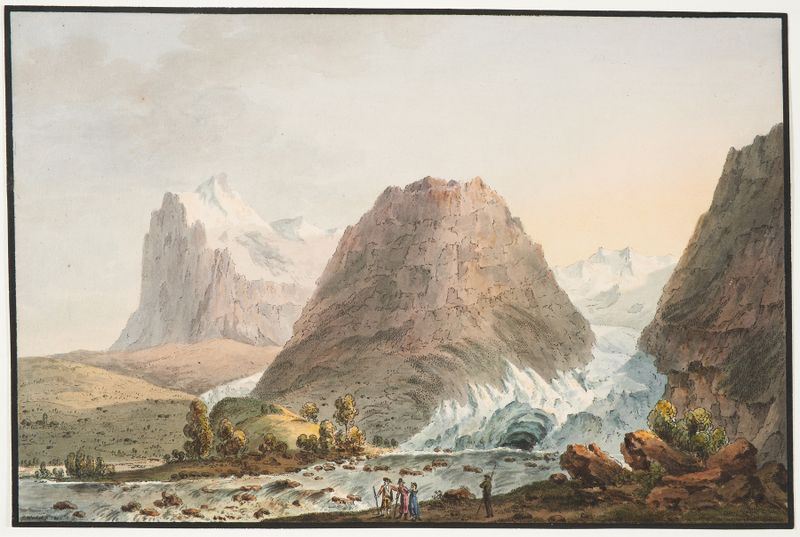
Vûe des Glacieres de Grindelwald
Jakob Samuel Weibel
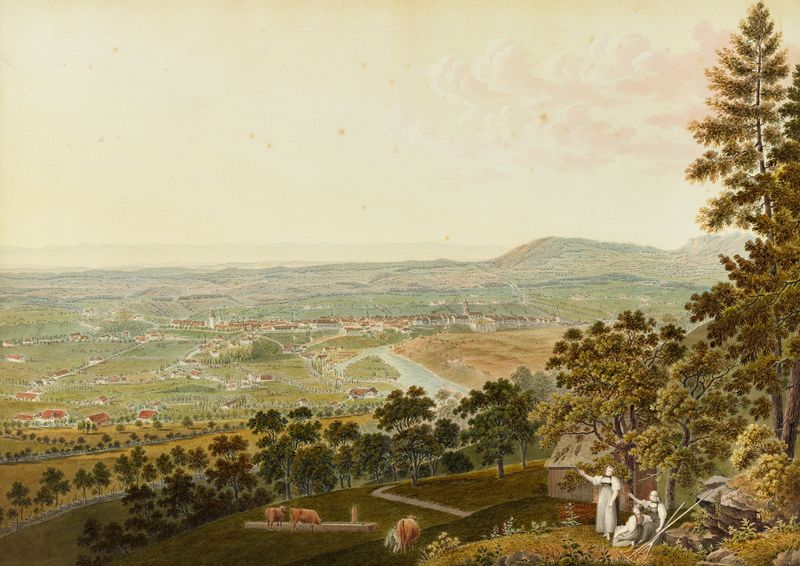
Ansicht Berns und der Aare vom Gurten aus
Jakob Samuel Weibel
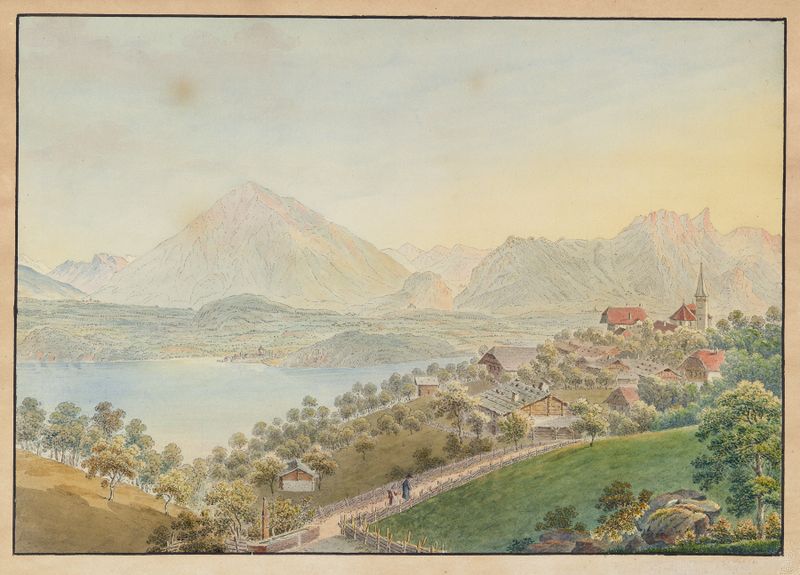
Ansicht von Sigriswil mit Niesen und Thunersee
Jakob Samuel Weibel
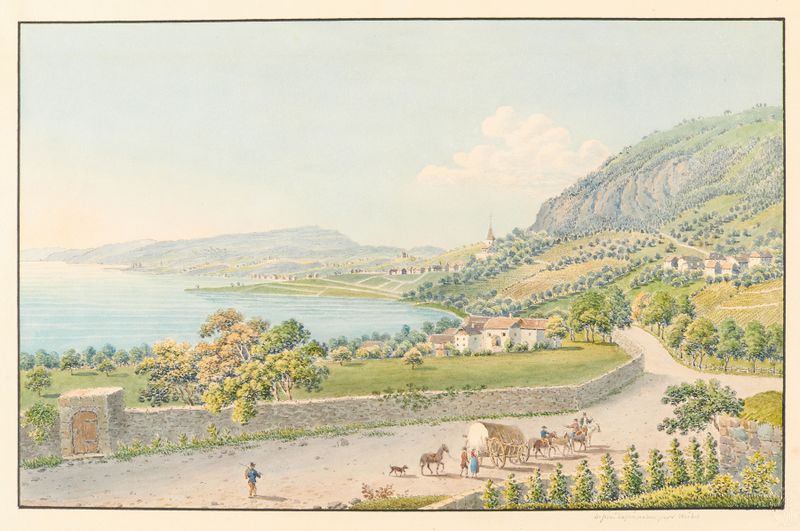
Vue des environs de Montreux et de Clarens
Jakob Samuel Weibel
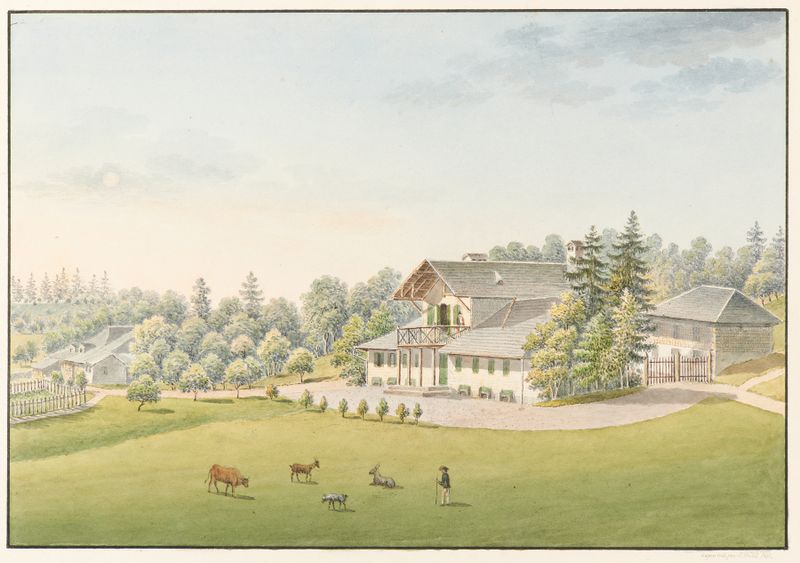
Vue du nouveau Châlet de Vernand
Jakob Samuel Weibel
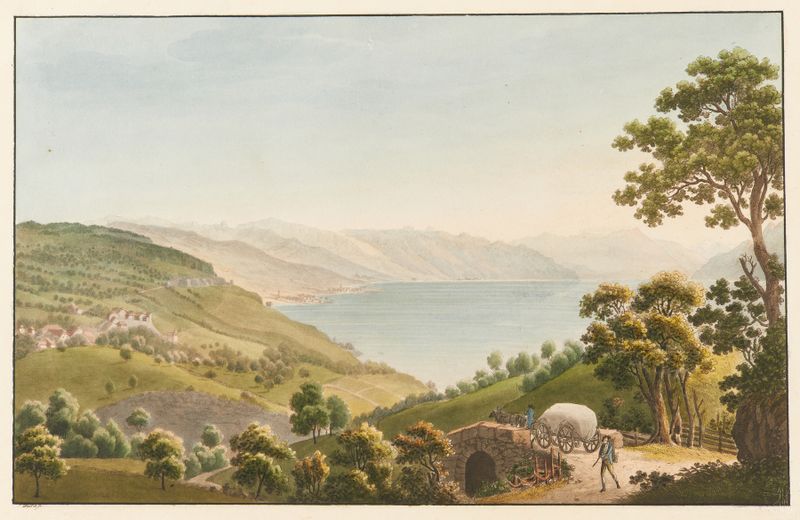
Vue des environs de Vevey depuis Chexbres
Jakob Samuel Weibel





