Djebel Serbal, Sinai — History & Facts
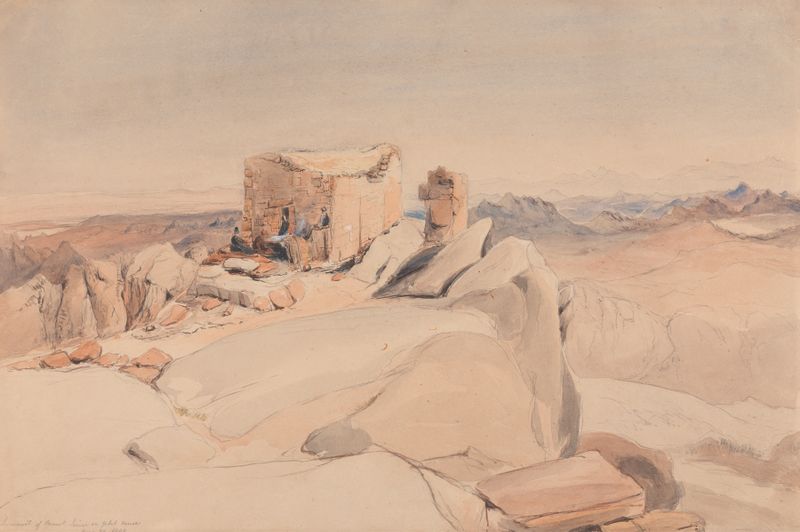
Who listens when art speaks of silence? In a world eager to drown out the whispers of isolation, a solitary mountain stands as a testament to both tranquility and the madness of nature's vastness. Look to the expansive canvas where muted earth tones dominate, creating a sense of weight and stillness. The towering Djebel Serbal rises dramatically, its rocky silhouette etched against a soft blue sky, inviting contemplation. Notice how the interplay of light and shadow carves the mountain’s craggy surface; the subtle gradations of color evoke the rugged texture of stone.
This stark representation draws your gaze upward, toward the summit where the heavens seem to touch the earth, yet remain unapproachable, emphasizing both majesty and solitude. Within this portrayal lies a tension between the grandeur of nature and the insignificance of humanity. The sheer scale of the mountain dwarfs any potential presence, suggesting a dialogue where humanity's madness is inconsequential against the eternal charism of the landscape. The absence of life in the foreground heightens this sense of desolation—questions of existence linger in the air, inviting viewers to ponder their own place within the vastness of the natural world. Rev.
Edward Thomas Daniell painted this scene in 1841 during a time of burgeoning interest in the sublime and picturesque. As he explored the Sinai region, he captured not only the physical beauty of the landscape but also his own internal struggles as an artist. Engaging with the Romantic ideals of his era, he sought to convey deep emotional responses through the portrayal of nature, resonating with both the isolation of the individual and the timelessness of the earth.