Summit of Mount Sinai or Jebel Musa — History & Facts
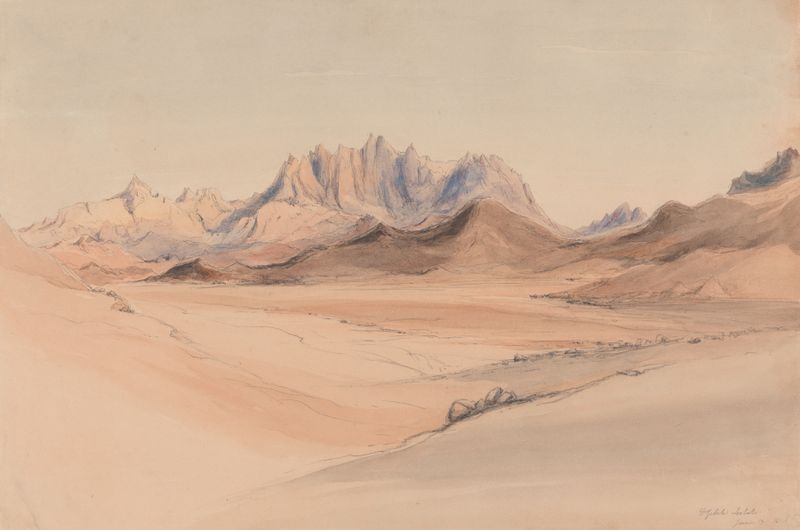
What if beauty was never meant to be finished? In the interplay of light and shadow, reverence and awe emerges, inviting contemplation on the transient nature of existence. Focus on the striking contrast between the illuminated peaks and the deep shadows that envelop the rugged terrain. The artist brilliantly captures the interplay of sunlight streaming across the rocky summits, illuminating the grandeur of Mount Sinai, while the valleys below remain cloaked in mystery. Observe the soft hues of ochre and grey that blend seamlessly, suggesting both the strength and fragility of this iconic landscape. The painting hints at a duality—a sacred mountain that embodies both spiritual ascension and the solitude of nature.
The stark shadows evoke feelings of uncertainty and introspection, perhaps representing the weight of history and the stories embedded within the rock. Each brushstroke resonates with a sense of timelessness, as if the mountain itself is a silent witness to the turmoil and triumph of humanity, capturing moments of both grandeur and humility. Completed in 1840, this work emerged during a period of growing interest in biblical landscapes and natural beauty, as artists sought to intertwine spirituality with the sublime. Daniell, an English artist and clergyman, created this piece as he traveled through the Holy Land, reflecting a moment in his life when faith and artistry converged.
His exploration of the narrative beauty of sacred sites positions him within the larger Romantic movement, where nature serves as both a backdrop and a central figure in the human experience.