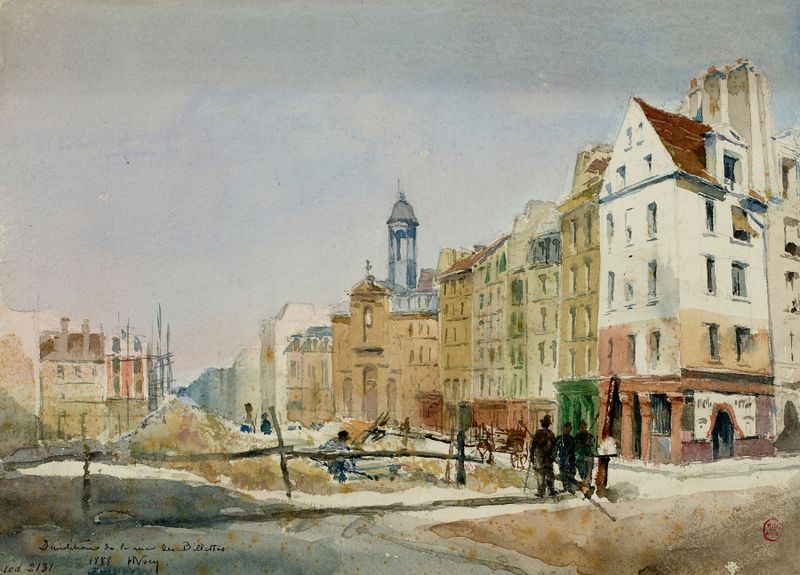
Démolition de la rue des Billettes, le 19 avril 1888 — History & Facts
In the midst of destruction, one can find the pulse of renewal; a harmony woven through the anarchy of change. Look to the center, where the swirling eddies of debris create an almost rhythmic dance, guiding the viewer’s gaze through the chaotic scene. Notice the bold brushstrokes that shape the figures of workers, their bodies engaged in strenuous labor, faces etched with determination. The vivid palette—earthy browns and vibrant blues—contrasts the raw force of demolition with an unexpected beauty, as light refracts off crumbling material, highlighting the struggle against time and progress. Yet beneath the surface lies a deeper commentary on urban transformation.
The juxtaposition of human effort against the backdrop of erasure speaks to the fleeting nature of existence, where old structures fall to make way for the new. Look closely at the expressions of the workers; within their exertion, there exists a flicker of ecstasy tinged with melancholy, capturing the duality of creation and destruction. Each stroke encapsulates the tension between loss and opportunity, illustrating not merely the act of demolition but the emotional landscape it inhabits. Created during the late 19th century, this piece reflects a significant turning point in Parisian life.
Nocq painted this work amid a burgeoning industrial landscape, marked by rapid urbanization and societal upheaval. It was a time when the city was redefining itself, and artists were increasingly exploring themes of change in their work, responding to the new rhythms of modernity and the complex narratives of progress.