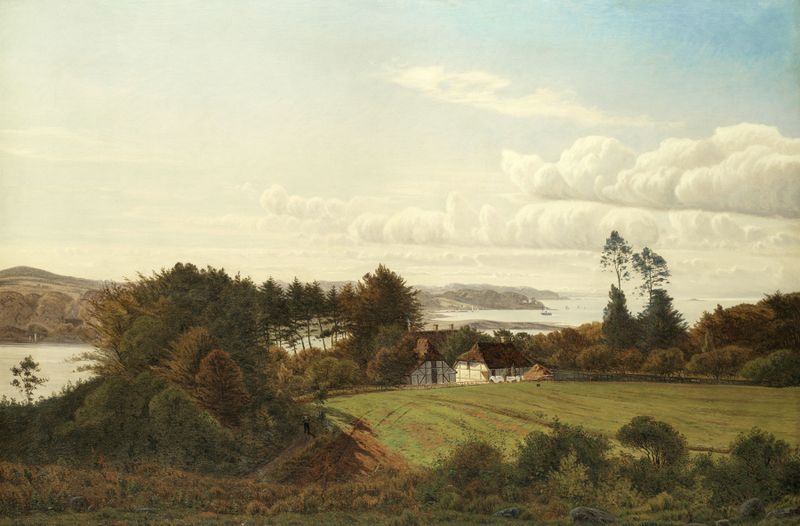
Dänische Ostseeküste am Roskildefjord, Seeland — History & Facts
In the delicate balance of perception, how does faith emerge amid the stillness of nature? Look to the left at the subtle hues of blue and green, where the gentle waves of the Roskildefjord meet the shoreline. The soft brushstrokes create a sense of movement, drawing the eye across the canvas. Notice how the sunlight bathes the scene in a warm glow, illuminating the tranquil waters while casting serene shadows on the sandy beach.
Each detail invites exploration, from the distant boats bobbing gently to the wispy clouds drifting lazily in the sky. The interplay between the vibrant earth tones and the calming blues evokes a sense of harmony and contemplation. As the horizon stretches infinitely, it suggests both distance and accessibility—a meeting point between the physical world and the spiritual. Hidden within the texture and color are whispers of solitude, beckoning the viewer to find refuge in the simplicity of nature.
This duality encapsulates a profound emotional tension, balancing the earthly delights with the ethereal longing for connection and understanding. In 1887, the artist captured this serene landscape while residing in Denmark, a time when Impressionism was beginning to influence the art world. Thorenfeld was deeply inspired by the natural beauty surrounding him, reflecting a broader movement that sought to depict the ephemeral qualities of light and atmosphere. The tranquility of the landscape mirrors his own contemplative spirit, as he navigated his role in the ever-evolving realm of art during this vibrant period.