Dockland — History & Facts
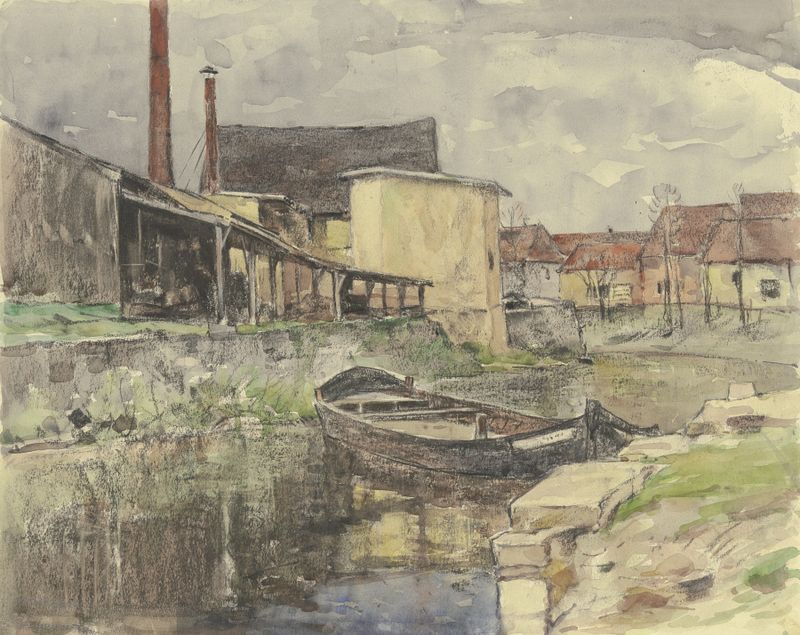
Who listens when art speaks of silence? The notion of destiny lingers in the air, echoing through the stillness of an unseen dockland. Focus on the gentle interplay between muted shades of blue and gray in the painting—these colors envelop the canvas, evoking a somber atmosphere. The horizon is a whisper, where water meets sky, subtly dissolving into one another. Notice how the brushwork is both deliberate and soft, allowing shapes to emerge rather than imposing form, inviting the viewer into an introspective space.
The horizon line draws the eye toward the expanse of water, while distant silhouettes of boats hint at distant journeys, both literal and metaphorical. Delve deeper into the shadows where the boats rest, harboring secrets and untold stories. The stillness in their forms contrasts with the dynamic waves lapping at their hulls, symbolizing the tension between fate and choice. Here, silence is not merely absence; it speaks volumes about waiting and the inevitability of what lies ahead.
Each element in the composition becomes a vessel for reflection, encouraging the viewer to ponder their own destiny while contemplating the vastness that surrounds them. Created in Naples during a period of personal and artistic transformation, the artist embraced themes of quiet contemplation and the weight of existence. At this time, his exploration of harbors and waterways reflected broader currents in art, as movements towards abstraction began to challenge traditional representation. This piece, rooted in a moment of self-discovery, captures the essence of a world on the brink of change and the timeless questions that accompany it.