
Dolwydellan Valley — History & Facts
This sentiment resonates deeply in the expansive beauty of a landscape that captures both ecstasy and melancholy. Look closely at the foreground, where the lush green grasses sway gently under the breath of the wind. The painter's deft brushwork reveals layers of texture, each stroke adding depth to the vibrant scene. Notice how the light dances on the rippling stream that cuts through the valley, reflecting a myriad of colors that hint at a hidden vitality.
The distant mountains loom majestically, their peaks kissed by the soft hues of twilight, casting a serene shadow over the valley while inviting exploration. Yet, beneath this idyllic panorama lies an emotional undercurrent. The juxtaposition of the lush valley and the imposing mountains speaks to the tension between tranquility and the sublime. The stream, a lifeline threading through the landscape, suggests a journey—one filled with both beauty and the weight of unspoken sorrows.
This duality evokes the idea that ecstasy can often coexist with struggle, capturing the essence of nature as both a nurturing and a formidable force. Created in 1864, this piece reflects Hans Gude's experience during a transformative period in Norwegian art. He was deeply influenced by the Romantic movement, emphasizing emotion and the grandeur of nature. At this time, Gude was establishing himself as a prominent landscape painter, drawing inspiration from his native Norway’s breathtaking terrains, which were often overlooked in the broader European art scene.
More Artworks by Hans Gude
Browse all →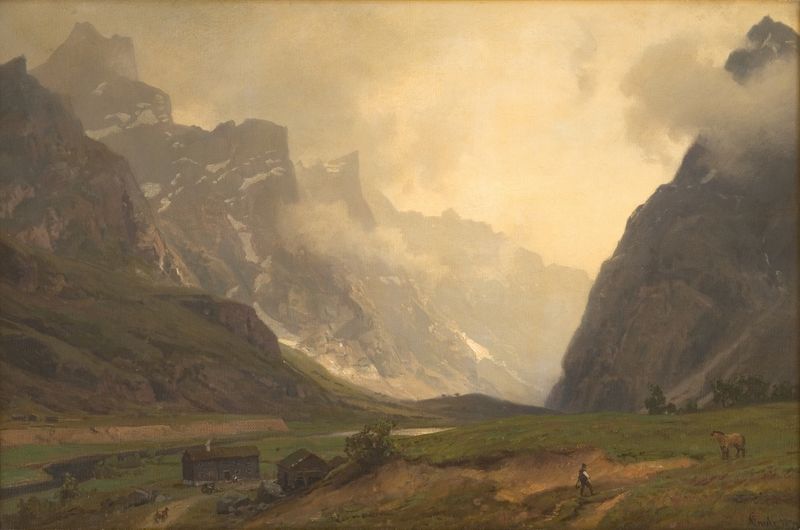
The Troll Peaks in Romsdalen, The Foot of Romsdalshorn to the Right
Hans Gude
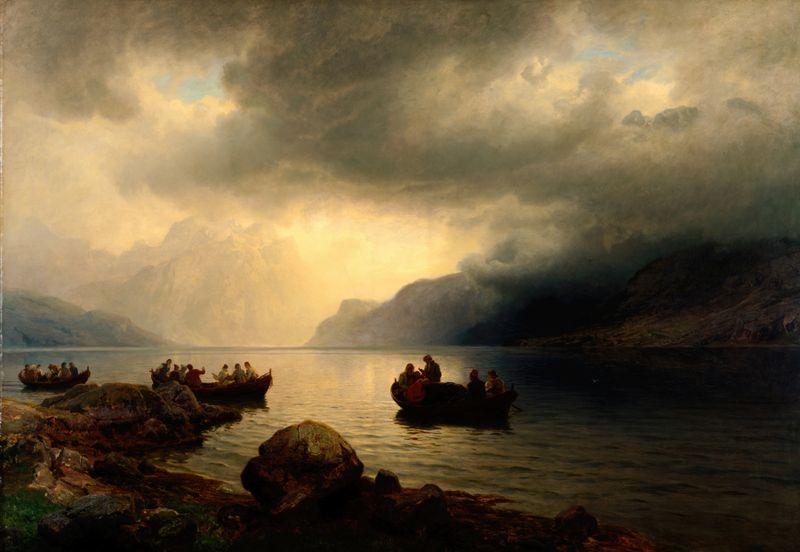
Funeral Procession on the Sogne Fjord
Hans Gude
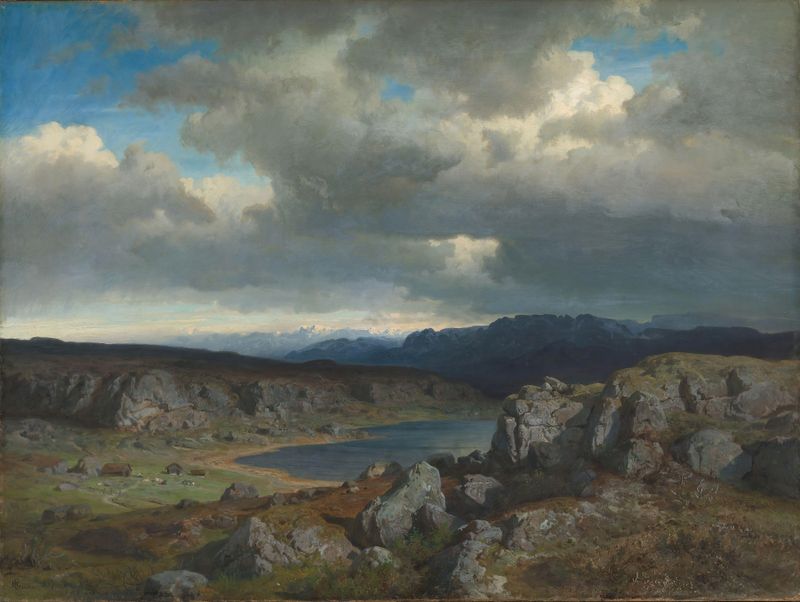
Norwegian Highlands
Hans Gude
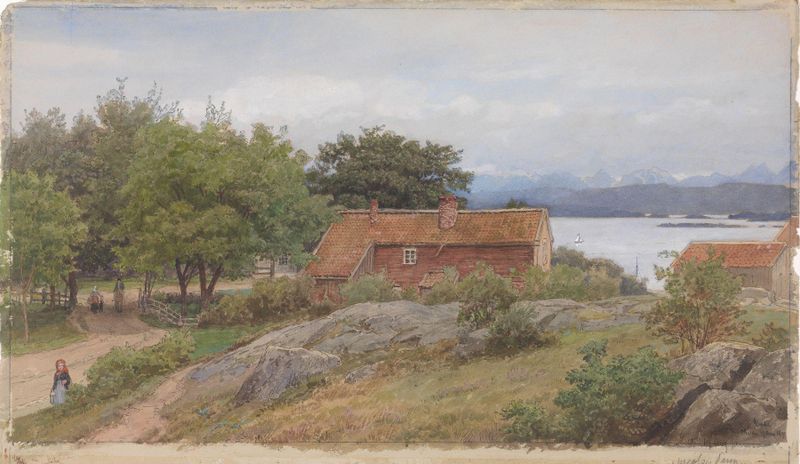
Landskap med bondegård ved Molde
Hans Gude
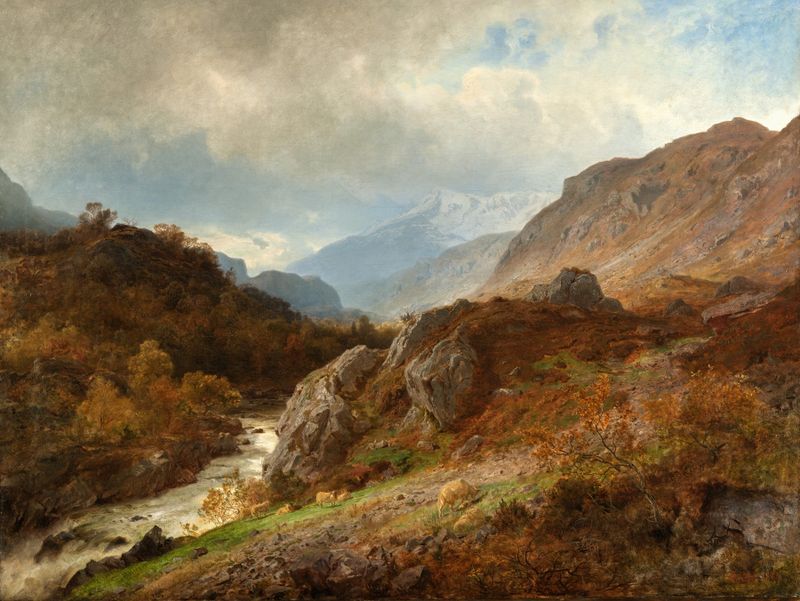
Mountain Landscape
Hans Gude
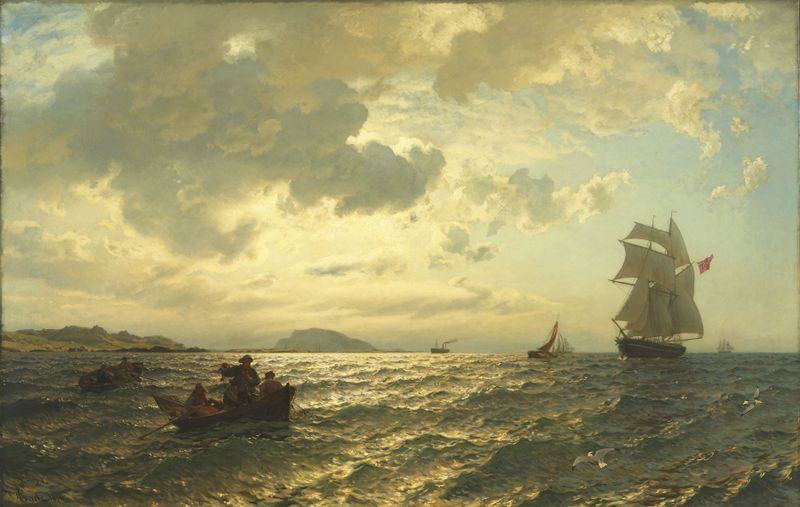
Fresh Breeze on the Norwegian Coast
Hans Gude
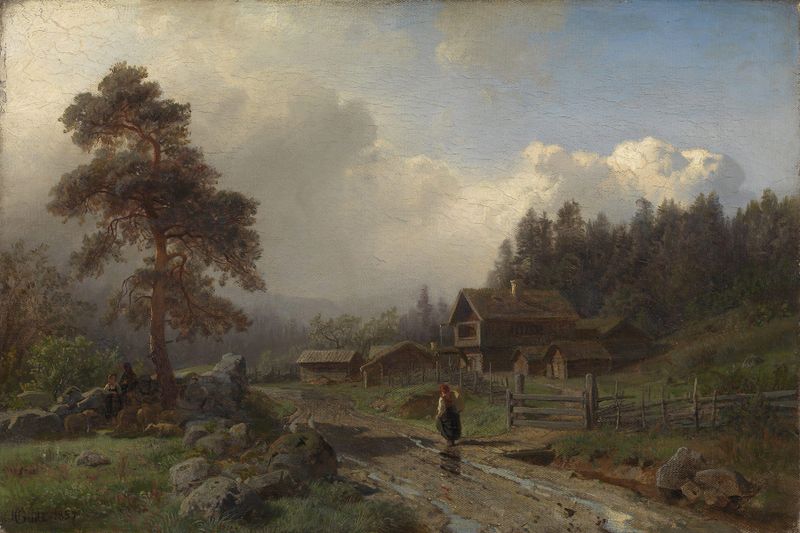
Norwegian Landscape in Rain
Hans Gude
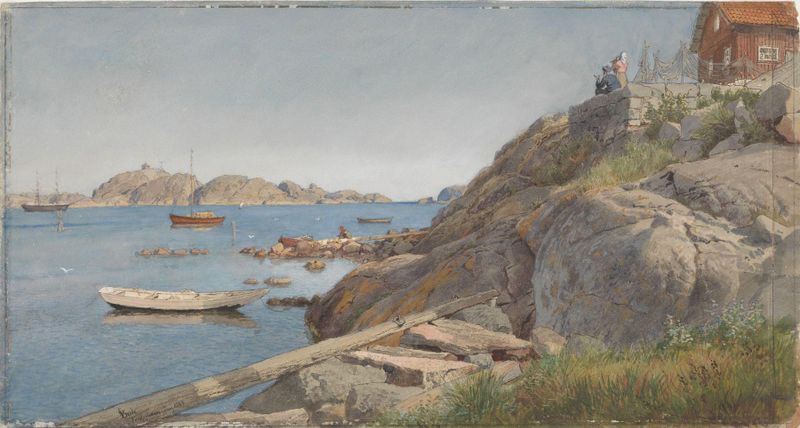
Landscape by Stavern
Hans Gude
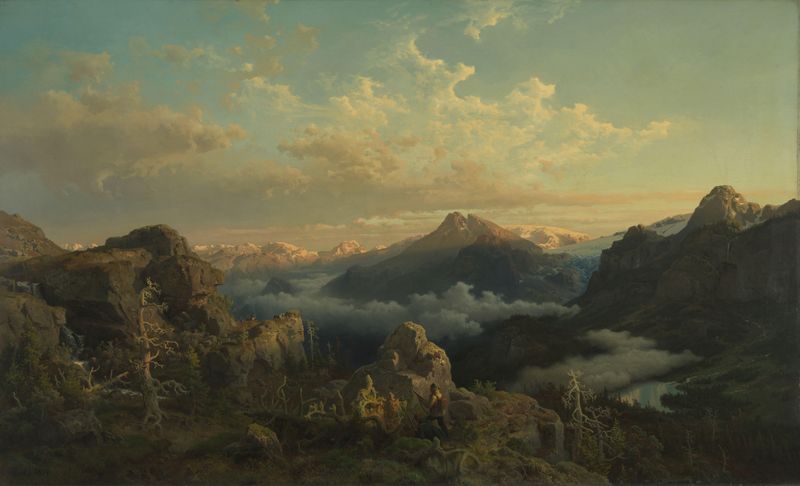
Norwegian Highlands in Sunrise
Hans Gude
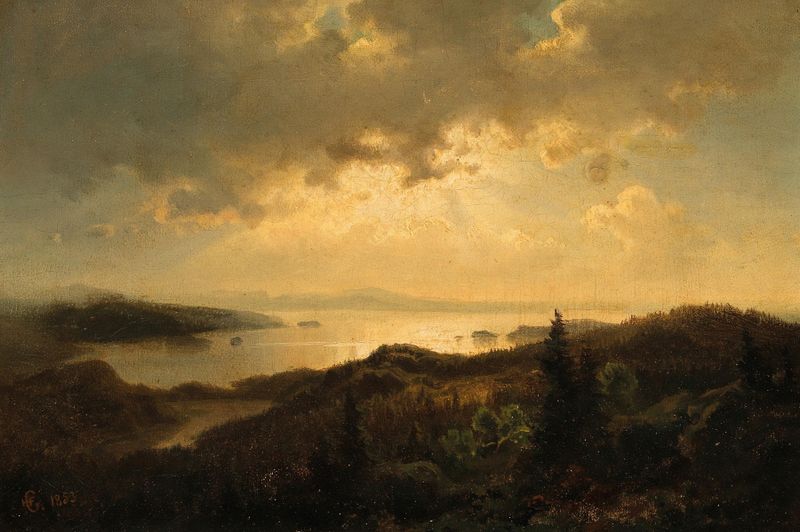
A Scene at Dusk in Norway
Hans Gude





