Dom wśród drzew na tle wzgórza — History & Facts
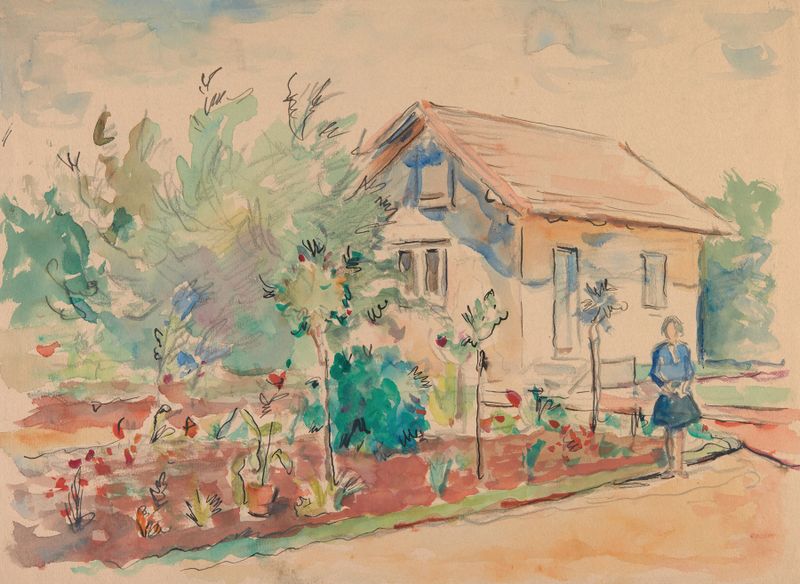
Who listens when art speaks of silence? In that profound stillness, grief unfolds, echoing through the canvas. Focus on the house nestled among the trees, its muted colors speaking volumes of isolation. Notice how the light falls upon the rooftops, bathing them in a soft glow that contrasts with the shadows creeping in from the surrounding foliage. The trees frame this solitary structure, their dark trunks and leaves creating a canopy that feels both protective and suffocating.
The delicate brushwork hints at the artist's emotional state, evoking a sense of nostalgia and melancholy. As you explore further, the choice of colors reveals a deeper narrative. The greens and browns resonate with life yet are tinged with a sense of loss, suggesting a once-vibrant memory now faded. The house, standing quietly, becomes a symbol of absence — perhaps a family left behind, or a home abandoned in the wake of grief.
Each brushstroke captures the tension between nature’s resilience and human fragility, inviting the viewer to reflect on the moments that have slipped away. Sofija Paraszczuk painted this piece in 1931 while living in Poland, a time when the country was grappling with social and political upheaval. This era marked a significant shift in the art world, as artists began to explore more personal and emotional themes in their work. The tranquility of her scene belies a complex inner world, illustrating the transition from collective experiences to introspective reflections during a tumultuous time.