
Domkirkeruinen, Hamar — History & Facts
Did the painter know this moment would outlive them? The remnants of a once-great cathedral rise dramatically against the Nordic sky, evoking the impermanence of human endeavor in the face of time's relentless march. Look to the center of the canvas where the skeletal ruins of the cathedral dominate the landscape, their weathered stones illuminated by a soft, ethereal light. Notice how the cool blues and greys of the structure contrast with the warm hues of the evening sky, creating a poignant tension between decay and beauty. The soft brushstrokes merge the architecture with its surrounding nature, as trees frame the scene and hint at life persisting around the desolation. Deep within the juxtaposition of light and shadow lies a narrative of mortality and resilience.
The crumbling walls suggest a history rich with stories, while the vibrant sky signals hope and continuity. A lone figure in the foreground gazes upward, embodying both reverence for the past and contemplation of the future. In this tension, Tidemand masterfully captures the essence of longing and the inevitability of loss, inviting viewers to reflect on their own fleeting existence. Created in 1843, this piece emerged during Tidemand's tenure as a prominent figure in Norwegian Romanticism, a period marked by a deep connection to nature and national identity.
As he painted this work in Hamar, Tidemand was influenced by contemporary movements that celebrated the simplicity and beauty of his homeland, while also grappling with the transition from a rural to an industrial society. The ruins he depicted stand as a testament to a glorious past, now enveloped in the whispers of time.
More Artworks by Adolph Tidemand
Browse all →
Bridal Procession on the Hardangerfjord
Adolph Tidemand

Fra Haugsbygd
Adolph Tidemand
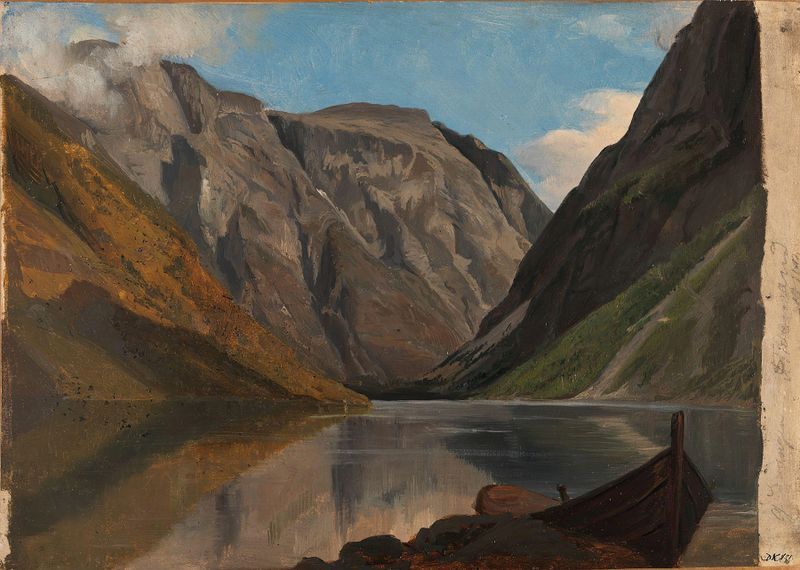
View of Gudvangen
Adolph Tidemand

Hagestad prestegård, Ulvik i Hardanger
Adolph Tidemand

View from Gudvangen
Adolph Tidemand

Fra Gulsvik
Adolph Tidemand

From Kullen in Sweden
Adolph Tidemand

Country Road
Adolph Tidemand

Untitled
Adolph Tidemand
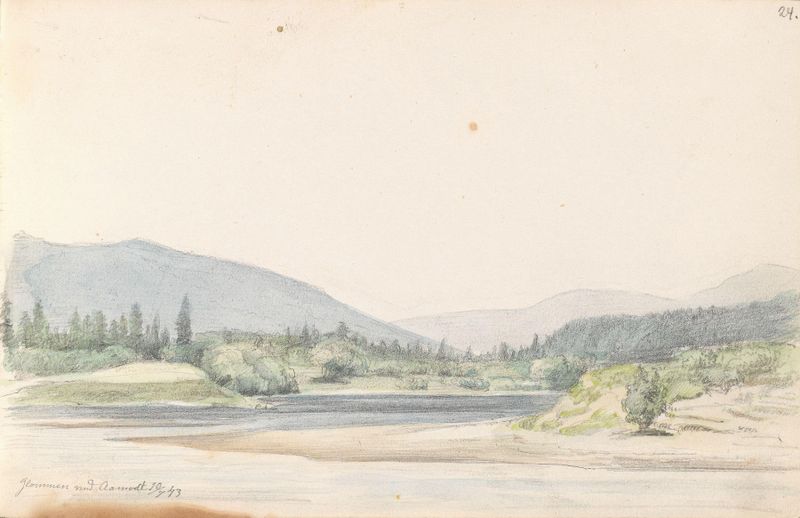
Glomma ved Åmot
Adolph Tidemand





