Dorf in der Sonne — History & Facts
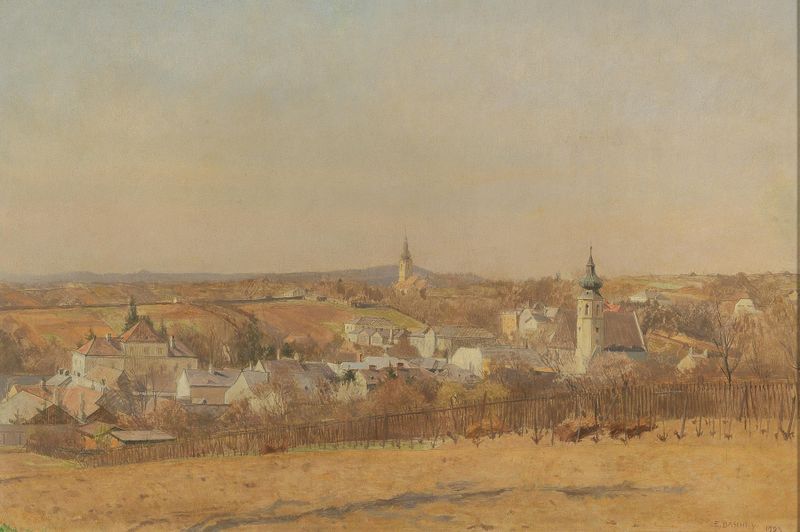
Is this a mirror — or a memory? In Dorf in der Sonne, the boundaries between reality and recollection blur, inviting us to step into a sun-drenched village that exists beyond the confines of time. Look to the left at the radiant, golden light spilling across the rooftops, illuminating the charming cottages and casting soft shadows that dance along the cobblestone streets. The vibrant palette, with lush greens and warm earth tones, draws your gaze through the scene, leading you toward the horizon where the sun seems to linger just a moment longer. Each brushstroke reveals a meticulous attention to detail, while the composition captures a serene tranquility, evoking a sense of warmth and belonging. Beneath the idyllic surface lies a deeper exploration of nostalgia and longing.
The juxtaposition of the bright sun and the quiet village hints at a moment suspended in time, where the past and present converge. The viewer may sense an emotional tension between the beauty of the landscape and the inherent transience of life, suggesting that while the village thrives in sunlight, shadows loom that remind us of impermanence. In 1910, Emanuel Baschny created this work during a time when the art world was shifting, embracing Impressionism and the exploration of light and color. Living in Germany, he was influenced by the burgeoning modernist movements, yet he chose to depict a simpler life, reflecting a personal yearning for connection to nature.
This painting stands as a testament to his artistic vision, capturing a moment that resonates with transcendent beauty and quiet reflection.