Grinzing in early spring — History & Facts
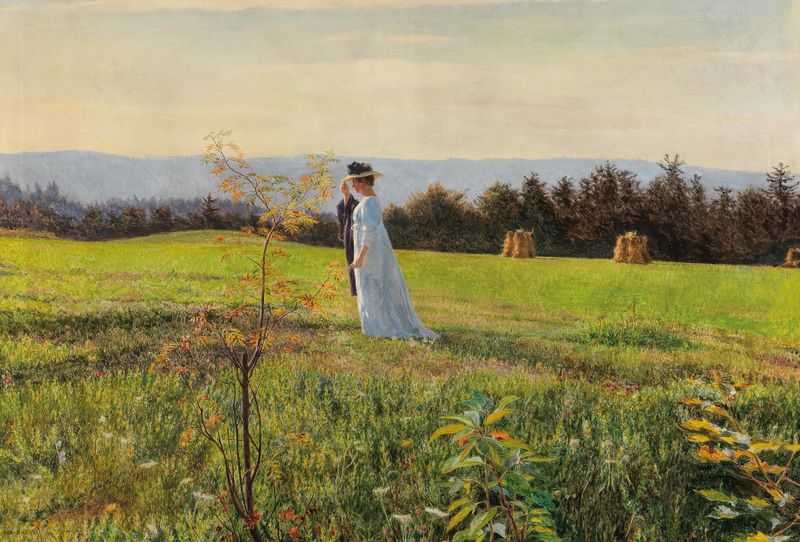
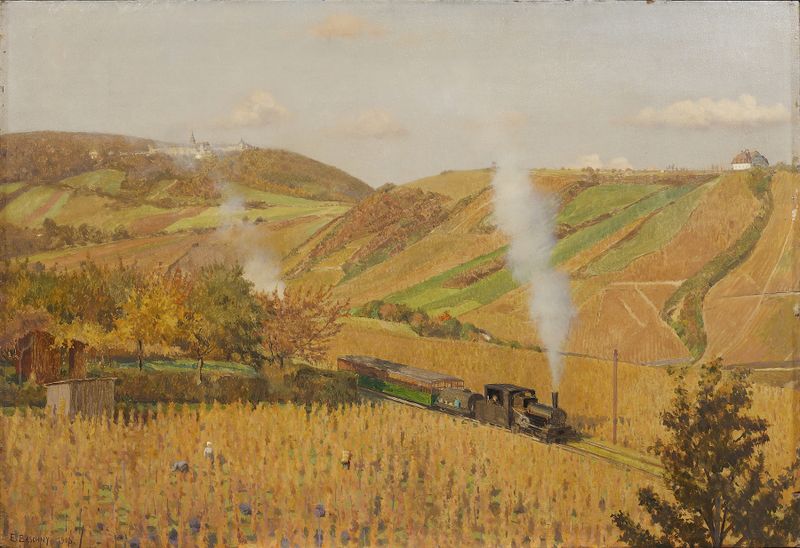
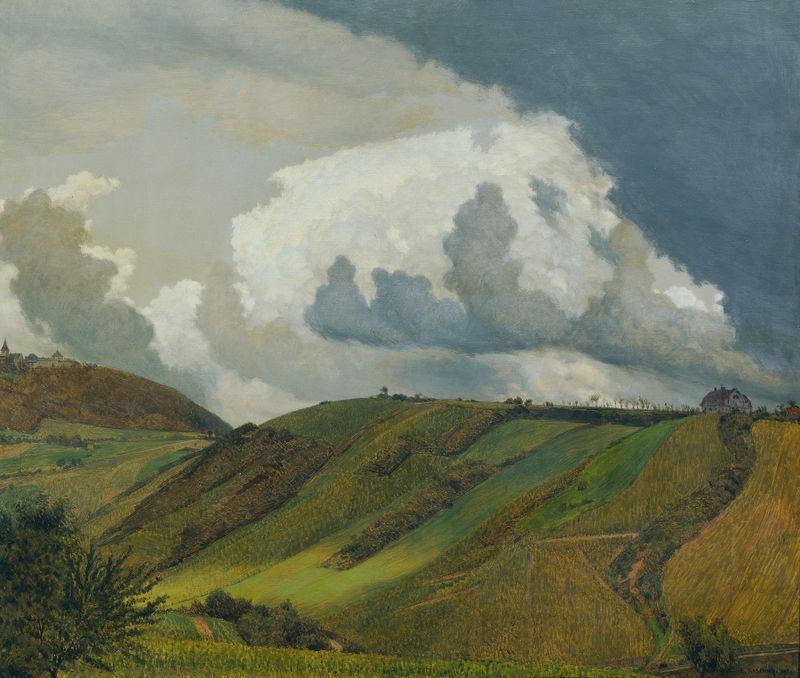
When did color learn to lie? The vibrant hues of a spring landscape invite introspection, dancing along the edges of truth and illusion. In Grinzing in early spring, the interplay of colors evokes a world where the familiar and the fantastical engage in a delicate balance, challenging our perception of reality. Look to the foreground, where the lively greens of budding foliage burst forth, drawing your gaze into the heart of the scene. Notice how the artist employs broad, sweeping strokes to convey the breezy texture of the leaves, while small dabs of white hint at the sun's gentle caress.
The carefully structured composition captures both the village’s charming architecture and the expansive sky, connecting them through a harmonious palette that speaks of renewal and hope. Yet, beneath this cheerful exterior lies a tension between the vibrancy of life and the threat of winter's lingering shadow. The contrasting tones suggest not just a seasonal shift, but a deeper metaphor for life’s unpredictability. The bright blossoms may evoke joy, but the encroaching shadows and cooler hues remind us of the fragility inherent in every bloom.
This duality invites contemplation, as nature balances itself between exuberance and restraint. Emanuel Baschny created this work in 1923, during a time of significant social and artistic upheaval in Europe following World War I. Living in Vienna, he was surrounded by a rich tapestry of modernist influences and a burgeoning appreciation for the beauty of daily life. This piece reflects a moment of personal and collective rebirth, capturing the essence of a world awakening from the darkness of the past.