Ein Sommertag — History & Facts
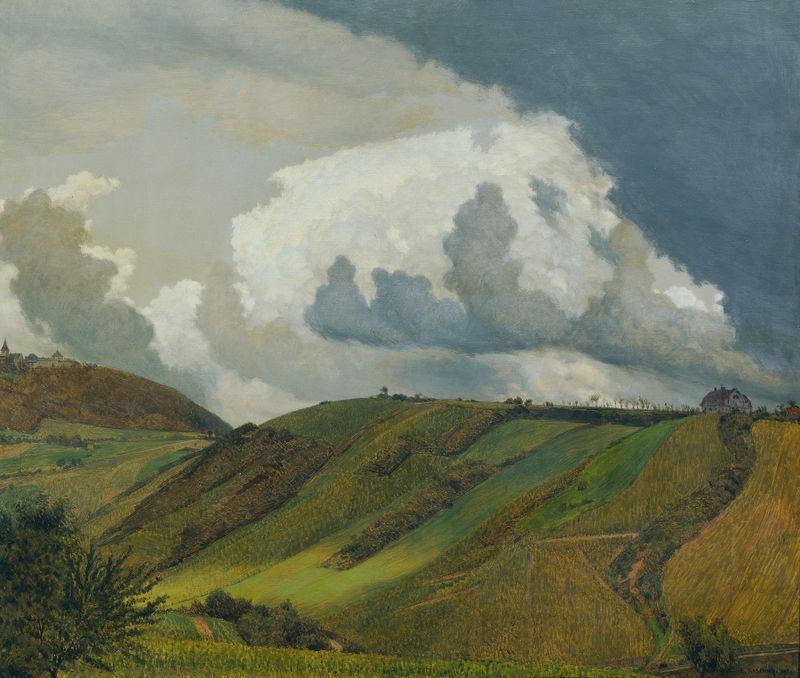
This sentiment resonates deeply within the vibrant strokes of Ein Sommertag, where ecstasy and fleeting bliss intertwine in a sunlit moment. The canvas, alive with color, whispers the stories of joy while hinting at an underlying ache, a reminder that pleasure often walks hand-in-hand with sorrow. First, gaze upon the left side of the painting, where the sun spills its golden warmth across a meadow, illuminating the delicate flowers swaying in harmony with the gentle breeze. Notice how the vivid greens blend effortlessly into a kaleidoscope of floral hues—pinks, blues, and yellows—all competing for your attention.
The use of light, both bright and soft, creates an almost ethereal atmosphere, inviting you to step into this idyllic day while simultaneously revealing the artist’s skilled brushwork that captures dynamic movement. As you delve deeper, observe the distant horizon where the sky meets the land, tinged with hints of stormy gray. This subtle contrast evokes a sense of duality; the joy of summer's day is tinged with the threat of impending change. The figures in the foreground radiate carefree joy, yet their expressions are tinged with introspection, suggesting a deeper longing or unfulfilled desire hidden amidst their laughter.
Such contrasts invite contemplation of how beauty and melancholy coexist within human experience. In 1910, Baschny created Ein Sommertag during a period of introspection and artistic evolution in his life. Living in Germany, he was influenced by the vibrant colors of the Impressionist movement while simultaneously grappling with the societal changes of the early 20th century. This blend of external circumstances and personal reflection profoundly shaped his artistic voice, evident in the way he encapsulated a moment of pure ecstasy, underscored by an ever-present hint of longing.