
Drachenlochbrücke am Drackensteiner Hang — History & Facts
In a world where obsessions both build and shatter, art becomes a refuge, a mirror reflecting the soul’s deepest yearnings. How does one capture the essence of an obsession, an unyielding hold on memory and place? Look closely at the intricate details of Drachenlochbrücke am Drackensteiner Hang. The bridge emerges gracefully across the canvas, its arching form embracing the surrounding landscape.
Notice how the muted greens and browns of the forest blend seamlessly with the soft textures of the sky, creating an ethereal quality that invites you into a dreamlike state. The composition draws the eye to the bridge, yet simultaneously, the vibrant flora in the foreground beckons attention, creating a juxtaposition of structure against nature. As you delve deeper, consider the tension between the man-made and the organic. The bridge symbolizes a human ambition, yet it rests precariously against a backdrop of untamed wilderness, suggesting a dialogue between civilization and nature’s dominion.
The play of light across the bridge's surface hints at the passage of time, perhaps a reminder of the fleeting nature of obsession itself — a moment captured before it inevitably fades. In 1938, Otto Geigenberger was immersed in the evolving landscape of German art, grappling with the tumultuous changes in society. Living in a period fraught with political unrest and impending conflict, he sought solace in landscapes, merging realism with a touch of romanticism. This painting reflects not only his personal fixation on structure within nature but also a broader commentary on humanity's relationship with the world around them.
More Artworks by Otto Geigenberger
Browse all →
Hohe Munde bei Seefeld in Tirol
Otto Geigenberger
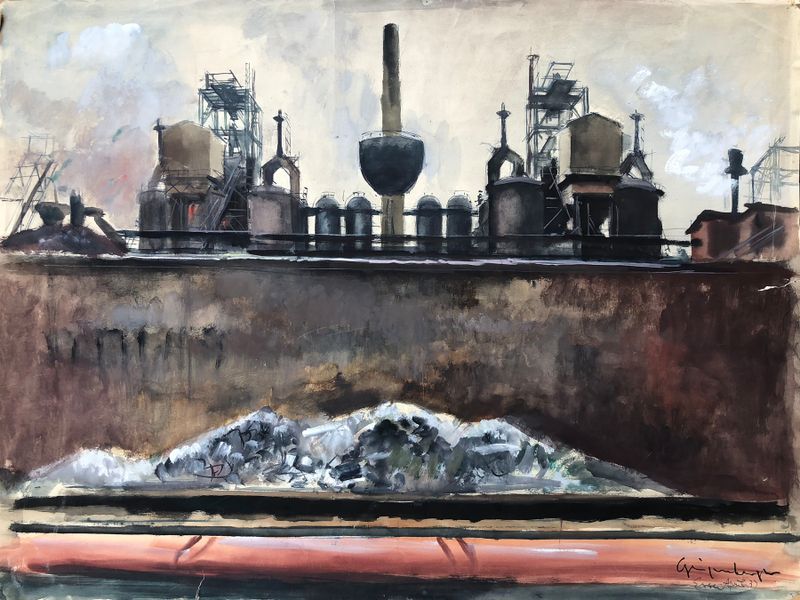
Stahlwerk Krupp in Essen
Otto Geigenberger

Landschaft mit Kirche
Otto Geigenberger

Passau am Inn 2
Otto Geigenberger
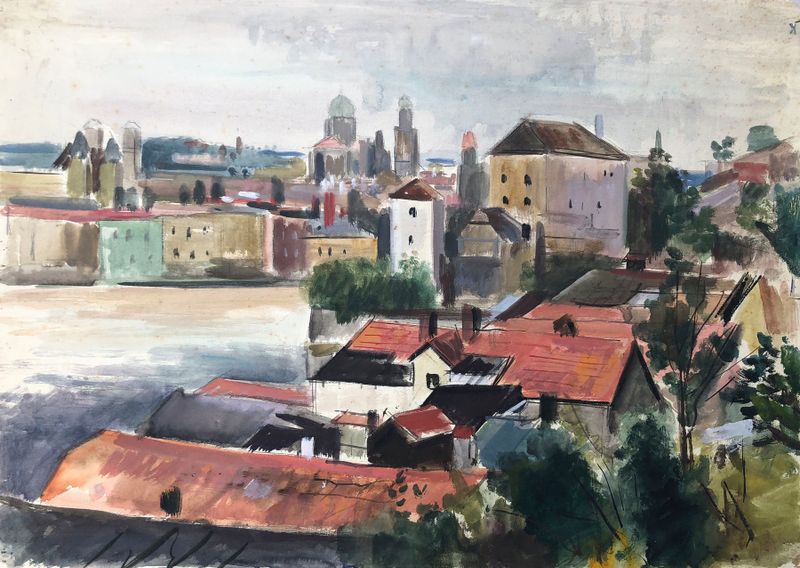
Passau am Inn
Otto Geigenberger
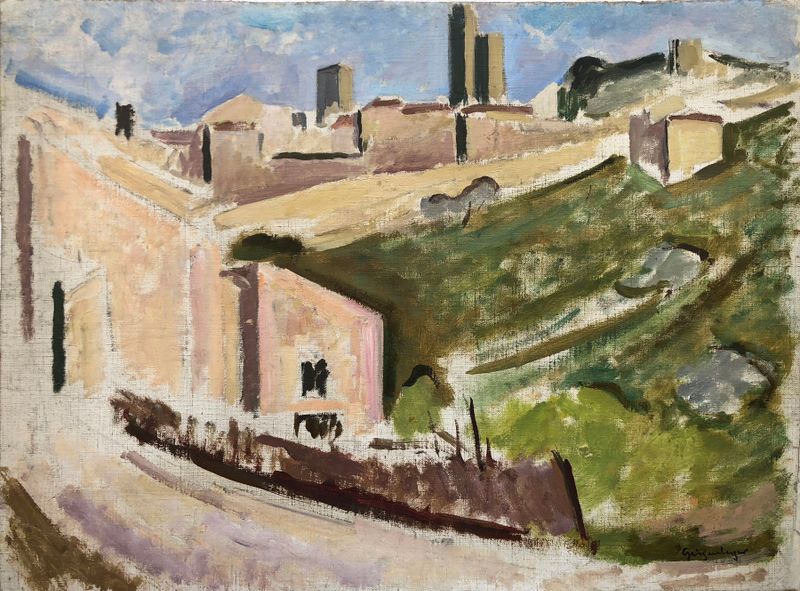
Südliche Stadt auf einem Hügel
Otto Geigenberger

Wasserburg am Inn – Häuserpartie am Inn
Otto Geigenberger

Wasserburg am Inn – Innfront
Otto Geigenberger
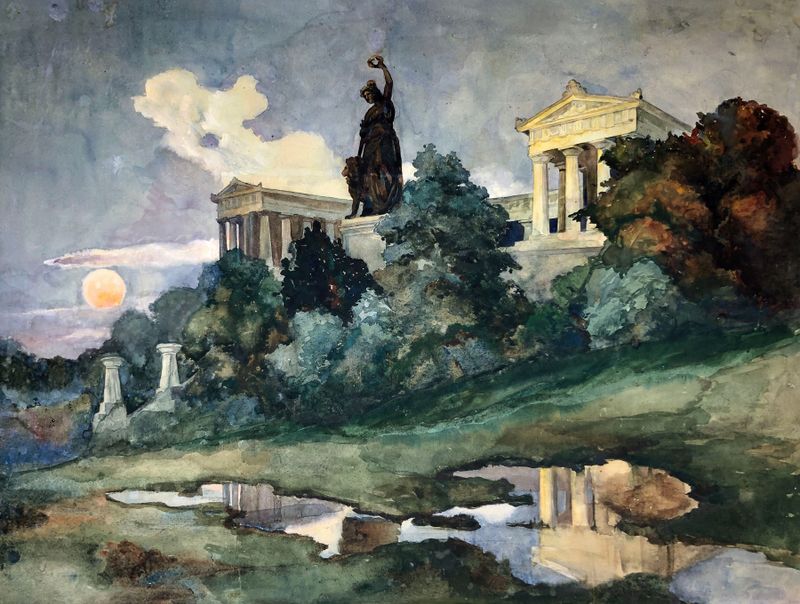
Sonnenuntergang an der Bavaria und Ruhmeshalle in München
Otto Geigenberger
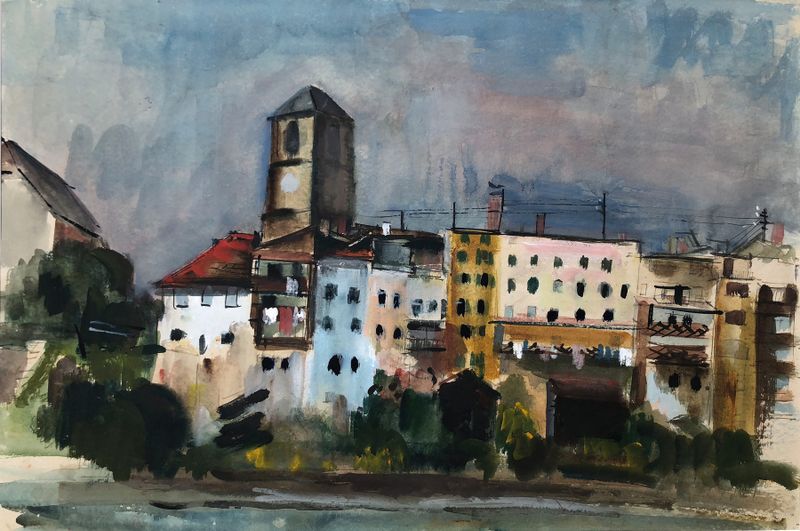
Wasserburg am Inn – Innfront.
Otto Geigenberger





