
Dresden at sunset — History & Facts
Could a single brushstroke hold eternity? In Dresden at sunset, the fleeting beauty of twilight captures not just a cityscape but a profound truth about time itself. Look to the left at the silhouetted rooftops, their jagged contours etched against a canvas awash in warm hues. Notice how delicate strokes blend oranges and purples, creating a gradient that bathes the scene in a celestial glow. The tranquil water below reflects these colors, mirroring the sky’s transformation, while scattered clouds seem to embrace the last light of day, adding depth and movement to the serene composition. Between the vibrant sky and the still river lies an emotional tension—a contrast between the dynamic moments of the day’s end and the silhouettes of urban permanence.
The softness of the sunset invites contemplation, suggesting that even the most bustling of cities can find peace in transient beauty. Each brushstroke becomes a testament to the passage of time, reminding us that while moments fade, their essence lingers. William Wyld painted this work during a time of innovation in the mid-19th century, likely inspired by the Romantic movement that celebrated nature and emotion. Living in England yet often traveling through Europe, he captured the essence of places through atmospheric landscapes.
His work reflects the period's fascination with the interplay of light and shadow, while also revealing a personal engagement with the shifting tides of art and life.
More Artworks by William Wyld
Browse all →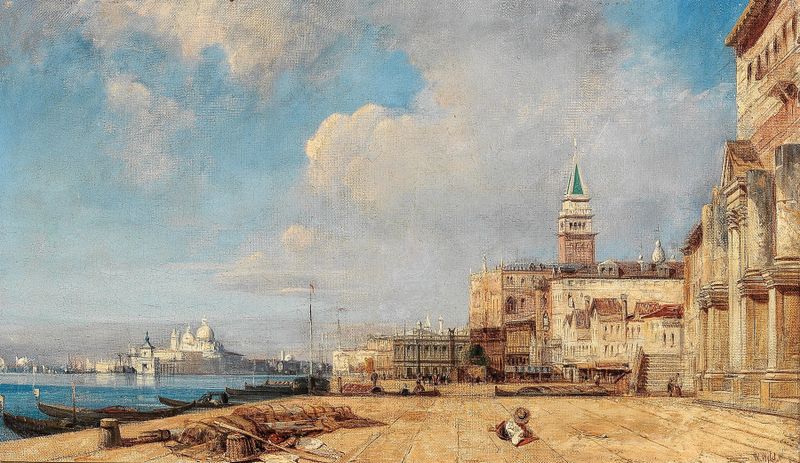
Venice, View of the Campanile and Santa Maria della Salute
William Wyld
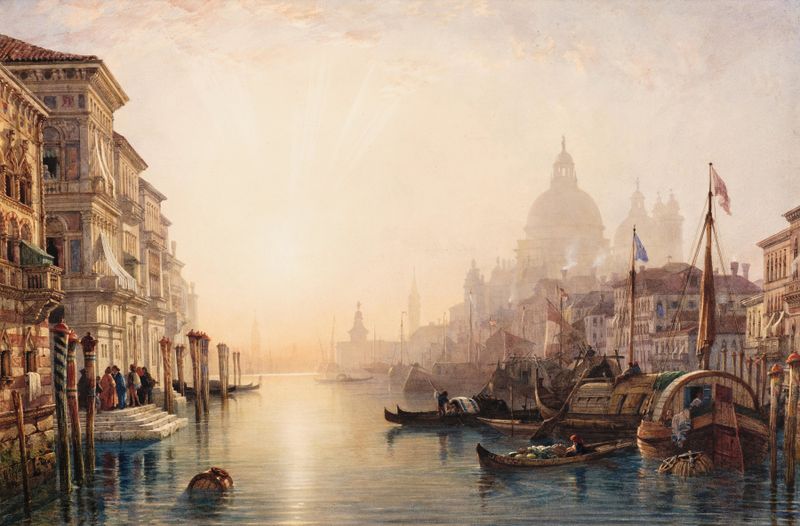
Venice, a View of the Grand Canal with Santa Maria della Salute and Punta della Dogana
William Wyld
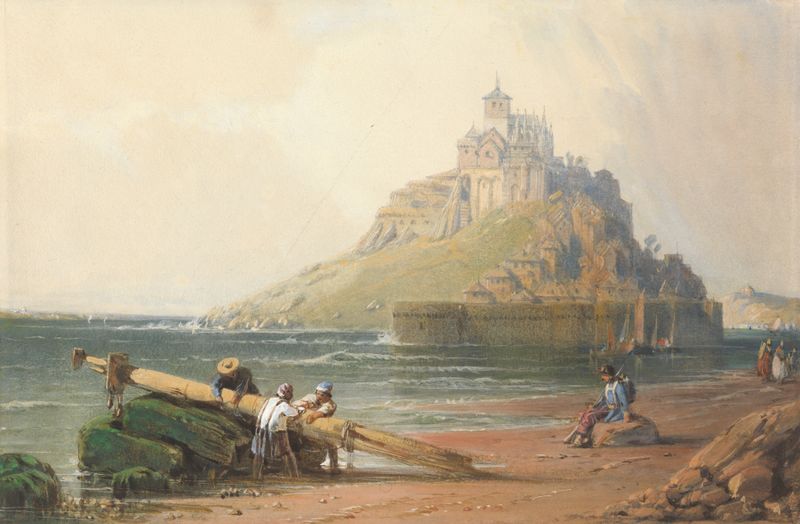
View of Mont St. Michel with Figures on the Beach
William Wyld
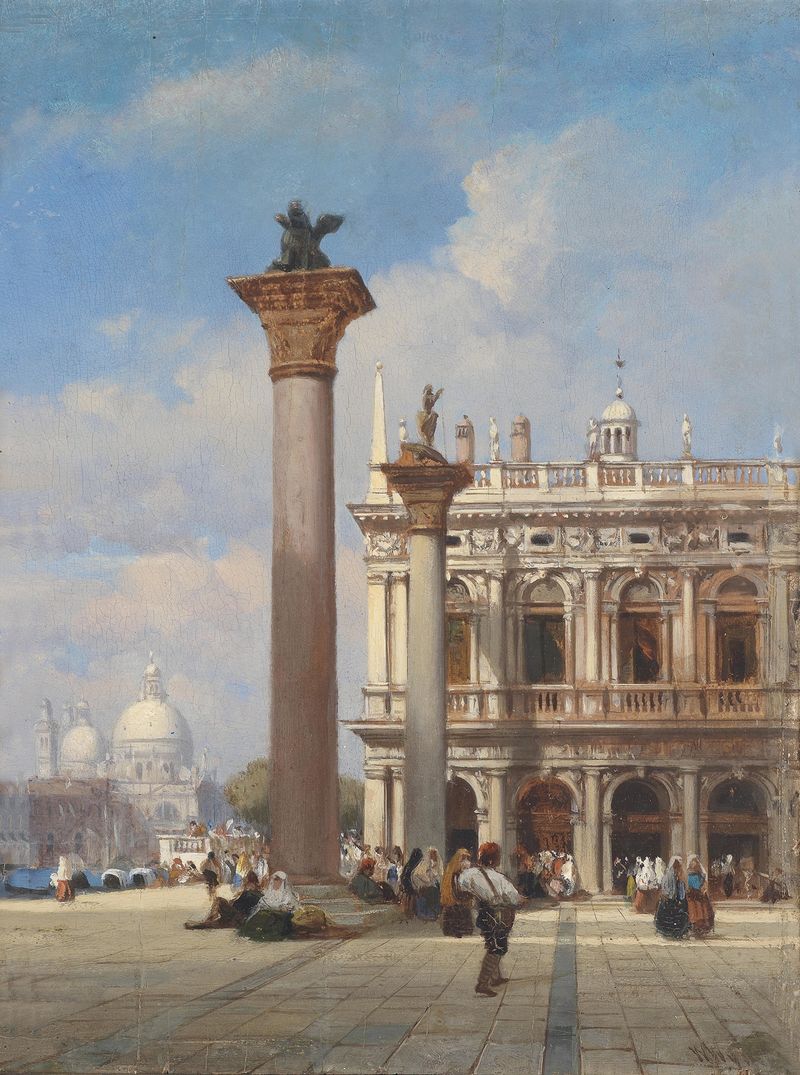
Venezia Piazza San Marco
William Wyld
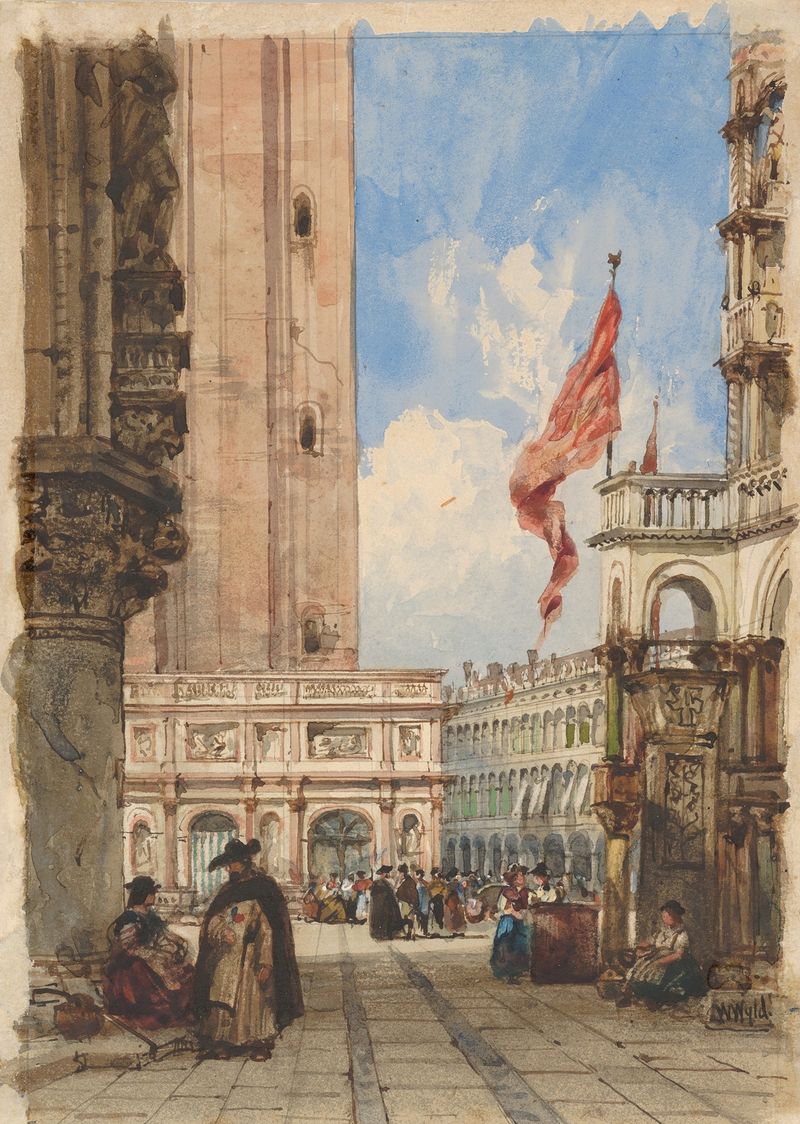
St. Mark’s Square, Venice, with Loggetta
William Wyld
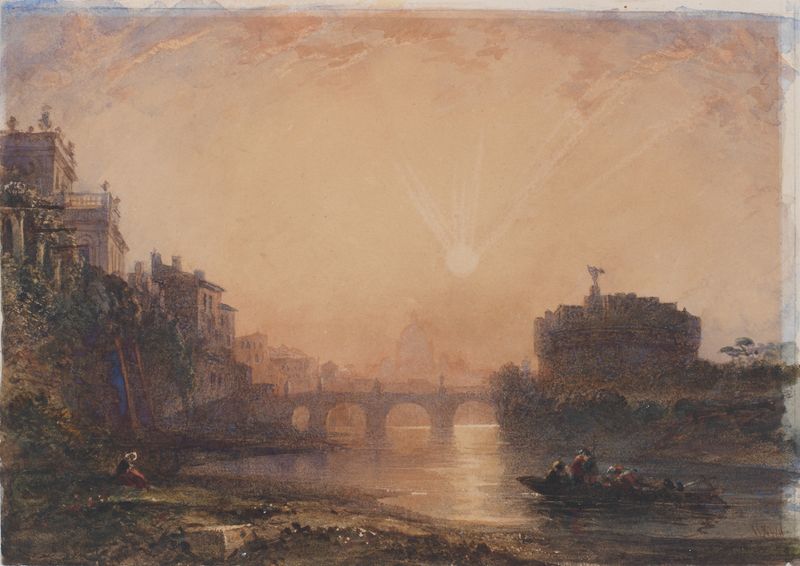
The Castel Sant’Angelo, Rome, at sunset
William Wyld

The Duomo in Milan from a Side Street
William Wyld
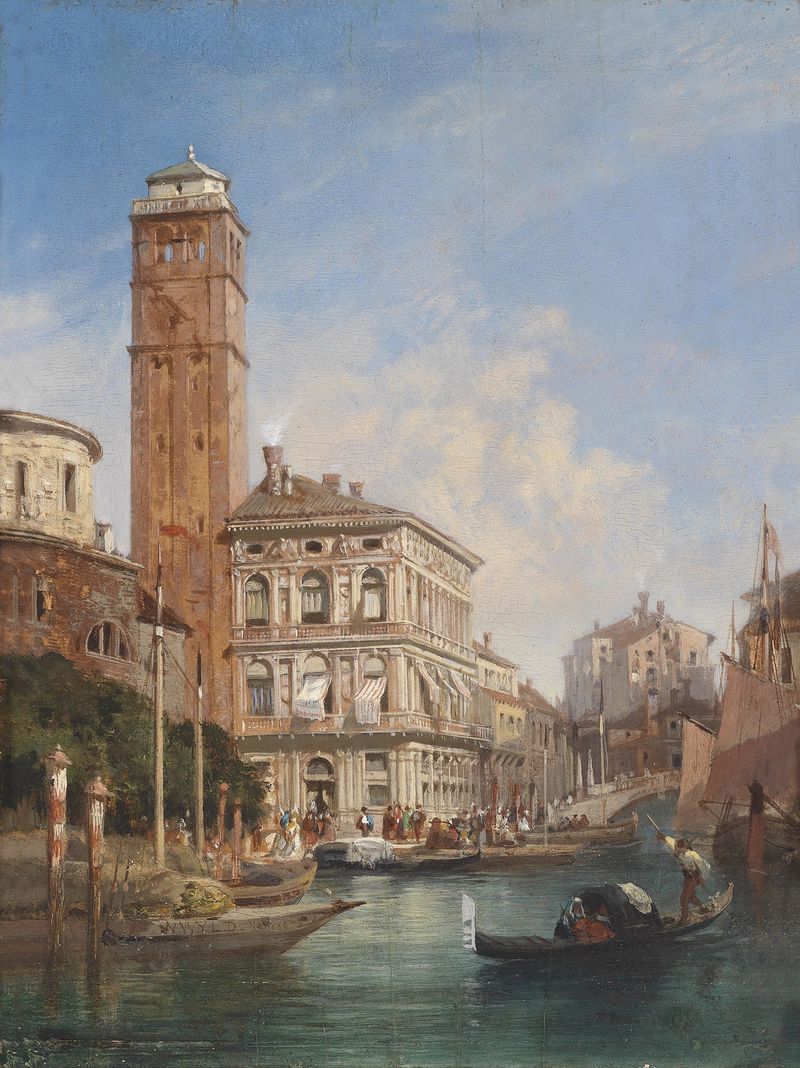
Venezia San Geremia
William Wyld
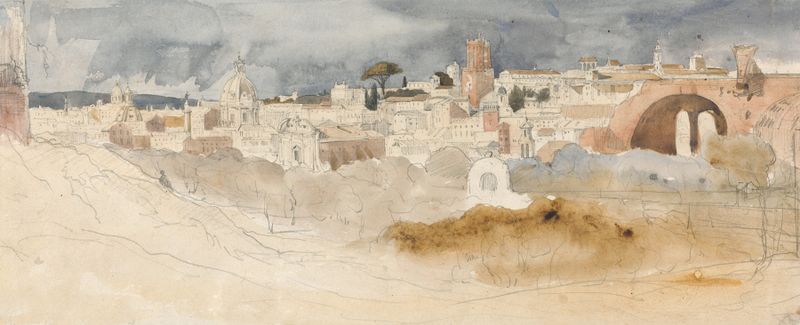
Rome from the Palatine Hill
William Wyld

Coastal scene with ruins
William Wyld





