
The Castel Sant’Angelo, Rome, at sunset — History & Facts
Who listens when art speaks of silence? In The Castel Sant’Angelo, Rome, at sunset, stillness envelops the scene, inviting contemplation of the divine amidst the ephemeral glow of dusk. Look to the horizon where the sun dips below the ancient fortress, casting a warm, golden hue across its weathered stone. Notice how the delicate brush strokes capture the fading light, creating a soft interplay of shadows and illumination. The darkened waters of the Tiber reflect this celestial transition, pulling your gaze into a tranquil embrace that connects the fortress to the heavens. Yet, beneath the serene surface lies a profound tension: the juxtaposition of human architecture against the vastness of the sky evokes both the grandeur and fragility of existence.
The fortress stands as a protector, yet the encroaching night suggests the inevitable passage of time. There is a dialogue between the permanence of stone and the fleeting nature of twilight, hinting at the divine as an eternal presence overshadowed by the transient. William Wyld painted this piece during a time when Europe was grappling with rapid changes in society and culture. The exact date remains uncertain, but his work often reflected the blending of romanticism with realism, capturing the essence of places like Rome amidst the backdrop of 19th-century artistic evolution.
The focus on natural light and atmospheric effects in this painting aligns with the era’s fascination with the divine in nature and the power it holds over the human spirit.
More Artworks by William Wyld
Browse all →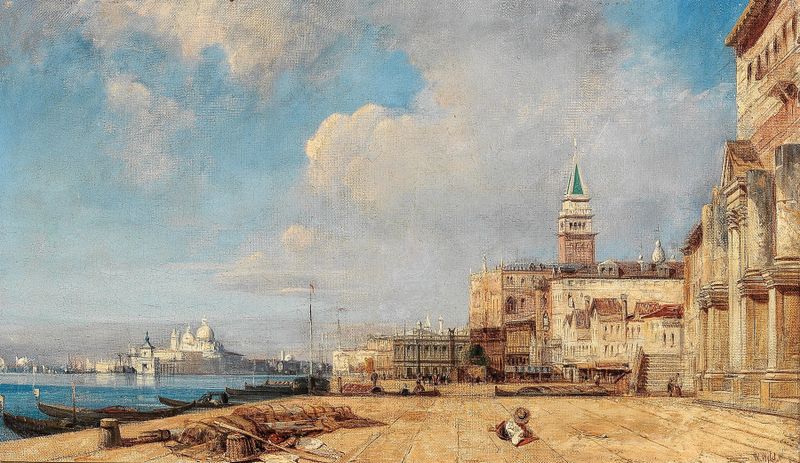
Venice, View of the Campanile and Santa Maria della Salute
William Wyld
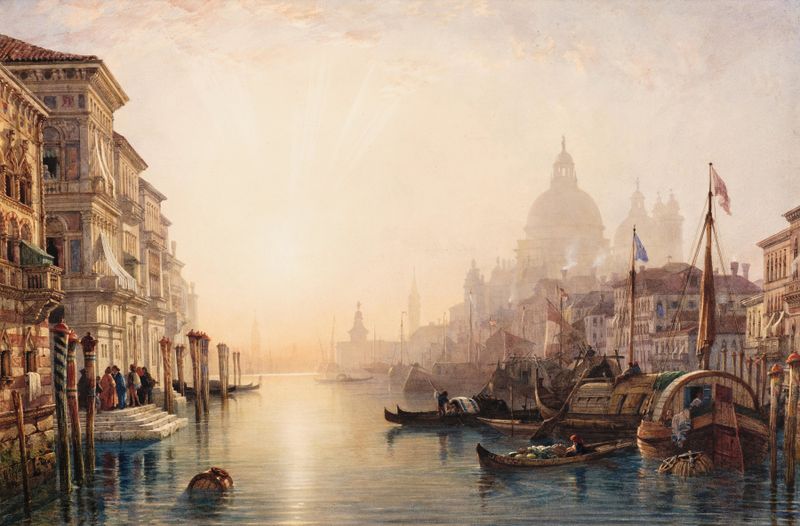
Venice, a View of the Grand Canal with Santa Maria della Salute and Punta della Dogana
William Wyld
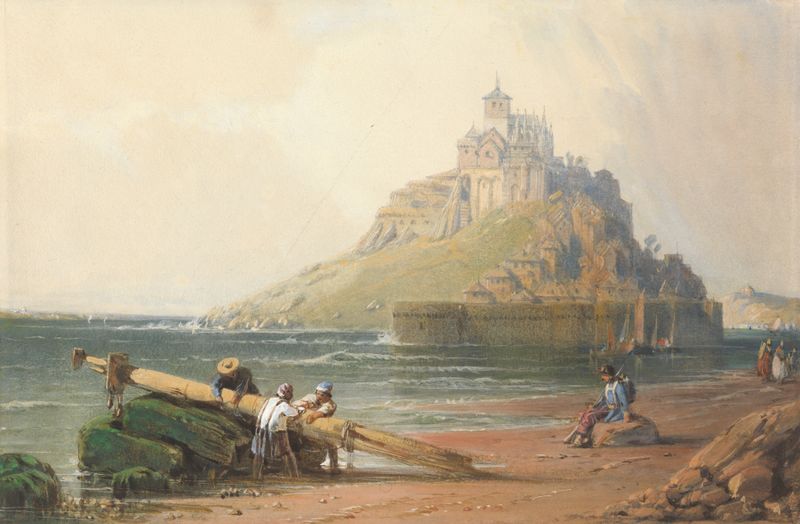
View of Mont St. Michel with Figures on the Beach
William Wyld
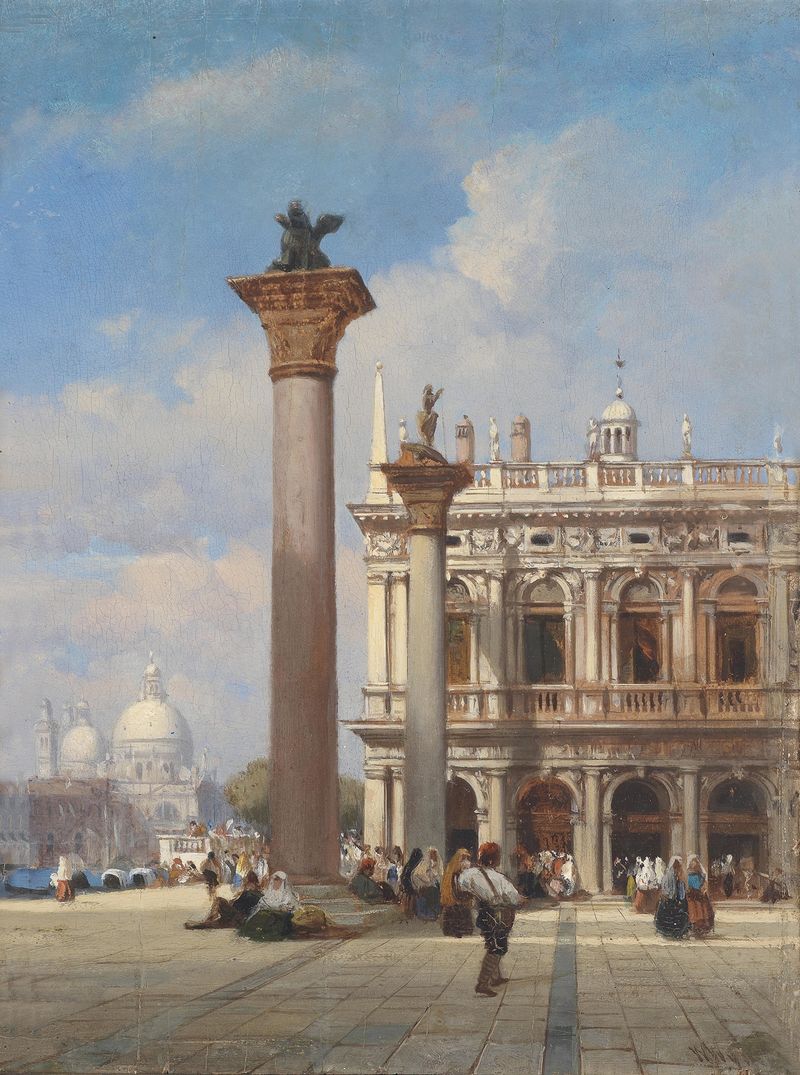
Venezia Piazza San Marco
William Wyld
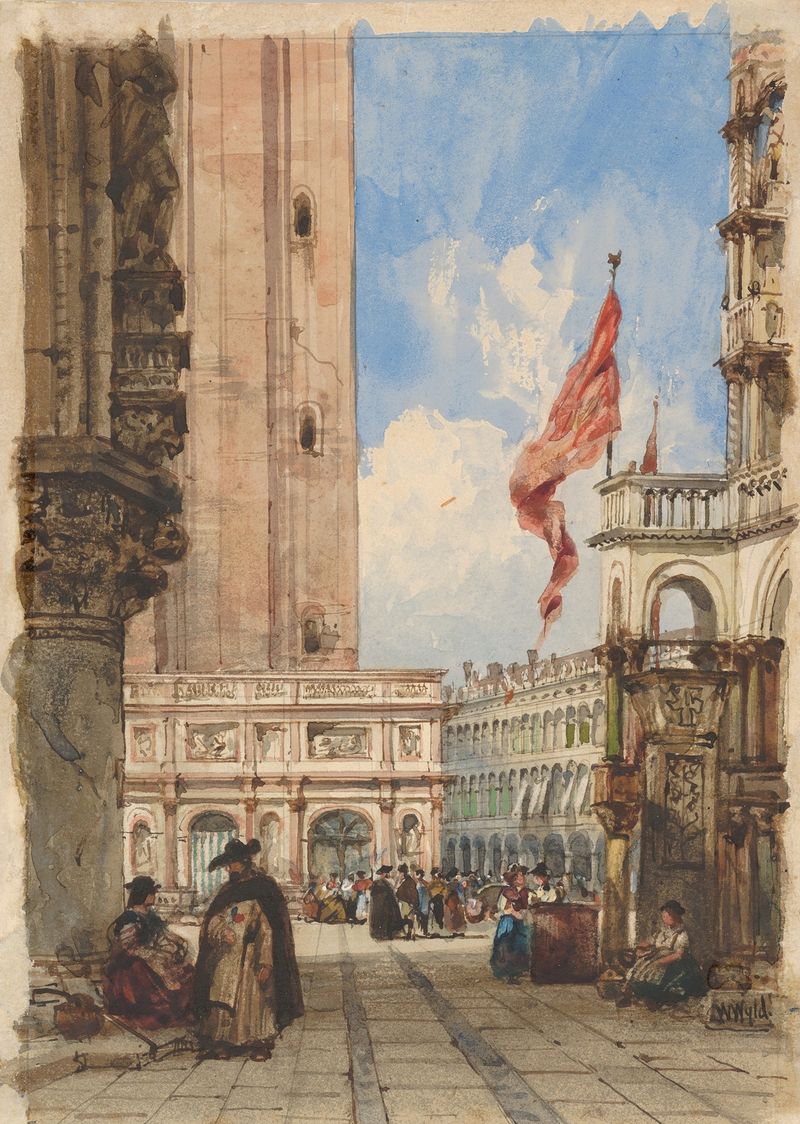
St. Mark’s Square, Venice, with Loggetta
William Wyld

The Duomo in Milan from a Side Street
William Wyld
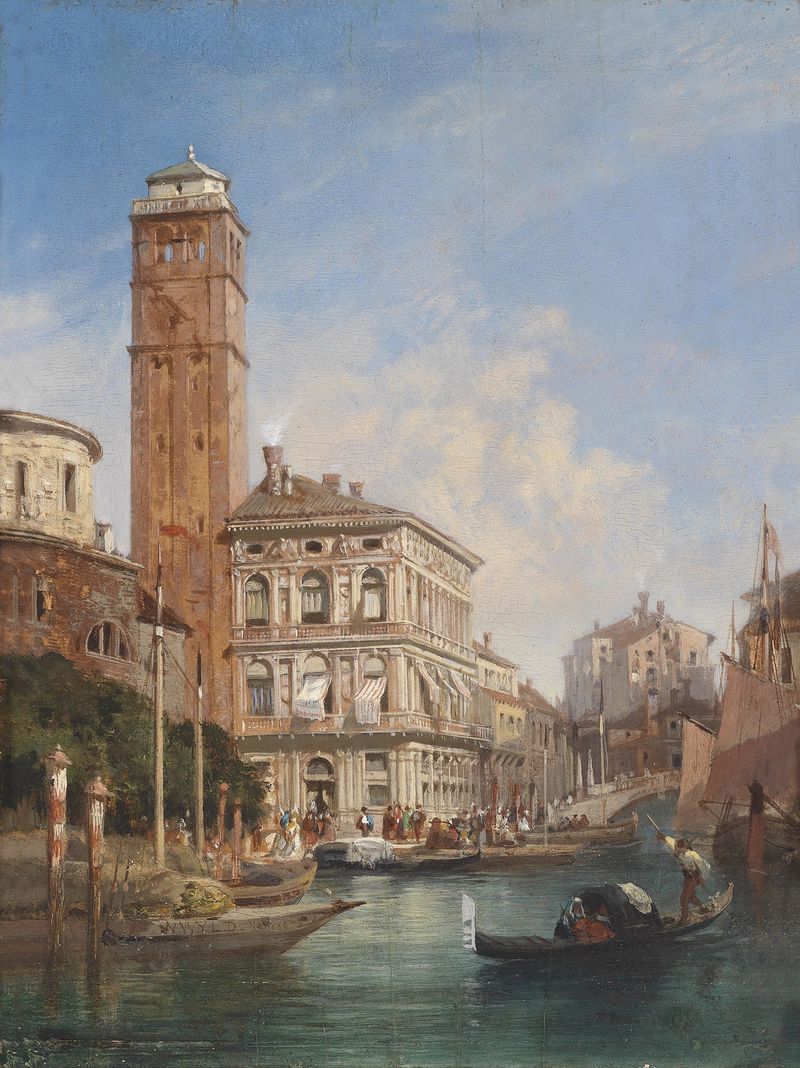
Venezia San Geremia
William Wyld
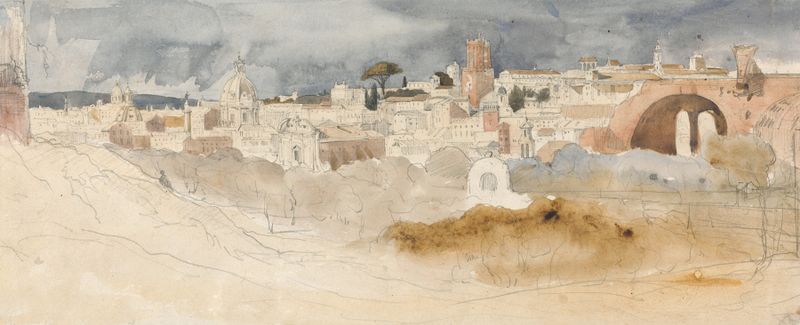
Rome from the Palatine Hill
William Wyld

Coastal scene with ruins
William Wyld
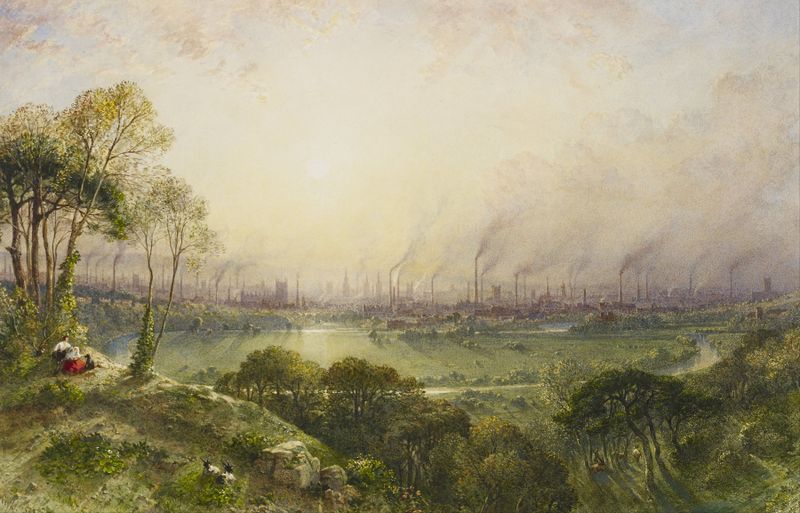
Manchester from Kersal Moor, with rustic figures and goats
William Wyld
More Architecture Art
Browse all →
The statue of Liberty
Frédéric Auguste Bartholdi

View of Houses in Delft, Known as ‘The Little Street’
Johannes Vermeer

View of Houses in Delft, Known as ‘The Little Street’
Johannes Vermeer

The Cathedral in Rouen. The portal, Grey Weather
Claude Monet

The yellow house
Vincent van Gogh

The Church in Auvers-sur-Oise, View from the Chevet
Vincent van Gogh