
Duinlandschap — History & Facts
The quiet majesty of nature often reveals a divine presence, whispering secrets through the layers of the earth. Look to the center of Duinlandschap, where soft dunes roll gently under a sky awash in pastel hues. The artist employs a delicate palette, with muted greens and sandy beiges harmonizing against the ethereal blue overhead. Notice how the brushwork captures the subtle movements of wind across the landscape, creating a tactile sense of depth that invites the viewer to wander through the canvas.
The horizon line, softened and blurred, draws your eye onward into the infinite distance, suggesting a world both familiar and unknowable. Beneath its serene surface, the painting speaks to the juxtaposition between human existence and the vastness of nature. The dunes, while beautiful, are also reminders of life's transience—constantly shifting and evolving. Their gentle contours contrast with the unyielding sky, which represents eternity.
This tension evokes a feeling of reverence, as if the viewer is standing at the edge of something sacred, contemplating the divine interplay between the earthly and the celestial. In 1893, Hoynck van Papendrecht created this work during a time of burgeoning artistic exploration in the Netherlands. The artist was deeply influenced by the Symbolist movement, which sought to express the ineffable through visual means. While he painted in the quaint surroundings of nature, he was also responding to the wider artistic currents of the period, blending traditional representation with emerging modernist ideas that sought to capture both emotion and spirituality.
More Artworks by Jan Hoynck van Papendrecht
Browse all →
Landschap op Texel
Jan Hoynck van Papendrecht
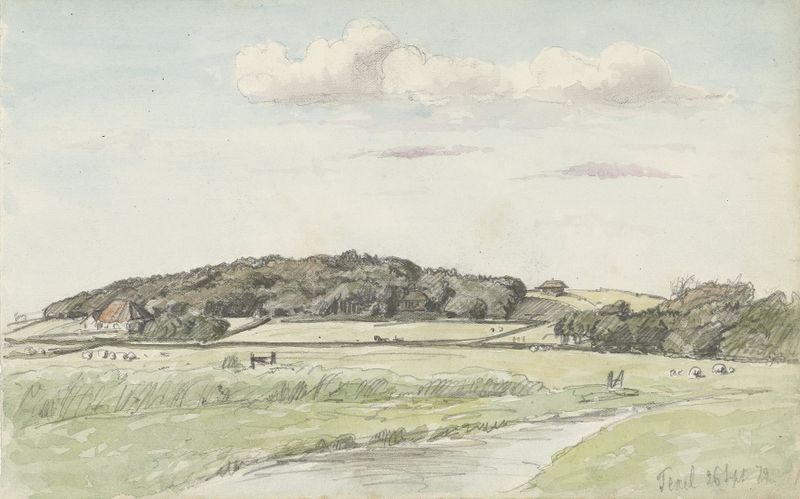
Gezicht op Texel
Jan Hoynck van Papendrecht

De Warmoesgracht
Jan Hoynck van Papendrecht

Duinlandschap tussen Bloemendaal en IJmuiden
Jan Hoynck van Papendrecht
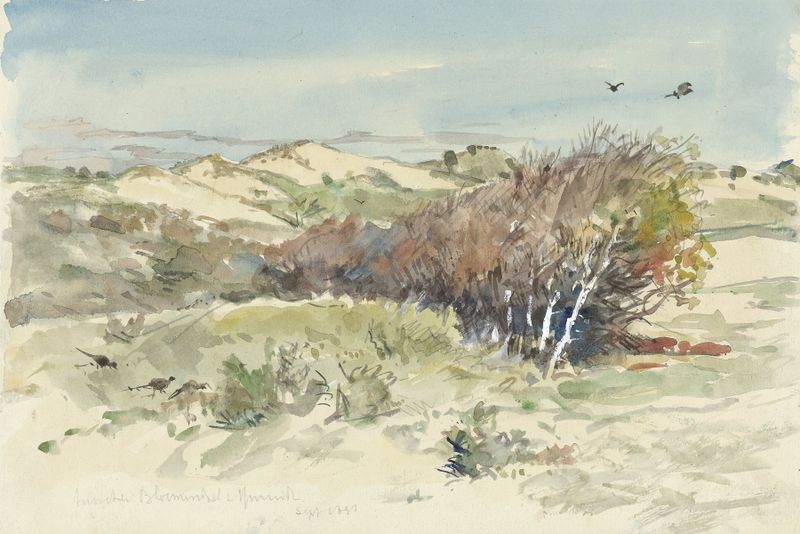
Duinlandschap tussen Bloemendaal en IJmuiden
Jan Hoynck van Papendrecht

Heiwerkzaamheden aan de Van Eeghenstraat, achter de Parkweg
Jan Hoynck van Papendrecht

Handelskade, Amsterdam
Jan Hoynck van Papendrecht





