
Gezicht op Texel — History & Facts
The essence of ecstasy lives in the interplay of light and color, revealing both nature's beauty and the artist's fervor. To truly appreciate this work, begin by focusing on the vibrant sky, where hues of azure and soft golden yellows mingle. Notice how the clouds, with their delicate brushwork, seem to dance across the canvas, inviting the viewer into a serene yet dynamic atmosphere. The horizon stretches wide, dominated by lush green pastures and the distant outline of the Dutch landscape, all painted with a fluidity that reflects an intimate connection to the land. Hidden within the canvas lies a dichotomy between tranquility and movement.
The gentle flow of the water contrasts with the lively strokes of the grass, symbolizing the constant ebb and flow of life. The play of light enhances this emotional tension—bright areas illuminate the joy of existence, while darker shades hint at the introspective moments we often overlook. Each detail, from the ripples of the water to the textured brushwork of the fields, tells a story of ecstasy found in the mundane. Created in 1879, this piece emerged during a pivotal time for the artist, who was deeply influenced by the Dutch Impressionist movement.
Living in the bustling atmosphere of Amsterdam, the artist sought to capture the fleeting beauty of everyday moments. As the world around him transformed, Gezicht op Texel reflects a personal and artistic yearning for connection to his homeland, encapsulating a sense of joy that resonates even today.
More Artworks by Jan Hoynck van Papendrecht
Browse all →
Landschap op Texel
Jan Hoynck van Papendrecht
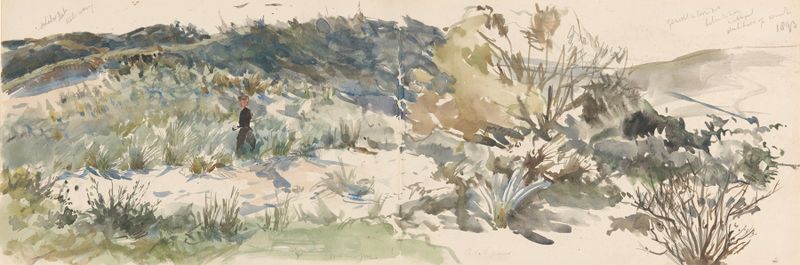
Duinlandschap
Jan Hoynck van Papendrecht

De Warmoesgracht
Jan Hoynck van Papendrecht

Duinlandschap tussen Bloemendaal en IJmuiden
Jan Hoynck van Papendrecht
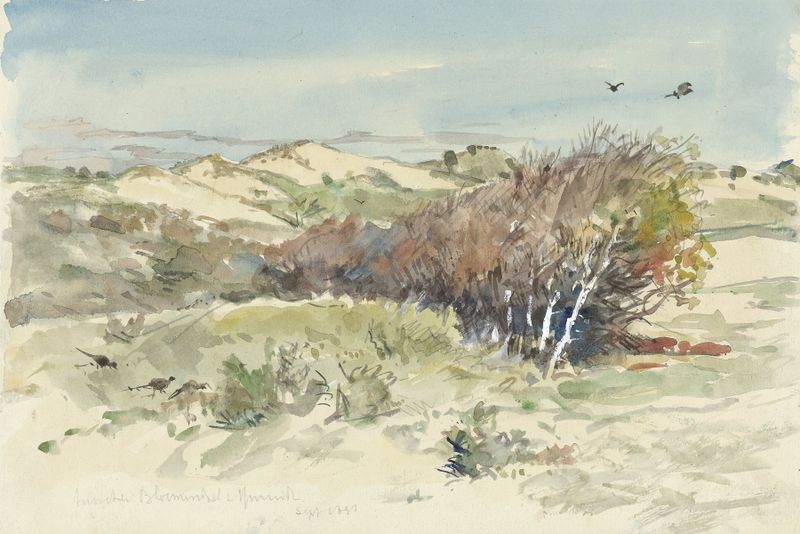
Duinlandschap tussen Bloemendaal en IJmuiden
Jan Hoynck van Papendrecht

Heiwerkzaamheden aan de Van Eeghenstraat, achter de Parkweg
Jan Hoynck van Papendrecht

Handelskade, Amsterdam
Jan Hoynck van Papendrecht





