
Landschap op Texel — History & Facts
This sentiment resonates deeply, particularly when considering how landscapes can whisper secrets of fate forged through time. In Landschap op Texel, the viewer’s gaze is drawn first to the sweeping horizon, where a delicate interplay of light and shadow dances across the tranquil waters. Look to the center where a patch of golden sunlight breaks through the clouds, illuminating the lush greenery on the shore. The palette—muted greens and blues punctuated by soft yellows—evokes a sense of serene beauty, inviting contemplation of the natural world’s eternal cycle. Beneath the surface, however, lies a tension between tranquility and inevitability.
The serene waters reflect not only the sky but also the weight of history, suggesting that what we perceive as serene may harbor deeper currents of change. The gentle ripples in the foreground hint at an unseen disturbance, a reminder of nature’s duality—its capacity for both beauty and destruction. Each brushstroke seems to whisper tales of destiny, revealing a landscape that may seem untouched yet is imbued with the passage of time. Jan Hoynck van Papendrecht painted Landschap op Texel in 1879 while residing in the Netherlands, a period marked by artistic exploration and the rise of impressionism.
The artist was influenced by the natural beauty surrounding him, particularly the landscapes of Texel, infusing his work with a sense of place and emotional depth. At this time, Dutch artists were increasingly captivated by the interplay of light and atmosphere, striving to capture fleeting moments in a world rapidly changing due to industrialization.
More Artworks by Jan Hoynck van Papendrecht
Browse all →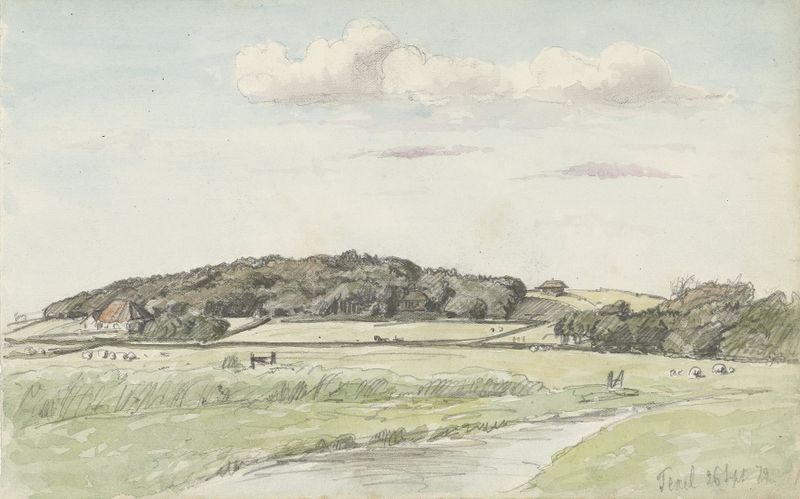
Gezicht op Texel
Jan Hoynck van Papendrecht
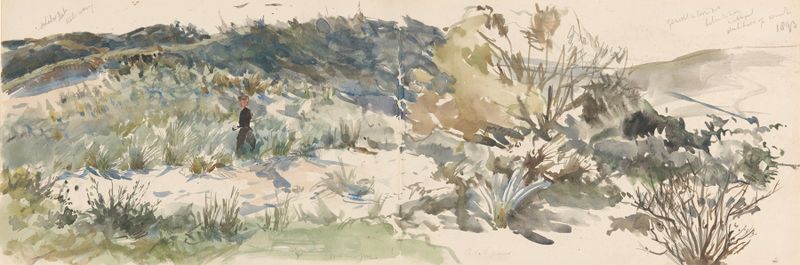
Duinlandschap
Jan Hoynck van Papendrecht

De Warmoesgracht
Jan Hoynck van Papendrecht

Duinlandschap tussen Bloemendaal en IJmuiden
Jan Hoynck van Papendrecht
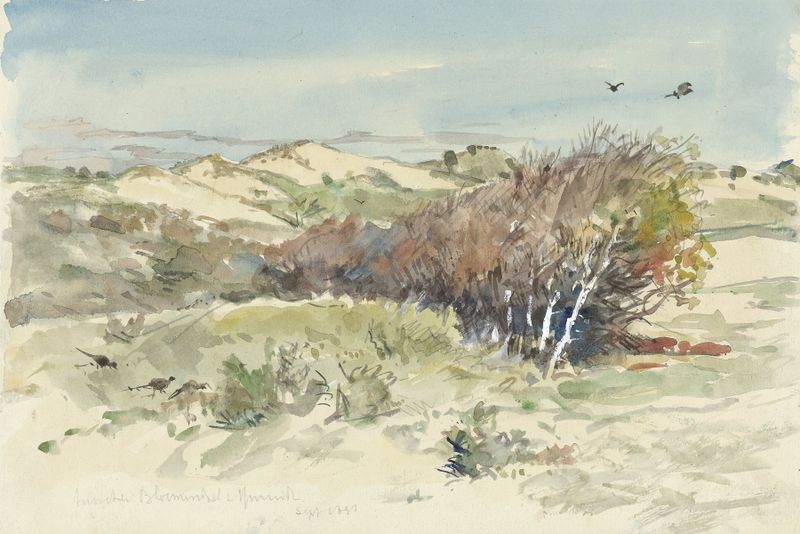
Duinlandschap tussen Bloemendaal en IJmuiden
Jan Hoynck van Papendrecht

Heiwerkzaamheden aan de Van Eeghenstraat, achter de Parkweg
Jan Hoynck van Papendrecht

Handelskade, Amsterdam
Jan Hoynck van Papendrecht





