Dune Landscape with a Country Road — History & Facts
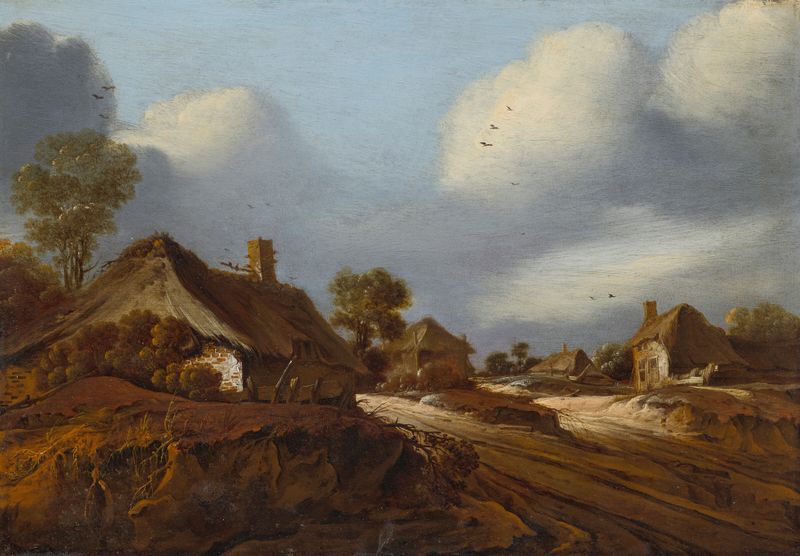
In a world where fleeting moments are swallowed by the relentless march of time, art acts as a silent guardian of memory. This single canvas, rich in texture and emotion, whispers the beauty of what once was and beckons us to linger in its embrace. Look to the horizon where a winding country road stretches into the distance, flanked by gentle dunes that seem to cradle a forgotten past. Notice how the warm tones of the sandy landscape blend seamlessly with soft blues and greens—a harmonious palette that evokes serenity.
The way the light dances across the surface, casting long shadows, draws your attention to the textured brushwork, inviting you to explore every nuance of this tranquil scene. In the interplay of light and shadow, time itself becomes palpable. The sweeping dunes, shaped by the wind, stand as monuments to nature's enduring presence, while the winding road suggests human transience and the passage of life. A solitary figure, almost ghostly in its stillness, ponders the journey ahead, capturing the tension between movement and stillness, the known and the unknown—a poignant reminder of our fleeting existence. Pieter van Santvoort created this work in 1629, during a period when the Dutch Golden Age was flourishing.
As a member of the Haarlem school, he was influenced by the rising interest in landscape painting, which was becoming a vital genre. At this time, artists were exploring both the beauty of nature and the emotional landscapes of human experience, reflecting changing societal values and the complexities of life in the Netherlands.