
Dune Landscape With Figures — History & Facts
In the stillness of a moment, the landscape becomes a canvas for our deepest yearnings and losses, inviting us to reflect on what lies beyond the visible. Focus first on the horizon, where muted earth tones of sandy dunes blend seamlessly with the soft, brooding sky. Notice how the figures, small and almost indistinct, traverse the undulating landscape, their movements echoing the quiet resilience of humanity against nature's vastness. The subtle interplay of light and shadow draws the eye, revealing contours that breathe life into the scene while evoking a sense of isolation. Hidden within the layers of paint, the artist captures the essence of loss—the figures are not purely wandering but seem to be searching for something just out of reach.
The expanse of sand reflects a journey, their vulnerability contrasting with the immense, indifferent landscape that surrounds them. This tension between human emotion and the vastness of nature creates a poignant dialogue about existence and the ephemeral nature of life. Philips Wouwerman painted during the 17th century, a vibrant period in Dutch art, characterized by its meticulous attention to detail and exploration of landscapes. It was a time of both economic prosperity and social change in the Netherlands, where artists sought to capture the beauty of everyday life.
While precise dating of this piece remains unclear, it exemplifies the artist's ability to intertwine figures and nature, reflecting both personal and collective narratives during an era marked by both hope and melancholy.
More Artworks by Philips Wouwerman
Browse all →
Halt of Cavaliers at an Inn
Philips Wouwerman

Halt of Travellers
Philips Wouwerman

Travelers Awaiting a Ferry
Philips Wouwerman
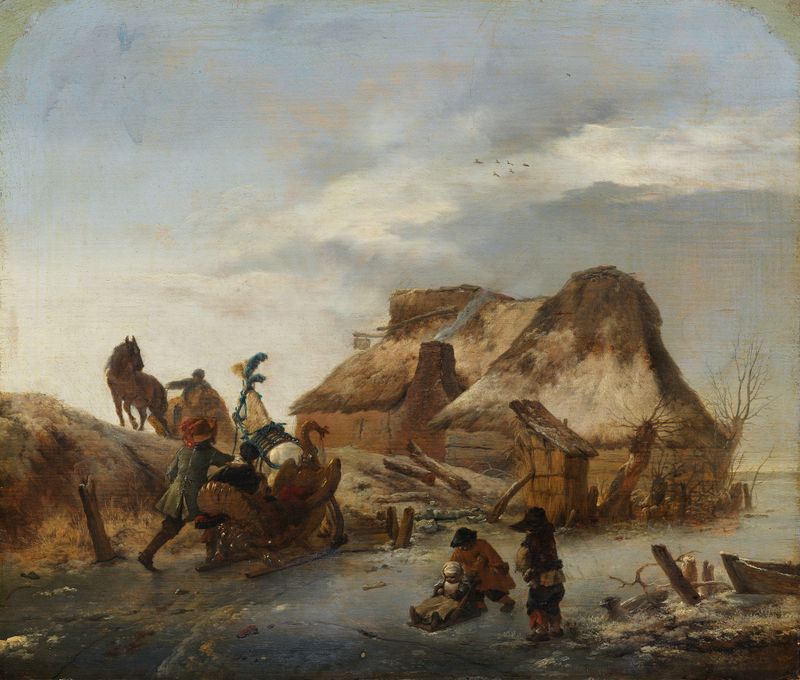
A Nobleman’s Sleigh on the Ice
Philips Wouwerman
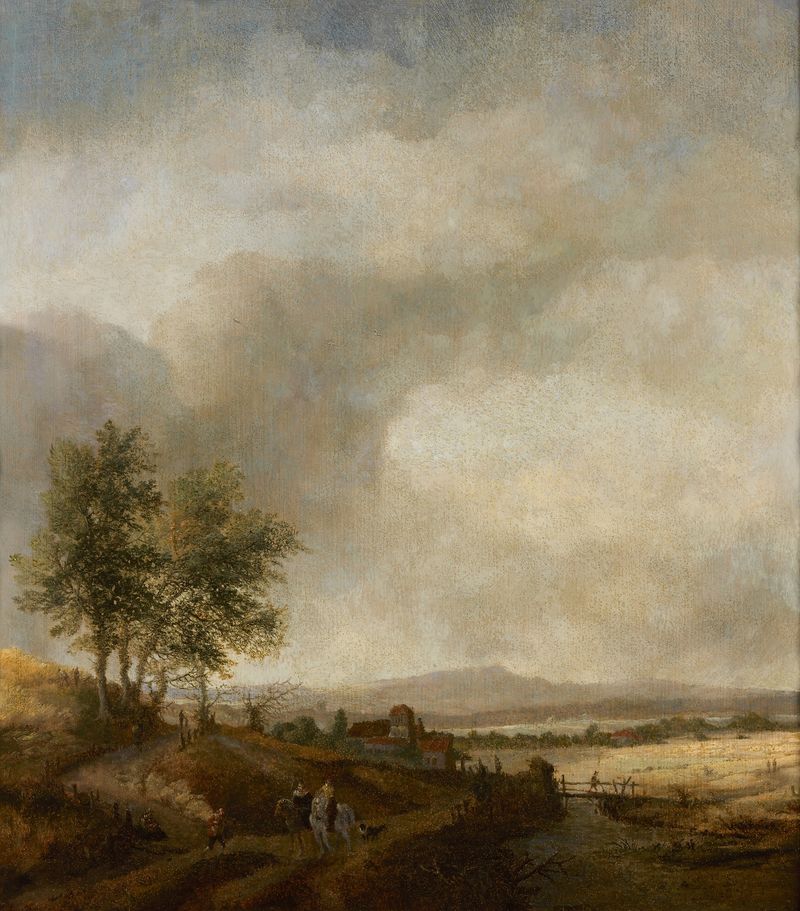
Landschap met ruiters
Philips Wouwerman
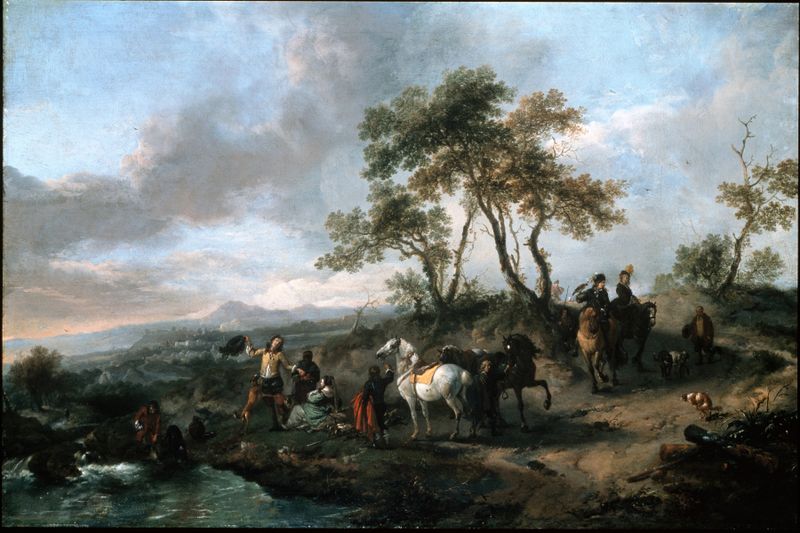
Halt of a Hunting Party
Philips Wouwerman
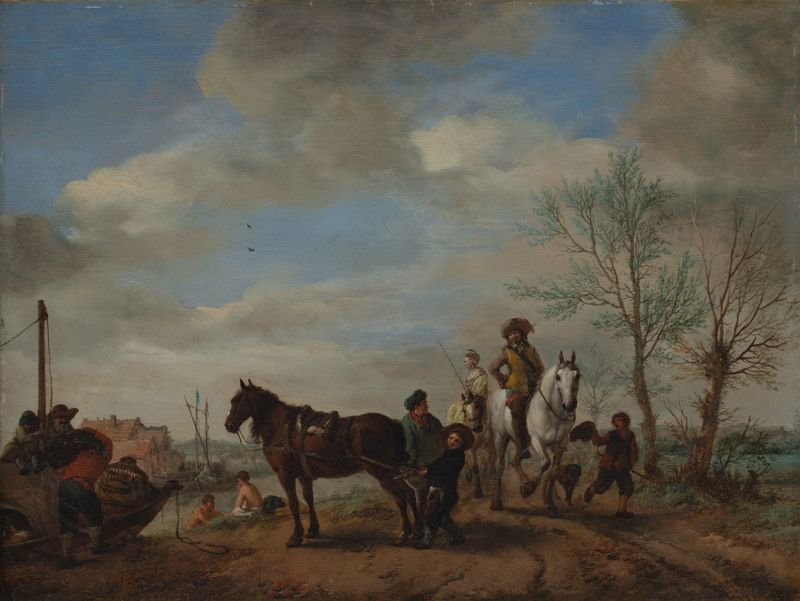
A Man and a Woman on Horseback
Philips Wouwerman
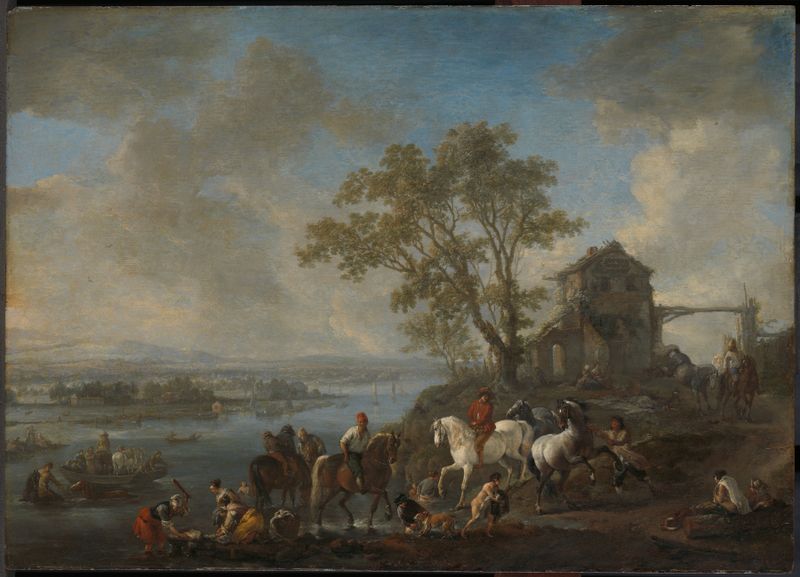
Horsepond on a River
Philips Wouwerman
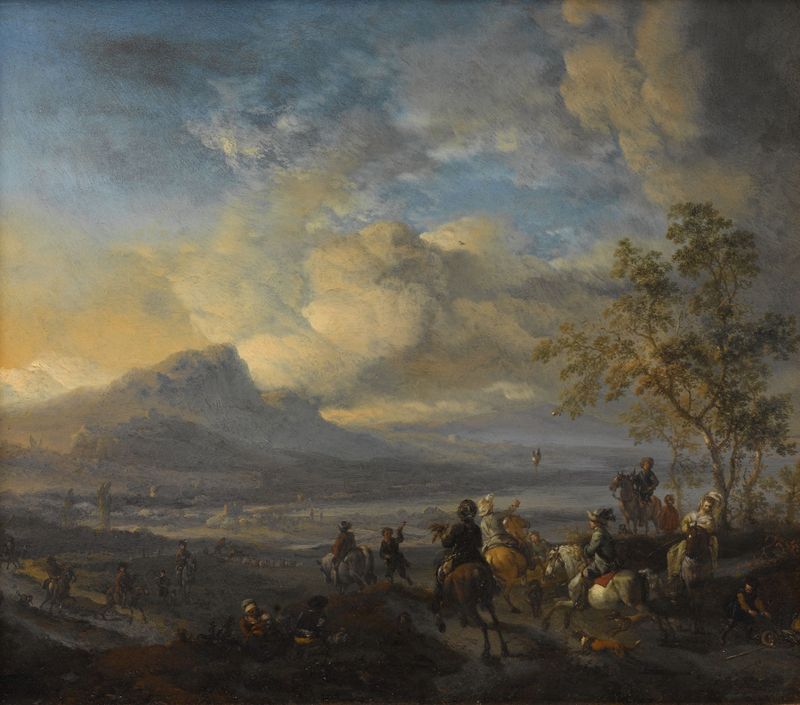
The Falcon Hunt
Philips Wouwerman

Riders at a Blacksmith’s
Philips Wouwerman





