Dune Shore — History & Facts
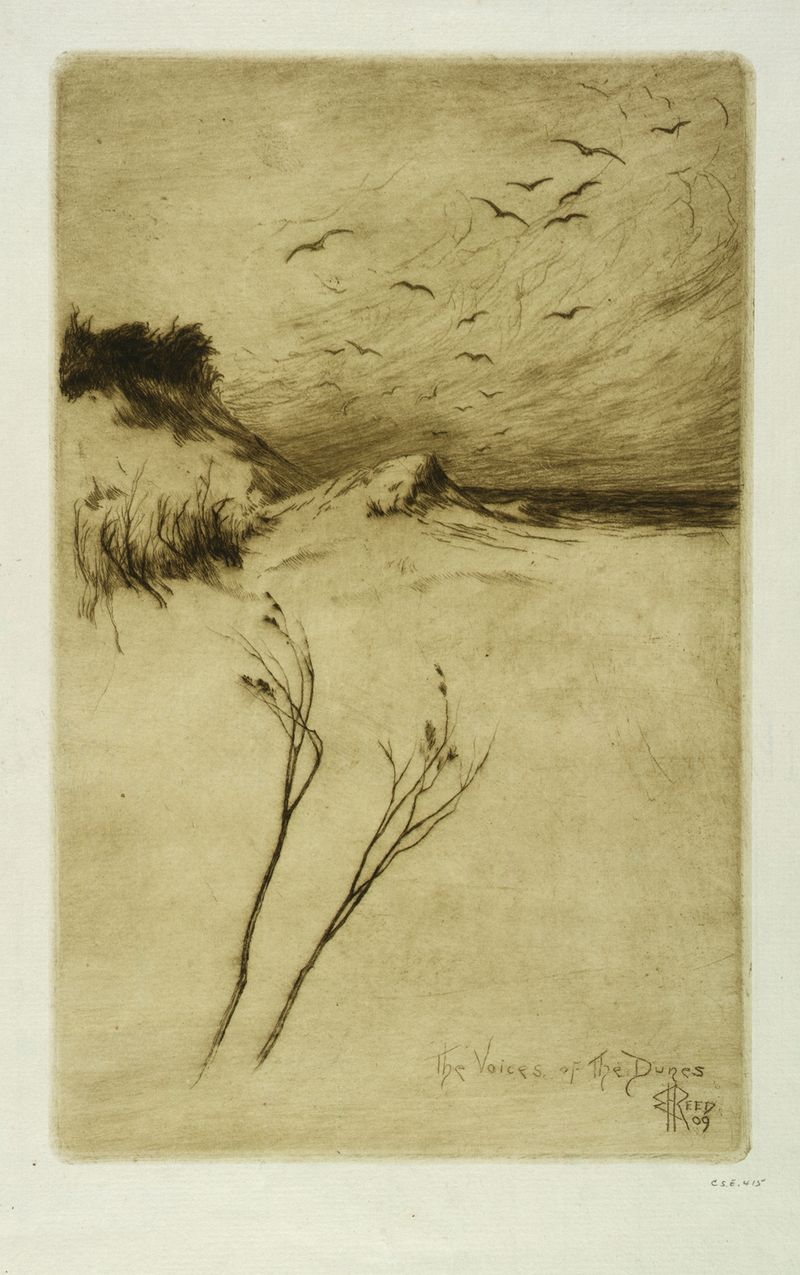
In the stillness of this moment, the world unfurls, urging us to confront its beauty and its contradictions. Each brushstroke whispers of change, beckoning us to witness the quiet revolution unfolding on the shore. Look to the foreground, where the gentle contours of the dune unfurl like a soft wave, leading your gaze towards the shimmering expanse of water. Notice how the sun casts a golden hue across the landscape, dancing upon the surface, creating contrasts of light and shadow.
The artist’s choice of muted earth tones interwoven with vibrant blues and golds evokes a sense of harmony, yet hints at the underlying tumult of the time. The composition is a serene invitation, yet it carries the weight of impending transformation. As the viewer delves deeper, hidden meanings emerge: the dune symbolizes both stability and the inevitability of change, while the horizon alludes to possibilities and uncharted territories. The juxtaposition of land and sea serves as a reminder of life’s duality — the calm before a storm, the familiar before the unknown.
The delicate brushwork expresses fragility, inviting contemplation of the world’s quiet upheavals. In 1909, the artist created this piece during a period of artistic exploration and societal turmoil in America. Reed, influenced by the shifting currents of modernism, sought to capture the essence of nature while reflecting the tensions of a society on the brink of revolution. The painting stands as a testament to both personal and collective transformation, resonating with the spirit of its time.