
Dunmose, West by North — History & Facts
What secret hides in the quiet of the canvas? In the stillness of Dunmose, West by North, a landscape whispers its tale, drawing the viewer into a sanctuary of tranquility where nature reigns supreme. Look to the horizon, where soft hues of twilight meld into the dusk, creating a delicate interplay of blues and golds. The gentle sweep of the land invites your gaze across undulating fields that seem to breathe with life. Notice how the light dances upon the water, reflecting a serene sky that cradles wisps of clouds, each brushstroke breathing movement into the stillness of the scene.
The composition cleverly balances foreground and distance, allowing a sense of depth as the viewer explores the hidden contours of the landscape. Beneath the surface, there lies a tension between solitude and connection. The minimal presence of human figures speaks to both isolation and introspection, as if the land holds truths that words cannot capture. The subtle variations in color evoke a sense of time passing, suggesting a moment suspended between reality and reverie.
This duality encapsulates the bittersweet nature of existence, inviting contemplation among the quiet. Created during an era when Romanticism was gaining momentum, Dunmose, West by North reflects the artist's fascination with nature as a vehicle for emotional expression. John Thomas Serres painted this landscape amidst a backdrop of industrial change in England, where the natural world increasingly stood as a stark contrast to urban expansion. The work embodies a longing for the simplicity of untouched beauty, serving as both a personal and universal meditation on truth.
More Artworks by John Thomas Serres
Browse all →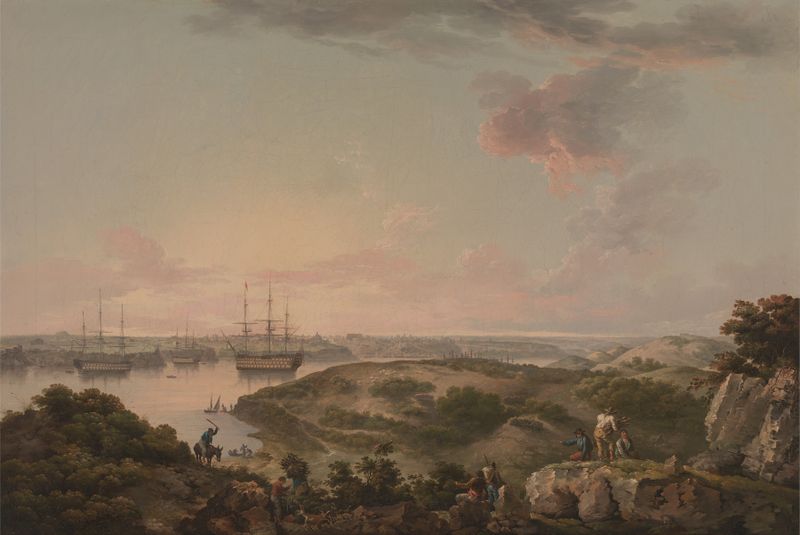
Port Mahon, Minorca with British Men-of-War at Anchor
John Thomas Serres
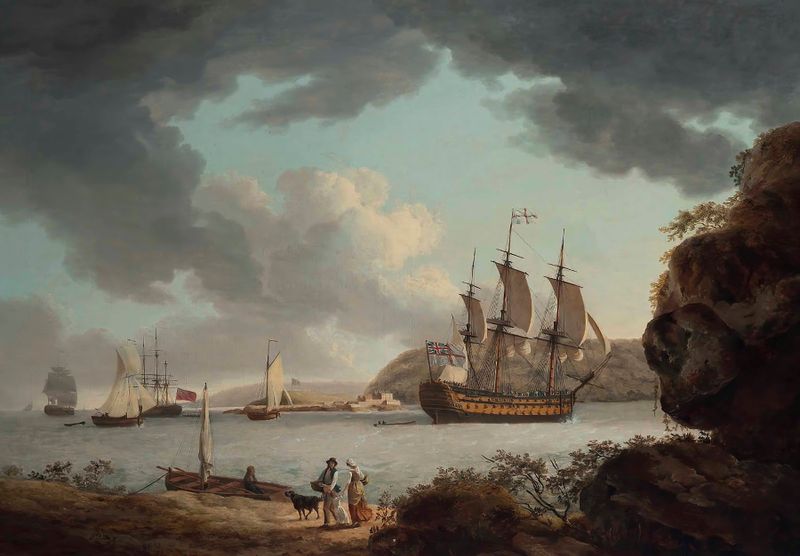
A Flagship Of The White Entering The Hamoaze And Approaching Plymouth Dock With Drake’S Island Off Her Port Quarter
John Thomas Serres
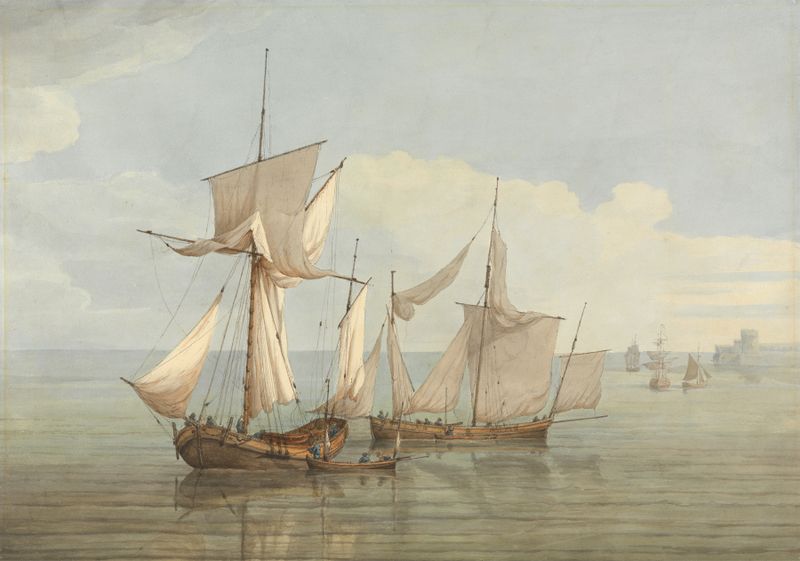
A Hoy and a Lugger with other Shipping on a Calm Sea
John Thomas Serres
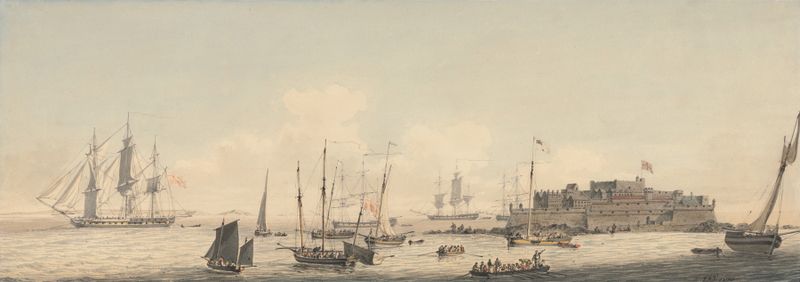
View of Castle Cornet, Guernsey, Channel Islands, with Shipping
John Thomas Serres
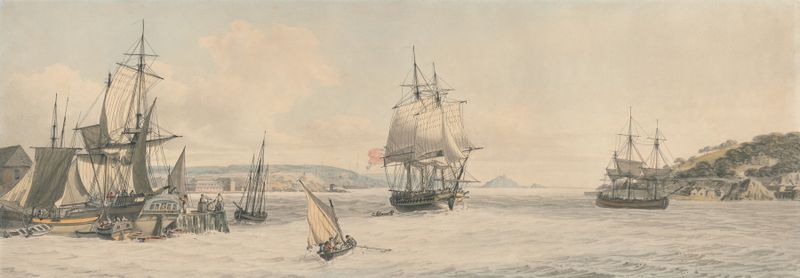
Plymouth Roads
John Thomas Serres

Gibraltar, South West by West
John Thomas Serres
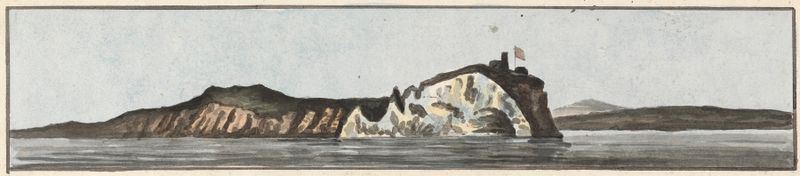
The Needles Bearing East
John Thomas Serres

The South Foreland and Shakespeare’s Cliff
John Thomas Serres

The North Foreland
John Thomas Serres

Gibraltar, The Signal House
John Thomas Serres





